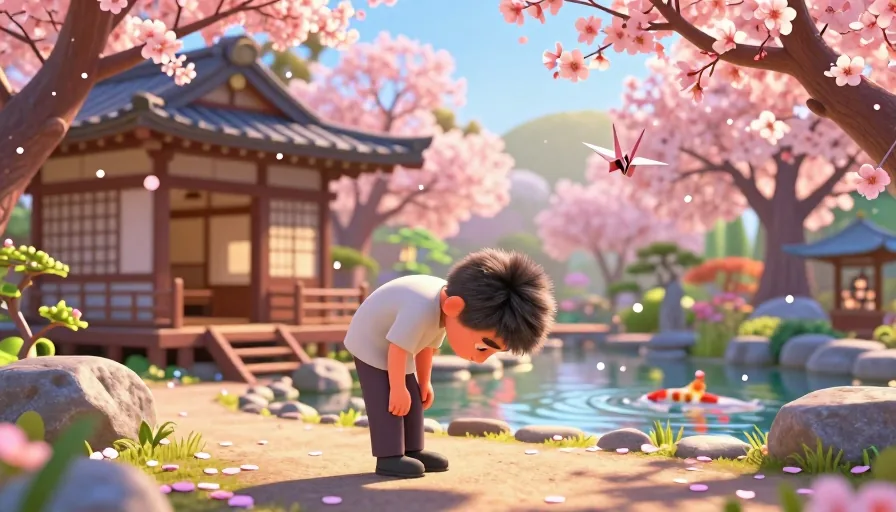
Apologising in Japanese is more than just saying 'sorry'; it's a nuanced art that reflects the depth of Japanese culture and social hierarchy. Whether you're a beginner or an advanced learner, understanding how to apologise in Japanese is crucial for effective communication. This guide will walk you through the various levels of formality, providing practical examples and checklists to help you master the art of apologising in Japanese.
Understanding the Nuances: When to Use Which Apology
Japanese apologies come in various forms, each suited to different situations. The key is to understand the context and choose the appropriate phrase. Here’s a breakdown of the most common apology phrases:
Casual Apologies
For everyday situations, casual apologies are used. These are informal and can be used among friends or in non-formal settings.
- Sumimasen (すみません)
- Meaning: Excuse me, sorry.
- Usage: Use this when you bump into someone, need to get past someone, or make a minor mistake.
- Example: Sumimasen, dozo (すみません、どうぞ) - Excuse me, please go ahead.
More Formal/Sincere Apologies
When you need to express a deeper level of remorse, use these phrases. They are more sincere and are often used in situations where you need to show more respect or sincerity.
- Gomennasai (ごめんなさい)
- Meaning: I’m sorry, please forgive me.
- Usage: Use this when you’ve made a mistake that affects someone else, such as forgetting a friend’s birthday or being late for a casual meeting.
- Example: Gomennasai, chotto okuremasu (ごめんなさい、ちょっと遅れます) - I’m sorry, I’m a bit late.
Apologies for Intrusions
These phrases are used when you need to enter someone’s space or interrupt them.
- Ojama shimasu (お邪魔します)
- Meaning: I’m intruding.
- Usage: Use this when entering someone’s home or office.
- Example: Ojama shimasu (お邪魔します) - I’m intruding.
Formal/Business Apologies
In formal or business settings, these apologies are used to show respect and sincerity.
-
Shitsurei shimasu (失礼します)
- Meaning: I’m being rude.
- Usage: Use this when leaving a formal setting, such as a business meeting or a formal gathering.
- Example: Shitsurei shimasu (失礼します) - I’m being rude.
-
Moushiwake arimasen (申し訳ありません)
- Meaning: I’m truly sorry, there is no excuse.
- Usage: Use this for serious mistakes or when you need to show deep remorse.
- Example: Moushiwake arimasen, douzo yoroshiku onegaishimasu (申し訳ありません、どうぞよろしくお願いします) - I’m truly sorry, please take care of me.

Learn Languages with YouTube
Watch videos in your target language, auto-capture words into flashcards, and track your progress — all in one place.
See How It Works →Essential Phrases for Everyday Situations
In everyday life, you’ll often need to use casual apologies. Here are some practical examples and a checklist to help you remember:
Practical Examples
-
Sumimasen (すみません)
- Scenario: You accidentally bump into someone on the street.
- Response: Sumimasen (すみません) - Excuse me, sorry.
-
Gomennasai (ごめんなさい)
- Scenario: You’re late for a casual meeting with friends.
- Response: Gomennasai, chotto okuremasu (ごめんなさい、ちょっと遅れます) - I’m sorry, I’m a bit late.
Checklist for Casual Apologies
- Use Sumimasen for minor mistakes or when you need to get someone’s attention.
- Use Gomennasai for mistakes that affect others or when you need to show more sincerity.
- Practice these phrases in different scenarios to get comfortable with their usage.
Formal Apologies for Business and Serious Mistakes
In formal or business settings, it’s crucial to use the right phrases to show respect and sincerity. Here are some examples and a checklist to help you master formal apologies:
Practical Examples
-
Shitsurei shimasu (失礼します)
- Scenario: You need to leave a formal business meeting early.
- Response: Shitsurei shimasu (失礼します) - I’m being rude.
-
Moushiwake arimasen (申し訳ありません)
- Scenario: You made a serious mistake at work that affected a client.
- Response: Moushiwake arimasen, douzo yoroshiku onegaishimasu (申し訳ありません、どうぞよろしくお願いします) - I’m truly sorry, please take care of me.
Checklist for Formal Apologies
- Use Shitsurei shimasu when leaving a formal setting or interrupting someone.
- Use Moushiwake arimasen for serious mistakes or when you need to show deep remorse.
- Practice these phrases in different formal scenarios to get comfortable with their usage.
Contextual Differences: Casual vs. Formal
Understanding the context is crucial when apologising in Japanese. Here are some key differences between casual and formal apologies:
Casual vs. Formal
- Casual Apologies: Used in everyday situations among friends or in non-formal settings. Examples include Sumimasen and Gomennasai.
- Formal Apologies: Used in business or formal settings to show respect and sincerity. Examples include Shitsurei shimasu and Moushiwake arimasen.
Mini Drill: Choose the Right Apology
- You bump into a friend on the street.
- Correct Apology: Sumimasen (すみません)
- You’re late for a business meeting.
- Correct Apology: Shitsurei shimasu (失礼します)
- You make a serious mistake at work.
- Correct Apology: Moushiwake arimasen (申し訳ありません)
- You need to enter a colleague’s office.
- Correct Apology: Ojama shimasu (お邪魔します)
Common Mistakes to Avoid
- Using the Wrong Level of Formality: Always match the level of formality to the situation. Using a casual apology in a formal setting can be disrespectful.
- Overusing Apologies: While apologies are important, overusing them can dilute their meaning. Use them when necessary and sincere.
- Not Understanding the Context: Always consider the context and the relationship before choosing an apology.
Conclusion
Apologising in Japanese is a nuanced art that requires understanding the context and choosing the right phrase. By mastering these phrases and practicing them in different scenarios, you’ll be able to communicate effectively and respectfully in Japanese. Remember to use the checklist and mini drills to reinforce your learning.
FAQ
What if I make a serious mistake and need to apologise deeply?
For serious mistakes, use **Moushiwake arimasen (申し訳ありません)**, which means 'I’m truly sorry, there is no excuse.' This phrase shows deep remorse and is appropriate for formal or serious situations.
Can I use casual apologies in formal settings?
No, using casual apologies in formal settings can be disrespectful. Always match the level of formality to the situation. For formal settings, use phrases like **Shitsurei shimasu (失礼します)** or **Moushiwake arimasen (申し訳ありません)**.
How do I know when to use **Sumimasen** vs. **Gomennasai**?
**Sumimasen (すみません)** is used for minor mistakes or when you need to get someone’s attention, while **Gomennasai (ごめんなさい)** is used for mistakes that affect others or when you need to show more sincerity. Use **Sumimasen** for casual, everyday situations and **Gomennasai** for situations where you need to show more remorse.
Related phrases
Start with Metheus
Watch videos in your target language, auto-capture words into flashcards, and track your progress — all in one place.
Get Started →

