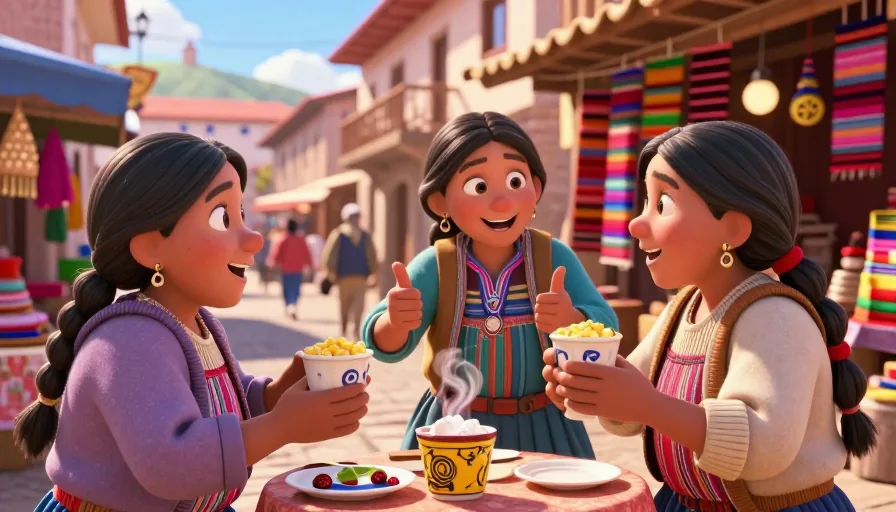
Bolivian slang is a vital component of authentic communication in Bolivia. Whether you're traveling through the vibrant streets of La Paz or immersing yourself in the local culture, understanding and using Bolivian slang can significantly enhance your experience. This guide will equip you with essential slang terms, their meanings, and practical examples to help you communicate like a local.
Essential Bolivian Slang for Travelers
Key Terms and Meanings
- Che: This is perhaps the most common and versatile term in Bolivian slang. It can mean 'friend,' 'dude,' or 'hey.' It's used casually in various contexts.
- Example: Che, ¿cómo estás? (Hey, how are you?)
- Pata: This term means 'friend' or 'buddy.' It's often used in informal settings.
- Example: Mi pata y yo vamos al cine. (My friend and I are going to the movies.)
- Gringo: This term refers to foreigners, often those from the United States or Europe. It's not always derogatory but can be depending on the context.
- Example: El gringo está perdido. (The foreigner is lost.)
- Chuta: This means 'to leave' or 'to go away.' It's a colloquial way to say goodbye.
- Example: Me chuto. (I'm leaving.)
- Cachai: This means 'you understand?' or 'got it?' It's used to confirm understanding.
- Example: Vamos al mercado, cachai? (We're going to the market, got it?)
- Poco a poco: This phrase means 'little by little' or 'slowly.' It's used to describe a gradual process.
- Example: Estoy aprendiendo español poco a poco. (I'm learning Spanish little by little.)
- Mama: This term means 'mom' but is also used affectionately to refer to anyone, especially in a friendly or familiar context.
- Example: Mama, ¿dónde está el baño? (Mom, where is the bathroom?)
- Pana: This means 'friend' or 'buddy' and is often used in informal settings.
- Example: Mi pana y yo vamos al cine. (My friend and I are going to the movies.)
- Pata: This term means 'friend' or 'buddy.' It's often used in informal settings.
- Example: Mi pata y yo vamos al cine. (My friend and I are going to the movies.)
- Gringo: This term refers to foreigners, often those from the United States or Europe. It's not always derogatory but can be depending on the context.
- Example: El gringo está perdido. (The foreigner is lost.)
- Chuta: This means 'to leave' or 'to go away.' It's a colloquial way to say goodbye.
- Example: Me chuto. (I'm leaving.)
- Cachai: This means 'you understand?' or 'got it?' It's used to confirm understanding.
- Example: Vamos al mercado, cachai? (We're going to the market, got it?)
- Poco a poco: This phrase means 'little by little' or 'slowly.' It's used to describe a gradual process.
- Example: Estoy aprendiendo español poco a poco. (I'm learning Spanish little by little.)
- Mama: This term means 'mom' but is also used affectionately to refer to anyone, especially in a friendly or familiar context.
- Example: Mama, ¿dónde está el baño? (Mom, where is the bathroom?)
Pronunciation Guides
- Che: Pronounced like 'cheh' with a soft 'e' sound.
- Pata: Pronounced like 'pah-tah' with a stress on the first syllable.
- Gringo: Pronounced like 'gree-ngo' with a stress on the first syllable.
- Chuta: Pronounced like 'choo-tah' with a stress on the first syllable.
- Cachai: Pronounced like 'ka-chigh' with a soft 'i' sound.
- Poco a poco: Pronounced like 'po-co a po-co' with a stress on the first syllable of each word.
- Mama: Pronounced like 'mah-mah' with a stress on the first syllable.
Understanding the Context: When to Use Bolivian Slang
Casual vs. Formal Settings
Bolivian slang is primarily used in casual settings. Avoid using it in formal or professional environments unless you're sure it's appropriate. Here are some guidelines:
- Casual Settings: Use slang with friends, family, and in informal social gatherings.
- Formal Settings: Stick to standard Spanish in professional or formal situations.
Common Mistakes to Avoid
- Overuse: Don't overuse slang. It can make you sound unnatural or disrespectful.
- Misuse: Ensure you understand the context and meaning before using a slang term.
Mini Drill: Practice Using Slang
- Imagine you're in a market in La Paz. How would you greet a friend?
- Answer: Che, ¿cómo estás?
- You're leaving a café. How would you say goodbye to your friend?
- Answer: Me chuto, nos vemos.
- You're asking a local for directions. How would you confirm understanding?
- Answer: Cachai?

Learn Languages with YouTube
Watch videos in your target language, auto-capture words into flashcards, and track your progress — all in one place.
See How It Works →Beyond the Basics: Deeper Dive into Bolivian Slang Phrases
Advanced Terms and Phrases
- Estar en la luna: This means 'to be daydreaming' or 'to be in a daze.'
- Example: Estoy en la luna, no te escuché. (I was daydreaming, I didn't hear you.)
- Tener un mal día: This means 'to have a bad day.'
- Example: Hoy tengo un mal día. (Today I'm having a bad day.)
- Estar en la onda: This means 'to be in the loop' or 'to be up-to-date.'
- Example: Estoy en la onda con las noticias. (I'm up-to-date with the news.)
- Estar en la luna: This means 'to be daydreaming' or 'to be in a daze.'
- Example: Estoy en la luna, no te escuché. (I was daydreaming, I didn't hear you.)
- Tener un mal día: This means 'to have a bad day.'
- Example: Hoy tengo un mal día. (Today I'm having a bad day.)
- Estar en la onda: This means 'to be in the loop' or 'to be up-to-date.'
- Example: Estoy en la onda con las noticias. (I'm up-to-date with the news.)
Cultural Context Behind the Slang
Bolivian slang is deeply rooted in the country's cultural heritage. Understanding the context can help you use the slang more effectively. For example, the term 'che' is influenced by the indigenous languages of Bolivia, reflecting the country's diverse linguistic landscape.
How Slang Helps Bridge the Gap Between Textbook Spanish and Real-World Conversation
Practical Examples
- Ordering Food: Instead of saying 'una orden de comida,' you might say 'una orden de chela y papas.'
- Example: Quiero una orden de chela y papas, por favor. (I want an order of beer and fries, please.)
- Asking for Directions: Instead of '¿Dónde está el baño?,' you might say '¿Dónde está el baño, pana?'
- Example: ¿Dónde está el baño, pana? (Where is the bathroom, buddy?)
- Greeting Friends: Instead of 'Hola,' you might say 'Che, ¿cómo estás?'
- Example: Che, ¿cómo estás? (Hey, how are you?)
Checklist for Effective Slang Use
- Learn the basic terms and their meanings.
- Practice pronunciation to sound natural.
- Understand the context and appropriate settings for each term.
- Avoid overuse and misuse.
- Engage in conversations to build confidence.
Conclusion
Mastering Bolivian slang can significantly enhance your travel experience and help you connect with locals. By understanding the key terms, their meanings, and how to use them in context, you'll be well on your way to authentic communication in Bolivia.
FAQ
Is it necessary to learn Bolivian slang to communicate effectively in Bolivia?
While it's not strictly necessary, learning Bolivian slang can greatly enhance your communication and help you connect with locals. It shows respect for the culture and can make your interactions more authentic and enjoyable.
Can I use Bolivian slang in formal settings?
It's generally best to avoid using slang in formal or professional settings. Stick to standard Spanish in these contexts to maintain a respectful and appropriate tone.
How can I practice using Bolivian slang effectively?
Practice using slang in casual settings with friends or locals. Engage in conversations and listen to how natives use the terms. This will help you build confidence and use the slang naturally.
Related phrases
Start with Metheus
Watch videos in your target language, auto-capture words into flashcards, and track your progress — all in one place.
Get Started →

