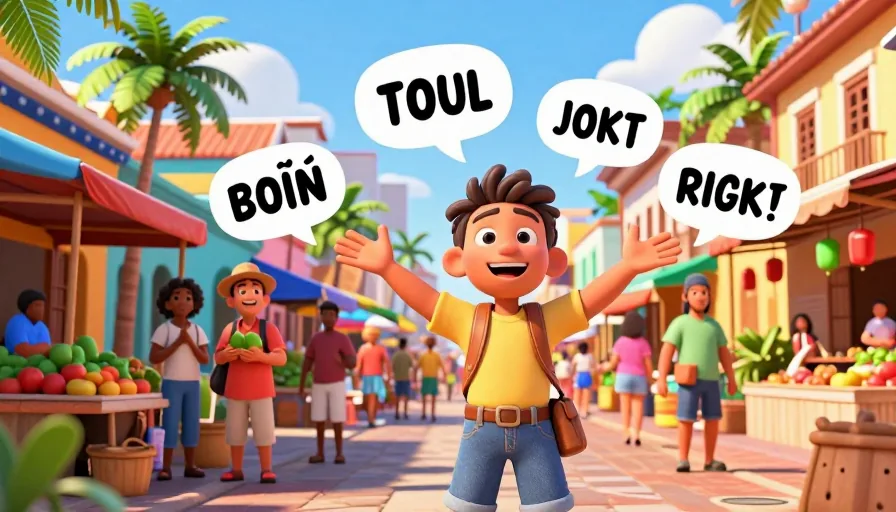
Textbook Portuguese gets you through airports, hotels, and polite small talk — then a Brazilian friend says 'tô de boa, mano' and the lesson book goes silent. Brazilian slang words are the layer of the language that actually shows up on the street, in the chat, and on TV: shortened forms, playful greetings, and everyday gírias that carry more meaning than their dictionary translations suggest. This guide covers the essential Brazilian slang words worth learning first, with real examples, regional context, and the unwritten rules for using them without sounding like a tourist.
Why Brazilian Slang Words Beat Textbook Portuguese
Brazilian Portuguese is spoken fast, contracted, and full of shortcuts. Estou collapses into tô, para into pra, and você into cê in relaxed speech, while whole greetings fold into single words. Slang is not a separate language — it is the informal register that carries the culture's warmth: jokes, affection, and playfulness. Learning gírias also fixes a real listening problem: Brazilians do not switch off slang for foreigners, so if you do not know the words, you will not follow real conversation no matter how much grammar you have studied.
There is also a divide worth knowing between Brazilian and European Portuguese. Some Brazilian slang is fully portable — valeu and legal work in both — but the daily register differs a lot: in Portugal people say fixe (cool) and bue (a lot), while in Brazil those are unknown. If your goal is Brazil, learn the Brazilian layer first and treat European forms as vocabulary you meet later.
The Essential Brazilian Slang Words You Will Hear Every Day
| Gíria | Meaning | Example |
|---|---|---|
| legal | cool, nice, fine | O filme foi legal! (The movie was cool!) |
| beleza | all good, okay; also a greeting | Beleza, te vejo amanhã! (Okay, see you tomorrow!) |
| valeu | thanks | Valeu pela ajuda! (Thanks for the help!) |
| mano / cara | dude, man | E aí, mano, tranquilo? (Hey, man, all good?) |
| galera | the group, the crew | A galera já chegou. (The crew already arrived.) |
| de boa | no worries, all good | Tô de boa. (I am all good.) |
| massa / maneiro | awesome (São Paulo / Rio) | Que música massa! (What an awesome song!) |
| rolê | hangout, outing | Bora num rolê hoje? (Shall we go out today?) |
A few micro-words deserve their own slot. Nossa! (wow!) punctuates surprises, e aí? (what's up?) opens almost every informal conversation, and né? (right?) tacked onto the end of a sentence invites agreement — answer with pois é or exatamente to keep the flow going. These small particles make up an enormous share of real Brazilian dialogue, so they repay attention faster than any dictionary entry.
Extended greetings and farewells
Beyond tudo bom? you will hear tudo joia, tudo certo, and tudo tranquilo — all meaning roughly everything is fine and all answerable with just another one of them. For farewells, até mais (see you later), tchau, and a quick valeu! close most encounters. The formula is simple: greeting, response, and closing each have several interchangeable slang variants, and Brazilians expect you to vary them.

Learn Languages with YouTube
Watch videos in your target language, auto-capture words into flashcards, and track your progress — all in one place.
Start Free →Regional Slang: Rio, São Paulo, and the Northeast
Slang is the fastest way to hear where a Brazilian is from. In Rio de Janeiro you get maneiro, cara, and the playful rhythm of carioca conversation; in São Paulo, mano, bagulho (stuff, thing), and the fast cadence of a financial hub; in the Northeast, oxente (wow, no way) anchors Bahia and beyond, and tô ligado (got it, I know what you mean) echoes through every city. Down south, Rio Grande do Sul brings tchê and piá (kid). None of these are wrong — they are flavors — but matching the local word makes you sound closer to the place than any accent course will.
How to Use Brazilian Slang Without Sounding Forced
Three rules keep gírias working for you. First, match the register: valeu and legal pass in semi-formal chats, while mano, cara, and rolê belong with friends. Second, do not spray slang into every sentence — Brazilians use it in natural clusters, not as seasoning on every word. Third, copy the intonation: valeU? rising as a question, beleza? as a check-in, legal! flat as an exclamation. Overusing slang reads as try-hard, exactly as it would in your own language, so start slow and let comfort build.
A realistic daily routine: one minute reviewing five gírias with example sentences, then five minutes of Brazilian YouTube or music with subtitles to hear them alive. In two weeks the new words stop being translations and start being reactions — which is the whole point of learning slang in the first place.
The Verdict
Brazilian slang words are not decoration; they are the difference between following a Brazilian conversation and smiling through it. Learn the everyday core — legal, beleza, valeu, e aí — add one or two regional favorites, and practice in real contexts where rhythm and tone do half the teaching. The goal is not to sound like a dictionary; it is to sound like a person.
Start Free with Metheus and turn Brazilian shows, vlogs, and music into your slang teacher: hover any gíria for an instant translation, save it as an SRS card, and let native content build the context no word list can.
FAQ
What are the most useful Brazilian slang words to learn first?
Start with the everyday core: legal (cool), beleza (all good, okay), valeu (thanks), mano (dude), galera (the crew), and de boa (no worries). These six cover greetings, agreement, and small talk, which is where most real Brazilian conversation happens. Add regional favorites like massa or maneiro once the basics feel natural.
Is Brazilian slang very different from European Portuguese slang?
Yes, more than textbooks admit. Brazilian Portuguese absorbed Indigenous and African vocabulary and moves at pop-culture speed, so words like cara, legal, and beleza are standard in Brazil but can sound foreign in Portugal, where fixe and bue rule casual conversation. Understand both, but pick one accent to imitate.
Which Brazilian slang words are safe to use in formal settings?
Most gírias are for relaxed contexts. Safe-enough words include legal (that is cool), vale (thanks), and tudo certo (all good). Avoid playful forms like e aí, mano, and cara with strangers, bosses, or older people, especially in business settings. When unsure, stick to standard Portuguese and let the other person set the tone.
How can I learn Brazilian slang words in context instead of from lists?
Lists teach recognition; context teaches use. Watch Brazilian YouTube vlogs, telenovelas, or soccer commentary where gírias flood the dialogue, and notice how tone changes meaning. Repeat whole chunks out loud, then test them with a language partner. Hearing slang in music, podcasts, and interviews builds the full picture that no word list can.
Related phrases
Language learning in 2026 isn't about finishing daily streaks. The fastest path to fluency combines three elements: comprehensible input from real media you enjoy, active vocabulary capture while consuming that content, and spaced repetition to lock words into long-term memory. Gamified apps build the habit. Immersion tools build the fluency. The most effective learners use both—in that order.
Start with Metheus
Watch videos in your target language, auto-capture words into flashcards, and track your progress — all in one place.
Get Started Free →