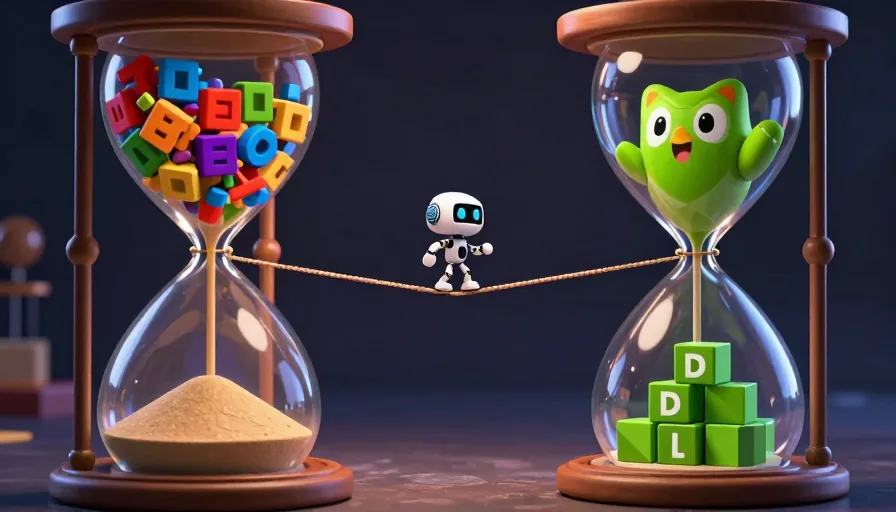
Learning a language quickly usually comes down to one debate: content immersion vs. tutoring. Immersion says you acquire the language the way children do — by consuming native content like Netflix series, YouTube channels, and books. Tutoring says the opposite: you need a human who corrects you in real time, like the instructors on Preply, or you will never speak properly. Both sides are partly right, and a learner who bets everything on one side stalls on the other half of the language. This guide compares the two approaches honestly, shows where each one fails, and gives you a blend that accelerates fluency instead of just feeling productive.
What Content Immersion Really Delivers
Immersion works because of volume and context. Every hour of native content exposes you to words in their natural environments — colloquial expressions, grammar in use, cultural references that no dictionary explains. Watching a Spanish series with subtitles teaches you phrases like "¿qué pasa?" in a way a textbook never can, because you remember the scene, not the words. Tools like LingQ and Migaku build on this by letting you save the unknown words you meet and turn them into flashcards without leaving the content. Pair that capture habit with an Anki-style spaced repetition review, and you get the strongest vocabulary engine most learners will ever use: frequency does the work, because high-frequency words keep repeating until they stop being new.
The failure mode is just as real. Immersion alone gives you no feedback. Pronunciation errors go uncorrected, grammar mistakes in your own output go unnoticed, and passive watching — subtitles on, phone in hand — produces almost nothing. The difference between watching for enjoyment and watching as study is the system around it: lookups, captures, review. Without that system, hours of immersion become pleasant noise instead of language you can use.
Where Tutoring Wins (and Where It Quietly Doesn't)
Tutoring solves exactly what immersion misses. A good tutor corrects your pronunciation on the spot, explains the grammar point you hit in your own reading, and forces you to produce language instead of just consuming it. For speaking confidence, one hour with a tutor is worth far more than ten hours of silent input, and mistakes that would fossilize for months get corrected in seconds. Platforms like Preply make weekly sessions practical, and a tutor who knows your level beats any generic course.
But tutoring has a ceiling. A realistic budget buys one or two sessions a week — a few hours of exposure a month, which is nothing in a language where output depends on thousands of words of input. And many tutors slide toward textbook material, so you end up paying for classroom drills in a different language. Tutoring without immersion produces correct, polite, empty sentences: grammar you can defend and vocabulary you never actually hear from native speakers.

Learn Languages with YouTube
Watch videos in your target language, auto-capture words into flashcards, and track your progress — all in one place.
Start Free →The Blend That Works: Daily Input, Weekly Feedback
The realistic pattern is asymmetric: immersion daily, tutoring weekly.
-
Consume daily (30-60 minutes). Netflix, YouTube, podcasts, or books in your target language, with instant lookups at hand. Capture every sentence you want to remember.
-
Review with spaced repetition (10 minutes). Feed your captured sentences into a flashcard deck. This is what turns content into retention instead of passive noise.
-
Meet a tutor weekly (45-60 minutes). Speak: retell an episode you watched, use your captured phrases out loud, and get corrected. Let the tutor fix what input cannot.
-
Recycle errors into content. The grammar your tutor corrects is the grammar to hunt for in the next episode. Find real examples of what you got wrong.
This works because the two methods train different skills. Input builds vocabulary, comprehension, and natural phrasing; a tutor builds pronunciation, confidence, and output grammar. Neither can train the other's skills at anything close to the same speed, which is why choosing one side of the content immersion vs. tutoring debate makes the whole project slower.
How to Measure Progress on Each Path
-
Immersion benchmarks: you follow a series with target-language subtitles without pausing every line, and you read a chapter of a book with fewer than five lookups per page.
-
Tutoring benchmarks: you hold a 15-minute conversation without falling back into your native language, and your tutor stops correcting the same error twice.
These milestones matter because both paths feel slow in the first weeks. Vocabulary gains show up around 100 hours of input, and speaking confidence typically follows in the second month of weekly sessions. Track one number per week — hours of real input, errors repeated — and you will see which side of your blend needs more weight.
The Verdict
Content immersion vs. tutoring is a false choice for anyone serious about speed. Immersion is the volume engine, and a tutor is the correction layer; together they cover vocabulary, comprehension, production, and pronunciation in a way neither method can alone. If you can only start one, start with daily immersion, and add a tutor session the month you begin speaking.
Metheus is the immersion half of that stack: a browser extension that turns native content into study material with bilingual subtitles, a hover dictionary, and sentence cards for spaced repetition — so every episode you watch becomes language you keep.
FAQ
Is content immersion or tutoring faster for learning a language?
For most learners, content immersion produces vocabulary and comprehension faster, because it gives you hundreds of hours of real input. Tutoring is faster for speaking: nothing improves pronunciation like being corrected in real time. The fastest realistic path is immersion for volume and a tutor for output, and learners who pick only one side stall in the half they skipped.
Can you learn a language with content immersion alone, without a tutor?
Yes, up to a point. Input-heavy learners using Netflix, YouTube, and books with instant lookups can reach strong reading and listening skills without tutoring. The risk is that speaking and pronunciation develop slower, and errors fossilize. One or two tutor sessions a week fixes that quickly, but pure self-study immersion works for many learners, especially when speaking is not the immediate goal.
How often should I take tutoring sessions if I self-study with content?
Once you have a daily content routine, one 45-minute session per week is typically enough for most learners, mostly for speaking and correction. Add a second weekly session if you are preparing for an exam or moving to the country. Beyond that, sessions get expensive, and extra minutes are conversation you could be getting from content for free.
How do I combine content immersion with tutoring without burning out?
Make content the base: consume native material daily with instant lookups, save sentences to a spaced repetition deck, and review them. Then bring that material to the tutor: practice the phrases, get corrected, and ask about the grammar you noticed. The tutor fixes what content cannot, and the content feeds the session with material you actually care about.
How much time does content immersion take before results show?
Most learners notice improved listening comprehension within four to eight weeks of daily exposure, and vocabulary gains accelerate around 100 hours of input. The mistake is measuring progress weekly. With a daily 30-minute habit plus weekly tutor feedback, the curve becomes clear by the third month.
Related phrases
Language learning in 2026 isn't about finishing daily streaks. The fastest path to fluency combines three elements: comprehensible input from real media you enjoy, active vocabulary capture while consuming that content, and spaced repetition to lock words into long-term memory. Gamified apps build the habit. Immersion tools build the fluency. The most effective learners use both—in that order.
Start with Metheus
Watch videos in your target language, auto-capture words into flashcards, and track your progress — all in one place.
Get Started Free →