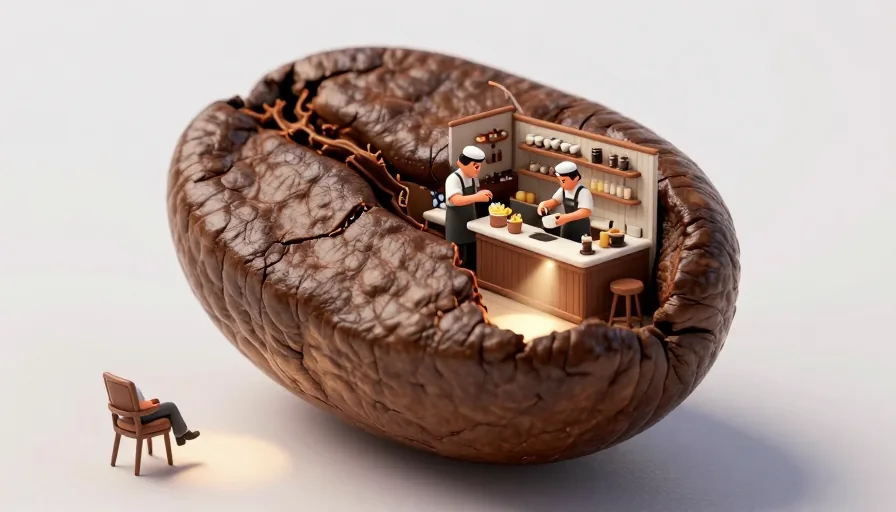
Learning to talk about cafes en ingles is a practical and enjoyable way to enhance your English vocabulary. Whether you're ordering a coffee, meeting friends, or discussing your favorite hangout spots, understanding how to use 'cafes' in various contexts will make your conversations more natural and engaging.
Translating 'Café' and 'Cafés': A Complete Guide
The direct translation of 'café' in English is 'cafe' or 'coffee shop'. The plural form 'cafés' translates to 'cafes' or 'coffee shops'. However, the usage can vary depending on the context. For example, 'café' can refer to the physical establishment or the beverage itself.
Common Mistakes and Clarifications
-
Mistake: Using 'café' as a verb.
- Correction: 'Café' is a noun. The verb form related to cafes is 'to frequent' or 'to visit'.
-
Mistake: Confusing 'café' with 'cafeteria'.
- Correction: A 'cafeteria' is typically a larger, self-service dining area, often found in schools or workplaces, while a 'café' is usually a smaller, more intimate setting for coffee and light meals.
Mini Drill: Translate the Following
- Yo voy al café todos los días.
- Los cafés en esta ciudad son muy acogedores.
- Me gusta tomar café en el café de la esquina.
Essential English Phrases for Talking About Cafes
Ordering at a Cafe
-
I would like to order a coffee, please.
- Yo me gustaría pedir un café, por favor.
-
Can I have a latte with extra foam?
- ¿Puedo tener un latte con más espuma?
-
Do you have any pastries?
- ¿Tienen algún tipo de pastel?
Socializing at a Cafe
-
Let's meet at the cafe around 3 PM.
- Vamos a encontrarnos en el café alrededor de las 3 PM.
-
I love coming here to study.
- Me encanta venir aquí a estudiar.
-
This cafe has the best atmosphere.
- Este café tiene el mejor ambiente.
Daily Routines at a Cafe
-
I always start my day with a coffee from the local cafe.
- Siempre empiezo mi día con un café del café local.
-
I need to grab a quick coffee before work.
- Necesito tomar un café rápido antes del trabajo.
-
I enjoy reading a book while sipping my coffee.
- Me gusta leer un libro mientras tomo mi café.

Learn Languages with YouTube
Watch videos in your target language, auto-capture words into flashcards, and track your progress — all in one place.
See How It Works →Grammar Spotlight: Using 'Café' in Sentences
Café as a Noun
-
I'm going to the cafe to meet my friends.
- Voy al café a encontrarme con mis amigos.
-
The cafe is known for its delicious pastries.
- El café es conocido por sus deliciosos pasteles.
Café in Different Contexts
-
Café culture is very popular in Europe.
- La cultura del café es muy popular en Europa.
-
I prefer to drink café con leche.
- Prefiero tomar café con leche.
Cultural Context: Cafes in English-Speaking Countries
The Role of Cafes in Daily Life
In English-speaking countries, cafes are more than just places to grab a quick coffee. They are social hubs where people meet friends, conduct business, or simply relax with a good book. Understanding the cultural significance of cafes can help you appreciate the nuances of the language and the people who speak it.
Checklist for Using 'Cafes' in Conversation
- Understand the difference between 'cafe' and 'cafeteria'.
- Learn common phrases for ordering and socializing at a cafe.
- Practice using 'cafe' in different grammatical contexts.
- Explore the cultural significance of cafes in English-speaking countries.
- Engage in conversations about your favorite cafes and daily routines.
Practical Examples and Conversations
Example 1: Ordering Coffee
Customer: Hi, I'd like to order a cappuccino, please. Barista: Sure, would you like it with extra foam? Customer: Yes, please. Barista: That will be $4.50.
Example 2: Meeting Friends
Friend 1: Let's meet at the new cafe downtown. Friend 2: Sounds great! What time? Friend 1: How about 4 PM? Friend 2: Perfect, see you there!
Example 3: Daily Routine
Colleague 1: I always stop by the cafe on my way to work. Colleague 2: Me too! It's the best way to start the day. Colleague 1: Absolutely. The coffee there is amazing.
Conclusion
Mastering the use of 'cafes en ingles' involves more than just knowing the translation. It's about understanding the cultural context, practicing common phrases, and using the word in various grammatical contexts. By following this guide, you'll be well on your way to sounding like a native speaker when talking about cafes in English.
FAQ
What is the difference between 'cafe' and 'cafeteria'?
A 'cafe' is typically a smaller, more intimate setting for coffee and light meals, while a 'cafeteria' is usually a larger, self-service dining area often found in schools or workplaces.
Can 'cafe' be used as a verb?
No, 'cafe' is a noun. If you want to express the action of visiting a cafe, you can use verbs like 'to frequent' or 'to visit'.
How do I order coffee in a cafe?
You can use phrases like 'I would like to order a coffee, please' or 'Can I have a latte with extra foam?' to order coffee in a cafe.
Related phrases
Start with Metheus
Watch videos in your target language, auto-capture words into flashcards, and track your progress — all in one place.
Get Started →

