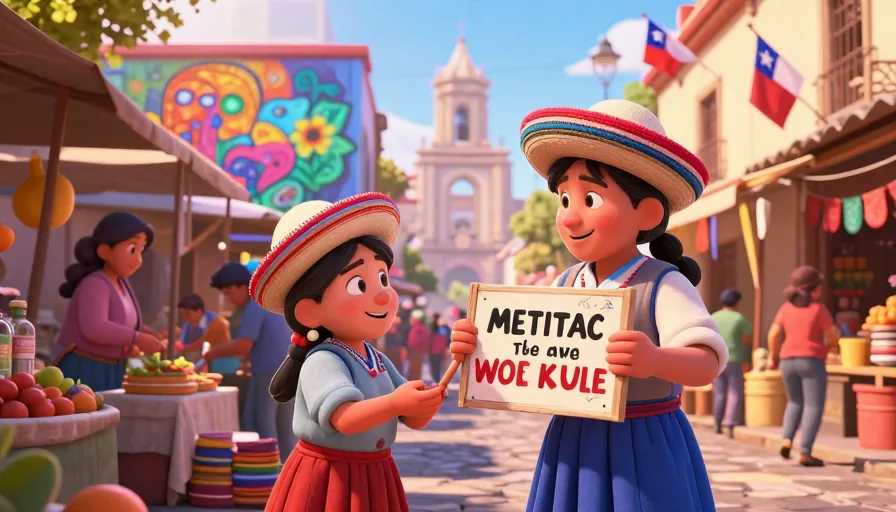
Chile slang words are a vibrant and essential part of the Chilean culture. Understanding and using these terms can greatly enhance your communication skills and cultural immersion. This guide will provide you with a categorized list of essential Chilean slang, along with contextual explanations and practical examples to help you master Chilean Spanish.
Essential Chilean Slang for Everyday Conversation
To start, let's dive into some of the most commonly used Chile slang words in everyday conversations. These terms will help you navigate social interactions and understand the local culture better.
Greetings and Farewells
- Po: Short for 'poder' (to be able to), it is used to ask 'How are you?' in a casual way. For example, '¿Po?' means 'How are you?'
- Chao: A casual way to say goodbye. It's similar to 'bye' in English.
Expressions of Surprise
- ¡Cachai!: This is a versatile expression that can mean 'you get it?' or 'do you understand?' It's often used to check if someone understands what you're saying.
- ¡Qué po!: An expression of surprise or disbelief, similar to 'No way!' in English.
Common Expressions
- ¡Qué chucha!: An exclamation of surprise or frustration, similar to 'What the...?' in English.
- ¡Qué po!: An expression of surprise or disbelief, similar to 'No way!' in English.
Understanding the Vibe: Cultural Context Behind Chilean Slang
Chilean slang is deeply rooted in the country's history and culture. Many slang terms have evolved from indigenous languages, Spanish, and even English influences. Understanding the cultural context behind these words can help you use them more effectively.
Historical Influences
Chilean slang has been influenced by various historical events and cultural exchanges. For example, the term 'po' comes from the indigenous Mapuche language and was adopted into Chilean Spanish as a casual way to ask 'How are you?'
Regional Variations
Chile is a diverse country, and slang can vary significantly from region to region. For example, in Santiago, you might hear 'po' frequently, while in the south, you might hear 'che' more often. Understanding these regional variations can help you communicate more effectively with locals.
Slang for People and Relationships in Chile
Chilean slang for people and relationships can be both endearing and humorous. Here are some common terms:
Terms of Endearment
- 'Weón': A versatile term that can mean 'dude,' 'guy,' or even 'idiot,' depending on the context. It's often used in a friendly or casual way.
- 'Gato': Means 'cat' but is used to refer to a cool or attractive person.
Family and Relationships
- 'Pololo/a': Refers to a boyfriend or girlfriend. It's a casual and affectionate term.
- 'Mamita': Means 'little mom' and is used to refer to a close friend or someone you care about.

Learn Languages with YouTube
Watch videos in your target language, auto-capture words into flashcards, and track your progress — all in one place.
See How It Works →Common Expressions and Reactions in Chilean Spanish
Chilean Spanish is rich with expressions and reactions that can add flavor to your conversations. Here are some common ones:
Expressions of Agreement
- 'Cachai': Means 'you get it?' or 'do you understand?' It's often used to check if someone understands what you're saying.
- 'Po': Short for 'poder' (to be able to), it is used to ask 'How are you?' in a casual way. For example, '¿Po?' means 'How are you?'
Expressions of Disagreement
- 'No po': Means 'no way' or 'nope.' It's a casual way to express disagreement.
- 'Qué po': An expression of surprise or disbelief, similar to 'No way!' in English.
Practical Examples and Checklists
To help you practice and remember these Chile slang words, here are some practical examples and a checklist:
Use This Phrase in a Sentence
- 'Po': '¿Po? ¿Cómo estás?' (How are you?)
- 'Cachai': '¿Cachai lo que te estoy diciendo?' (Do you understand what I'm saying?)
- 'Weón': '¡Ey, weón, ¿cómo estás?' (Hey, dude, how are you?)
- 'Pololo/a': 'Mi pololo/a es muy simpático/a.' (My boyfriend/girlfriend is very nice.)
- 'Gato': 'Ese tipo es un gato.' (That guy is cool.)
Checklist for Mastering Chilean Slang
- Learn the basic greetings and farewells.
- Practice common expressions of surprise and agreement.
- Understand the cultural context behind the slang.
- Use slang in different conversational scenarios.
- Pay attention to regional variations.
Mini Drills for Practice
- Greetings and Farewells: Practice using 'po' and 'chao' in different scenarios.
- Expressions of Surprise: Use '¡Qué po!' and '¡Cachai!' in conversations to express surprise or check understanding.
- Terms of Endearment: Use 'weón' and 'gato' in casual conversations.
- Relationship Terms: Practice using 'pololo/a' and 'mamita' in different contexts.
- Expressions of Agreement and Disagreement: Use 'cachai' and 'no po' in conversations to express agreement or disagreement.
Comparison with Standard Spanish
Chilean slang often differs from standard Spanish in terms of vocabulary and usage. For example, 'po' is a casual way to ask 'How are you?' in Chilean Spanish, while in standard Spanish, you would say '¿Cómo estás?' Understanding these differences can help you communicate more effectively with locals.
Common Mistakes to Avoid
- Overusing Slang: While slang can be fun and useful, overusing it can make you sound unnatural or disrespectful.
- Misusing Context: Always pay attention to the context and regional variations when using slang.
- Ignoring Cultural Nuances: Understanding the cultural context behind the slang can help you use it more effectively.
Conclusion
Mastering Chile slang words can greatly enhance your communication skills and cultural immersion. By understanding the cultural context, usage examples, and conversational scenarios, you can use these terms more effectively and naturally. Practice regularly and pay attention to regional variations to become fluent in Chilean Spanish.
Final Checklist
- Learn and practice essential Chilean slang words.
- Understand the cultural context behind the slang.
- Use slang in different conversational scenarios.
- Pay attention to regional variations.
- Practice regularly to become fluent.
FAQ
Is it appropriate to use Chilean slang in formal settings?
Using Chilean slang in formal settings is generally not appropriate. Slang is more suited for casual conversations with friends and family. In formal settings, it's best to stick to standard Spanish to maintain professionalism and respect.
How can I avoid sounding disrespectful when using Chilean slang?
To avoid sounding disrespectful, pay attention to the context and regional variations of the slang. Always use slang in a respectful and appropriate manner, and be mindful of the cultural nuances behind the words.
What are some common mistakes to avoid when learning Chilean slang?
Common mistakes include overusing slang, misusing context, and ignoring cultural nuances. To avoid these mistakes, practice regularly, pay attention to regional variations, and always use slang in a respectful and appropriate manner.
Related phrases
Start with Metheus
Watch videos in your target language, auto-capture words into flashcards, and track your progress — all in one place.
Get Started →

