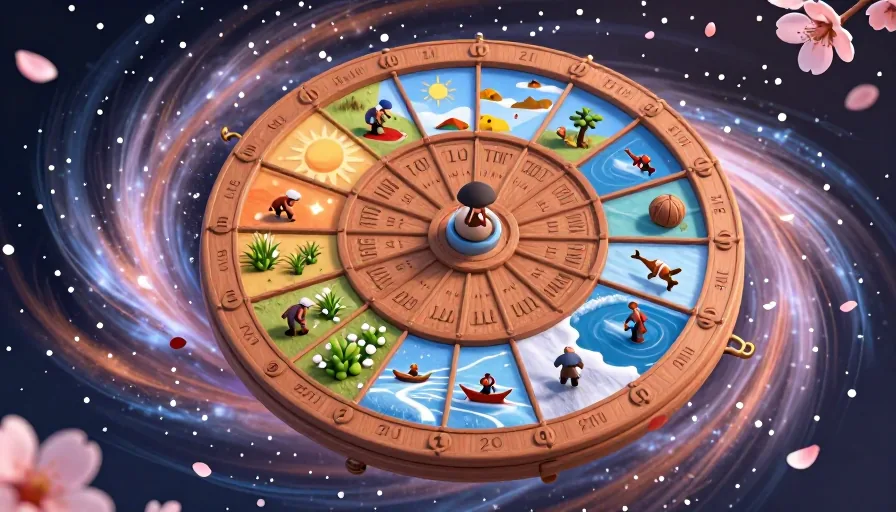
The 24 Solar Terms, or chinese seasons, are a fundamental aspect of traditional Chinese culture and language. These terms, deeply rooted in ancient agricultural practices, provide a unique lens through which to understand and learn the Chinese language. By connecting these terms to practical language learning, you can enrich your vocabulary, gain cultural insights, and improve your conversational fluency.
Understanding the Foundation: What are the 24 Solar Terms?
The 24 Solar Terms are a set of 24 points in the traditional Chinese calendar that divide the year into 24 equal parts. Each term marks a specific phase in the solar year, reflecting changes in climate, natural phenomena, and agricultural activities. These terms are not just about weather; they are intertwined with cultural practices, festivals, and daily life.
Origin and Significance
The 24 Solar Terms were created by ancient Chinese farmers to guide agricultural activities. Each term has a specific name that describes the natural changes occurring during that period. For example, 'Lichun' (立春) marks the beginning of spring, while 'Liqi' (立秋) signifies the start of autumn. Understanding these terms can help you grasp the rhythm of life in China and enrich your language learning experience.
The Four Seasons: Mastering the Core Vocabulary
The four main seasons in Chinese are 春 (chūn) for spring, 夏 (xià) for summer, 秋 (qiū) for autumn, and 冬 (dōng) for winter. Each season has its unique vocabulary and cultural practices.
Spring (春 - chūn)
Spring in Chinese is associated with renewal and growth. Key vocabulary includes:
- 花 (huā) - flower
- 草 (cǎo) - grass
- 雨 (yǔ) - rain
Example Sentence: 春天的花开得很美丽。 (Chūntiān de huā kāi de hěn měilì.) - The flowers bloom beautifully in spring.
Summer (夏 - xià)
Summer is the hottest season and is associated with activities like swimming and eating cold foods. Key vocabulary includes:
- 热 (rè) - hot
- 游泳 (yóuyǒng) - swimming
- 冰淇淋 (bīngqílín) - ice cream
Example Sentence: 夏天很热,我喜欢游泳。 (Xiàtiān hěn rè, wǒ xǐhuān yóuyǒng.) - It's very hot in summer, I like swimming.
Autumn (秋 - qiū)
Autumn is a season of harvest and cool weather. Key vocabulary includes:
- 收获 (shōuhuò) - harvest
- 凉 (liáng) - cool
- 月饼 (yuèbǐng) - moon cake
Example Sentence: 秋天的月饼很美味。 (Qiūtiān de yuèbǐng hěn měiwèi.) - Moon cakes in autumn are very delicious.
Winter (冬 - dōng)
Winter is the coldest season and is associated with snow and indoor activities. Key vocabulary includes:
- 雪 (xuě) - snow
- 暖和 (nuǎnhuo) - warm
- 火锅 (huǒguō) - hotpot
Example Sentence: 冬天很冷,我喜欢吃火锅。 (Dōngtiān hěn lěng, wǒ xǐhuān chī huǒguō.) - It's very cold in winter, I like eating hotpot.

Learn Languages with YouTube
Watch videos in your target language, auto-capture words into flashcards, and track your progress — all in one place.
See How It Works →Beyond Vocabulary: Using Seasons in Conversation and Culture
Learning seasonal vocabulary is just the beginning. To truly master the chinese seasons, you need to understand how they are used in conversation and cultural contexts.
Mood Learning: Feeling the Season
Mood Learning involves understanding the emotional and contextual nuances of each season. For example, spring is often associated with joy and renewal, while autumn is linked to nostalgia and harvest.
Example: When talking about spring, you might say: 春天让我感到很开心。 (Chūntiān ràng wǒ gǎnjué hěn kāixīn.) - Spring makes me feel very happy.
Cultural Practices and Festivals
Each season has its unique festivals and cultural practices. For example, the Lantern Festival (元宵节 - Yuánxiāojié) is celebrated in spring, while the Mid-Autumn Festival (中秋节 - Zhōngqiūjié) is celebrated in autumn.
Example: During the Mid-Autumn Festival, you might say: 我们一起赏月,吃月饼。 (Wǒmen yīqǐ shǎngyuè, chī yuèbǐng.) - We enjoy the moon and eat moon cakes together.
Practical Application: Seasonal Food, Festivals, and Daily Life
Understanding how seasons influence daily life, food, and festivals can deepen your language learning experience.
Seasonal Food
Each season has its unique foods. For example, in spring, people enjoy 桃花 (táohuā) - peach blossoms, while in autumn, 梨 (lí) - pears are popular.
Example: In autumn, you might say: 我喜欢吃梨。 (Wǒ xǐhuān chī lí.) - I like eating pears.
Festivals and Activities
Festivals are a great way to learn about seasonal practices. For example, the Dragon Boat Festival (端午节 - Duānwǔjié) in summer involves eating 粽子 (zòngzi) - zongzi, while the Double Ninth Festival (重阳节 - Chóngyángjié) in autumn involves climbing mountains and drinking chrysanthemum tea.
Example: During the Dragon Boat Festival, you might say: 我们一起吃粽子。 (Wǒmen yīqǐ chī zòngzi.) - We eat zongzi together.
Daily Life
Seasons also influence daily activities. For example, in spring, people might say: 春天我喜欢散步。 (Chūntiān wǒ xǐhuān sànbù.) - In spring, I like taking walks.
Tips for Learners to Memorize and Use Seasonal Vocabulary Effectively
Checklist for Seasonal Vocabulary
- Learn Key Words: Start with the basic vocabulary for each season.
- Practice Sentences: Create sentences using the new vocabulary.
- Cultural Context: Understand the cultural practices and festivals associated with each season.
- Interactive Learning: Use apps and games to practice seasonal vocabulary.
- Real-Life Application: Incorporate seasonal vocabulary into your daily conversations.
Mini Drills
- Spring Drill: Describe your favorite spring activity using at least three seasonal words.
- Summer Drill: Talk about a summer festival and the food associated with it.
- Autumn Drill: Explain the significance of the Mid-Autumn Festival and how it is celebrated.
- Winter Drill: Describe a winter activity and the clothing you would wear.
Common Mistakes to Avoid
- Overlooking Cultural Context: Don't just memorize words; understand their cultural significance.
- Ignoring Pronunciation: Pay attention to the tones and pronunciation of seasonal words.
- Lack of Practice: Regular practice is key to retaining new vocabulary.
Conclusion
Mastering the chinese seasons and the 24 Solar Terms can significantly enhance your Chinese language learning experience. By understanding the vocabulary, cultural practices, and daily life applications, you can gain a deeper insight into the language and culture. Use the tips and examples provided to practice and improve your fluency.
FAQ
How do the 24 Solar Terms relate to modern Chinese life?
The 24 Solar Terms are still relevant in modern Chinese life, influencing festivals, food, and daily activities. For example, the Mid-Autumn Festival in autumn is a time for family reunions and moon viewing, while the Dragon Boat Festival in summer is celebrated with zongzi and dragon boat races. Understanding these terms can help you connect with contemporary Chinese culture and language.
Is it necessary to learn all 24 Solar Terms to improve my Chinese?
While learning all 24 Solar Terms can deepen your understanding of Chinese culture, it's not necessary to learn them all at once. Start with the core vocabulary for each season and gradually expand your knowledge. Focus on how these terms are used in conversation and cultural contexts to improve your fluency.
How can I practice seasonal vocabulary effectively?
Practice seasonal vocabulary by creating sentences, understanding cultural contexts, and using interactive learning tools. Incorporate the vocabulary into your daily conversations and real-life situations. Regular practice and cultural immersion will help you retain and effectively use the new words.
Related phrases
Start with Metheus
Watch videos in your target language, auto-capture words into flashcards, and track your progress — all in one place.
Get Started →

