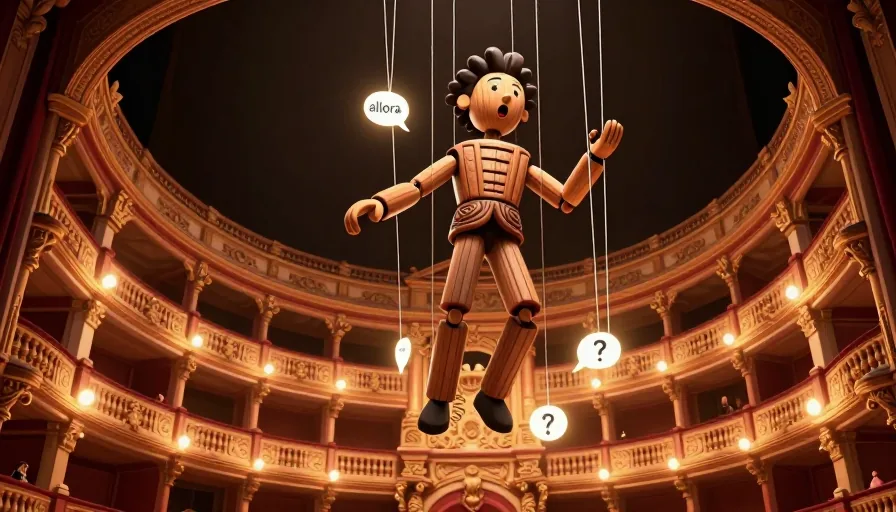
Understanding how to define 'allora' in Italian goes beyond a simple dictionary translation. 'Allora' is a versatile filler word that plays a crucial role in Italian conversations, helping speakers buy time, express impatience, or indicate contemplation. This guide will delve into the nuances of 'allora,' providing practical examples and checklists to enhance your conversational fluency.
What is 'Allora'? A Deep Dive into the Italian Filler Word
'Allora' is an Italian word that translates literally to 'then' or 'so.' However, its usage in everyday conversations is much more nuanced. It is often used as a filler word to pause and think, similar to 'well' or 'so' in English. For example, if you're trying to remember a name or think of the next thing to say, you might use 'allora' to fill the gap.
Mini Drill: Practice Using 'Allora'
- Imagine you're in a conversation and you need a moment to think. How would you use 'allora'?
- Try to incorporate 'allora' into a sentence where you're explaining a complex idea.
- Practice using 'allora' in a casual conversation with a friend.
Context is King: When to Use 'Allora' in Conversation
Buying Time and Hesitation
One of the most common uses of 'allora' is to buy time when you're thinking of what to say next. It's a polite way to indicate that you're not finished speaking yet. For example:
- Italian: Allora, vediamo... (So, let's see...)
- English: Well, let's see...
Expressing Impatience or Contemplation
'Allora' can also convey impatience or a sense of contemplation. The tone of voice and context play a significant role in determining the meaning. For instance:
-
Italian: Allora, che cosa vuoi fare? (So, what do you want to do?)
-
English: So, what do you want to do? (with a hint of impatience)
-
Italian: Allora, pensiamoci su. (So, let's think about it.)
-
English: So, let's think about it.
Beyond Translation: Understanding the Nuance of 'Allora'
Literal Translation vs. Contextual Meaning
The literal translation of 'allora' is 'then' or 'so,' but its contextual meaning can vary widely. It's essential to understand the context and the emotional tone to use 'allora' effectively. For example, in a formal setting, 'allora' might be used to introduce a new topic or summarize a point, while in an informal setting, it might be used to express frustration or impatience.
Common Uses of 'Allora' as a Filler Word
'Allora' is often used as a filler word to buy time or indicate hesitation. It's a versatile word that can be used in various contexts to convey different emotions. For example:
-
Italian: Allora, non so cosa dire. (So, I don't know what to say.)
-
English: Well, I don't know what to say.
-
Italian: Allora, fammi pensare. (So, let me think.)
-
English: So, let me think.

Learn Languages with YouTube
Watch videos in your target language, auto-capture words into flashcards, and track your progress — all in one place.
See How It Works →Situational Examples: Formal vs. Informal Contexts
Formal Contexts
In formal contexts, 'allora' is often used to introduce a new topic or summarize a point. For example:
- Italian: Allora, riassumendo... (So, summarizing...)
- English: So, summarizing...
Informal Contexts
In informal contexts, 'allora' can be used to express frustration or impatience. For example:
- Italian: Allora, che cosa stai facendo? (So, what are you doing?)
- English: So, what are you doing? (with a hint of impatience)
How 'Allora' Fits into Broader Italian Conversational Flow
'Allora' is a crucial part of Italian conversational flow. It helps to maintain the rhythm of the conversation and indicates that the speaker is still engaged. For example:
- Italian: Allora, continuiamo. (So, let's continue.)
- English: So, let's continue.
Checklist for Using 'Allora'
- Understand the Context: Ensure you understand the context and the emotional tone before using 'allora.'
- Practice with Examples: Use the examples provided to practice using 'allora' in different contexts.
- Listen to Native Speakers: Pay attention to how native speakers use 'allora' in conversations.
- Experiment with Tone: Try using 'allora' with different tones to convey different emotions.
- Reflect on Your Usage: Reflect on how you use 'allora' and make adjustments as needed.
Practical Examples from Authentic Italian Media
To better understand how 'allora' is used in real-life conversations, let's look at some examples from authentic Italian media:
- Example 1: In a TV interview, the host might say, 'Allora, parliamo di...' (So, let's talk about...) to introduce a new topic.
- Example 2: In a casual conversation, a friend might say, 'Allora, che cosa vuoi fare stasera?' (So, what do you want to do tonight?) to suggest plans.
- Example 3: In a formal presentation, a speaker might say, 'Allora, riassumendo...' (So, summarizing...) to conclude their points.
By understanding these nuances, you can use 'allora' more effectively in your conversations, enhancing your fluency and cultural awareness.
Conclusion
Defining 'allora' goes beyond a simple dictionary translation. It involves understanding the context, emotional tone, and conversational flow. By practicing with examples and paying attention to how native speakers use 'allora,' you can incorporate this versatile word into your Italian conversations with confidence.
FAQ
Is 'allora' always used to buy time?
No, 'allora' can also express impatience, introduce a new topic, or summarize points. The context and tone of voice are crucial in determining its meaning.
Can 'allora' be used in formal settings?
Yes, 'allora' can be used in both formal and informal settings. In formal contexts, it is often used to introduce a new topic or summarize points, while in informal contexts, it can express frustration or impatience.
How can I practice using 'allora' effectively?
Practice using 'allora' in different contexts and with varying tones. Listen to native speakers and pay attention to how they use 'allora' in conversations. Reflect on your usage and make adjustments as needed.
Related phrases
Start with Metheus
Watch videos in your target language, auto-capture words into flashcards, and track your progress — all in one place.
Get Started →

