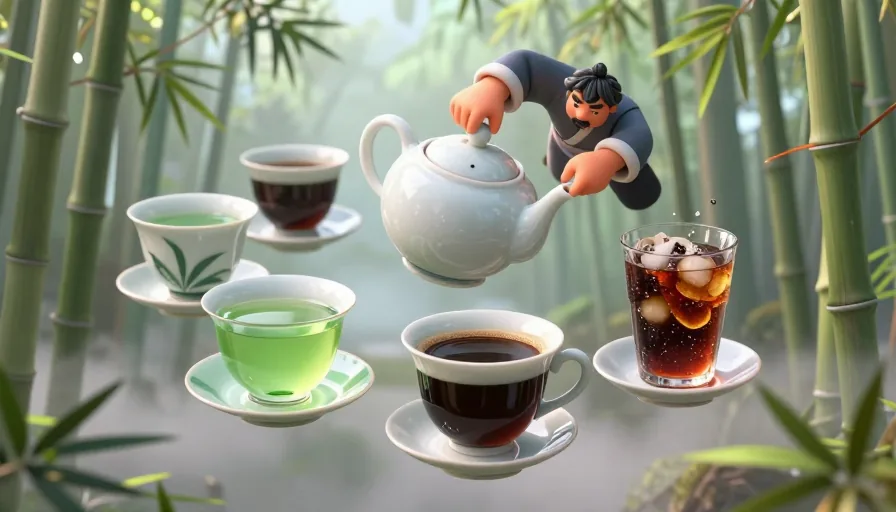
Mastering drinks in Mandarin is essential for navigating daily life and social interactions. This guide covers over 85 terms, from essential vocabulary for common drinks like tea, coffee, and juice to more specialized terms for alcoholic beverages. You'll also learn modifiers for temperature and additions, along with practical examples and a checklist to reinforce your learning.
Essential Daily Drinks: Tea, Coffee, and Juice
Tea (茶 - Chá)
Tea is a staple in Chinese culture. Here are some essential terms:
- Green tea: 绿茶 (Lǜ chá)
- Black tea: 红茶 (Hóng chá)
- Oolong tea: 乌龙茶 (Wū lóng chá)
- Jasmine tea: 茉莉花茶 (Mò lì huā chá)
- Milk tea: 奶茶 (Nǎi chá)
Example: 我喜欢喝绿茶。(Wǒ xǐhuān hē lǜ chá.) I like to drink green tea.
Coffee (咖啡 - Kāfēi)
Coffee has gained popularity in China. Here are some key terms:
- Coffee: 咖啡 (Kāfēi)
- Espresso: 意式浓咖啡 (Yì shì nóng kāfēi)
- Cappuccino: 卡布奇诺 (Kǎ bù qí nuò)
- Latte: 拉花 (Lā huā)
- Iced coffee: 冰咖啡 (Bīng kāfēi)
Example: 我喜欢喝咖啡。(Wǒ xǐhuān hē kāfēi.) I like to drink coffee.
Juice (果汁 - Guǒzhī)
Juice is a popular beverage, especially among children. Here are some common terms:
- Orange juice: 橙汁 (Chéng zhī)
- Apple juice: 苹果汁 (Píng guǒ zhī)
- Grape juice: 葡萄汁 (Pú táo zhī)
- Pineapple juice: 菠萝汁 (Bō luó zhī)
- Mixed fruit juice: 混合果汁 (Hùn hé guǒ zhī)
Example: 我喜欢喝橙汁。(Wǒ xǐhuān hē chéng zhī.) I like to drink orange juice.
Navigating the Bar: Alcoholic Beverages in Mandarin
Beer (啤酒 - Píjiǔ)
Beer is a common alcoholic beverage in China. Here are some terms:
- Beer: 啤酒 (Píjiǔ)
- Lager: 拉格啤酒 (Lā gé píjiǔ)
- Ale: 爱尔啤酒 (Ài ěr píjiǔ)
- Stout: 斯托特啤酒 (Sī tuō tè píjiǔ)
- Wheat beer: 小麦啤酒 (Xiǎo mài píjiǔ)
Example: 我喜欢喝啤酒。(Wǒ xǐhuān hē píjiǔ.) I like to drink beer.
Wine (葡萄酒 - Pútáojiǔ)
Wine is gaining popularity in China. Here are some terms:
- Wine: 葡萄酒 (Pútáojiǔ)
- Red wine: 红葡萄酒 (Hóng pútáojiǔ)
- White wine: 白葡萄酒 (Bái pútáojiǔ)
- Sparkling wine: 起泡葡萄酒 (Qǐ pào pútáojiǔ)
- Rosé wine: 玫瑰葡萄酒 (Méi guī pútáojiǔ)
Example: 我喜欢喝红葡萄酒。(Wǒ xǐhuān hē hóng pútáojiǔ.) I like to drink red wine.
Spirits (烈酒 - Lièjiǔ)
Spirits are strong alcoholic beverages. Here are some terms:
- Spirits: 烈酒 (Lièjiǔ)
- Vodka: 伏特加 (Fú tè jiā)
- Whiskey: 威士忌 (Wēi shì jí)
- Rum: 朗姆酒 (Lǎng mǔ jiǔ)
- Tequila: 龙舌兰酒 (Lóng shé lán jiǔ)
Example: 我喜欢喝威士忌。(Wǒ xǐhuān hē wēi shì jí.) I like to drink whiskey.

Learn Languages with YouTube
Watch videos in your target language, auto-capture words into flashcards, and track your progress — all in one place.
See How It Works →Beyond the Basics: Modifiers for Drinks (Hot, Cold, Sweet)
Temperature Modifiers
- Hot: 热 (Rè)
- Cold: 冷 (Lěng)
- Warm: 温 (Wēn)
- Iced: 冰 (Bīng)
- Room temperature: 室温 (Shì wēn)
Example: 我喜欢喝热咖啡。(Wǒ xǐhuān hē rè kāfēi.) I like to drink hot coffee.
Sweetness Modifiers
- Sweet: 甜 (Tián)
- Less sweet: 少甜 (Shǎo tián)
- Not sweet: 不甜 (Bù tián)
- Very sweet: 很甜 (Hěn tián)
- Sugar: 糖 (Táng)
Example: 我喜欢喝少甜的咖啡。(Wǒ xǐhuān hē shǎo tián de kāfēi.) I like to drink coffee that is less sweet.
Additions
- Milk: 牛奶 (Niú nǎi)
- Cream: 奶油 (Nǎi yóu)
- Sugar: 糖 (Táng)
- Lemon: 柠檬 (Níng méng)
- Ice: 冰 (Bīng)
Example: 我喜欢在咖啡里加牛奶。(Wǒ xǐhuān zài kāfēi lǐ jiā niú nǎi.) I like to add milk to my coffee.
Practical Examples and Checklist
Common Mistakes to Avoid
- Mistake 1: Confusing 热 (Rè) and 冷 (Lěng). Remember that 热 means hot and 冷 means cold.
- Mistake 2: Using the wrong measure word for drinks. The measure word for drinks is 杯 (Bēi).
- Mistake 3: Mispronouncing 咖啡 (Kāfēi) as 咖啡 (Gāfēi).
Checklist for Learning Drinks in Mandarin
- Learn the basic terms for tea, coffee, juice, and soda.
- Practice using temperature and sweetness modifiers.
- Learn the terms for common additions like milk and sugar.
- Practice ordering drinks in a café or restaurant.
- Learn the terms for alcoholic beverages.
- Practice using the new vocabulary in sentences.
Mini Drill: Ordering a Drink
Imagine you are in a café. Practice ordering a drink using the vocabulary you've learned.
Example Dialogue:
- You: 我要一杯热咖啡,少甜,加牛奶。(Wǒ yào yī bēi rè kāfēi, shǎo tián, jiā niú nǎi.)
- Server: 好的,请稍等。(Hǎo de, qǐng shāo děng.)
Additional Resources
- Apps: Use language learning apps like Metheus.app to practice pronunciation and vocabulary.
- Flashcards: Create flashcards for the new vocabulary terms.
- Practice: Engage in conversations with native speakers to reinforce your learning.
By mastering these terms and practicing regularly, you'll be able to confidently order and discuss drinks in Mandarin. Enjoy your language learning journey!
FAQ
How do I ask for a drink without sugar in Mandarin?
To ask for a drink without sugar, you can say '不加糖' (Bù jiā táng). For example, '我要一杯不加糖的咖啡' (Wǒ yào yī bēi bù jiā táng de kāfēi) means 'I want a coffee without sugar.'
What is the difference between 热 (Rè) and 冷 (Lěng)?
热 (Rè) means hot, while 冷 (Lěng) means cold. These terms are commonly used to describe the temperature of drinks. For example, '热咖啡' (Rè kāfēi) means hot coffee, and '冷水' (Lěng shuǐ) means cold water.
How do I order a drink with milk in Mandarin?
To order a drink with milk, you can say '加牛奶' (Jiā niú nǎi). For example, '我要一杯加牛奶的咖啡' (Wǒ yào yī bēi jiā niú nǎi de kāfēi) means 'I want a coffee with milk.'
Related phrases
Start with Metheus
Watch videos in your target language, auto-capture words into flashcards, and track your progress — all in one place.
Get Started →

