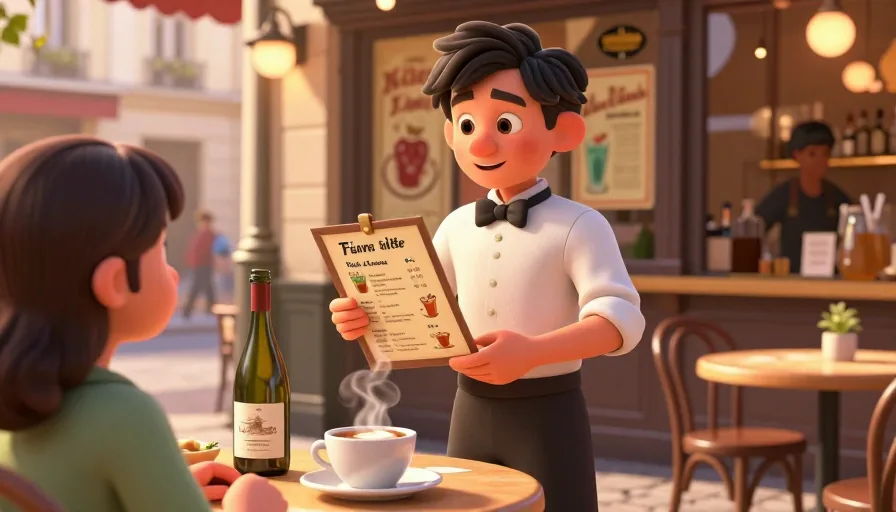
Understanding the drinks menu in French is essential for anyone looking to navigate French-speaking restaurants with confidence. This guide will provide you with direct translations, contextual usage, essential vocabulary, and cultural insights to help you order drinks like a local.
The Direct Translation: What is 'Drinks Menu' in French?
The direct translation of 'drinks menu' in French is 'menu des boissons.' This phrase is straightforward and commonly used in French restaurants. However, understanding how to use it in context is crucial for effective communication.
Common Mistakes to Avoid
-
Avoid Literal Translations: While 'menu des boissons' is correct, using it in the wrong context can lead to confusion. For example, saying 'menu des boissons' when referring to a specific drink on the menu is incorrect.
-
Contextual Errors: Be mindful of the context. For instance, 'menu des boissons' is used to refer to the entire drinks section, not individual drinks.
Contextual Usage: How to Use 'Menu' and 'Drinks' in French Phrases
Understanding how to use 'menu' and 'drinks' in various phrases is key to effective communication. Here are some practical examples:
-
Menu avec des boissons: This phrase means 'menu with drinks' and is often used to describe a meal that includes both food and beverages.
-
Boissons au menu: This translates to 'drinks on the menu' and is used to refer to the availability of drinks on a menu.
-
Menu des boissons: As mentioned earlier, this is the direct translation of 'drinks menu.'
Practical Examples
-
At a Restaurant: When asking for the drinks menu, you can say, 'Pouvez-vous me donner le menu des boissons, s'il vous plaît?' (Can you give me the drinks menu, please?)
-
Ordering Drinks: When ordering a drink, you might say, 'Je voudrais un verre de vin rouge, s'il vous plaît.' (I would like a glass of red wine, please.)
Essential Vocabulary for Ordering Drinks in a French Restaurant
Knowing the right vocabulary can make your dining experience smoother. Here are some essential terms:
-
Boisson: Drink
-
Vin: Wine
-
Bière: Beer
-
Café: Coffee
-
Eau: Water
-
Jus: Juice
-
Cocktail: Cocktail
-
Thé: Tea
Mini Drill: Practice Ordering Drinks
-
Ask for the Drinks Menu: 'Pouvez-vous me donner le menu des boissons, s'il vous plaît?'
-
Order a Glass of Wine: 'Je voudrais un verre de vin rouge, s'il vous plaît.'
-
Ask for a Beer: 'Je voudrais une bière, s'il vous plaît.'
-
Order a Coffee: 'Je voudrais un café, s'il vous plaît.'
-
Ask for Water: 'Je voudrais de l'eau, s'il vous plaît.'

Learn Languages with YouTube
Watch videos in your target language, auto-capture words into flashcards, and track your progress — all in one place.
See How It Works →Cultural Nuances in Ordering/Serving Drinks in French Contexts
Understanding cultural nuances can enhance your dining experience. Here are some tips:
-
Politeness: Always use 's'il vous plaît' (please) and 'merci' (thank you) when ordering.
-
Tipping: In France, tipping is not mandatory but is appreciated. A small tip (around 5-10%) is customary.
-
Ordering for Others: If you are ordering for a group, it is polite to ask each person what they would like before ordering.
Checklist for Ordering Drinks in French
-
Learn the basic vocabulary for drinks.
-
Practice asking for the drinks menu.
-
Understand the cultural nuances of ordering drinks.
-
Be polite and use 's'il vous plaît' and 'merci' when ordering.
-
Consider tipping if the service was good.
Related Vocabulary: Types of Drinks and Menu Terms
Expanding your vocabulary beyond the basics can make your dining experience more enjoyable. Here are some additional terms:
-
Vin blanc: White wine
-
Vin rouge: Red wine
-
Vin rosé: Rosé wine
-
Champagne: Champagne
-
Soda: Soft drink
-
Lait: Milk
-
Jus d'orange: Orange juice
-
Café au lait: Coffee with milk
-
Expresso: Espresso
Practical Examples
-
Ordering a Soft Drink: 'Je voudrais un soda, s'il vous plaît.'
-
Asking for Milk: 'Je voudrais du lait, s'il vous plaît.'
-
Ordering Orange Juice: 'Je voudrais un jus d'orange, s'il vous plaît.'
-
Asking for Coffee with Milk: 'Je voudrais un café au lait, s'il vous plaît.'
-
Ordering an Espresso: 'Je voudrais un expresso, s'il vous plaît.'
Conclusion
Mastering the drinks menu in French involves understanding direct translations, contextual usage, essential vocabulary, and cultural nuances. By following this guide, you'll be well-equipped to order drinks like a local in any French-speaking restaurant.
FAQ
What is the direct translation of 'drinks menu' in French?
The direct translation of 'drinks menu' in French is 'menu des boissons.'
How do I ask for the drinks menu in a French restaurant?
You can ask for the drinks menu by saying, 'Pouvez-vous me donner le menu des boissons, s'il vous plaît?' which means 'Can you give me the drinks menu, please?'
What are some common mistakes to avoid when ordering drinks in French?
Common mistakes include using literal translations in the wrong context and not understanding the cultural nuances of ordering drinks. Always use polite phrases like 's'il vous plaît' and 'merci.'
Related phrases
Start with Metheus
Watch videos in your target language, auto-capture words into flashcards, and track your progress — all in one place.
Get Started →

