Easter in Spanish language is a rich and multifaceted topic that goes beyond a simple translation. Understanding the nuances between 'Pascua' and 'Semana Santa' can greatly enhance your language skills and cultural awareness. This guide will delve into the direct translations, historical roots, and practical usage of these terms.
What is the Spanish word for Easter?
The direct translation of 'Easter' in Spanish is 'Pascua.' However, it's important to note that 'Pascua' has a deeper historical and cultural significance. It originates from the Hebrew word 'Pesach,' which refers to the Jewish Passover. This connection highlights the religious and historical depth of the term.
Common Mistakes and Clarifications
-
Mistake: Using 'Pascua' only to refer to Easter Sunday.
- Clarification: 'Pascua' can refer to the entire Easter season, not just Easter Sunday.
-
Mistake: Assuming 'Pascua' is exclusively religious.
- Clarification: While 'Pascua' has religious connotations, it is also used in a general holiday context.
Pascua vs. Semana Santa: Understanding the Difference
'Pascua' and 'Semana Santa' are often used interchangeably, but they have distinct meanings and contexts.
Pascua
- Definition: Refers to the Easter season and the religious celebrations surrounding it.
- Usage: Often used in religious contexts and to describe the broader Easter period.
- Example: 'Celebramos la Pascua con una misa especial.' (We celebrate Easter with a special mass.)
Semana Santa
- Definition: Literally translates to 'Holy Week' and refers to the week leading up to Easter Sunday.
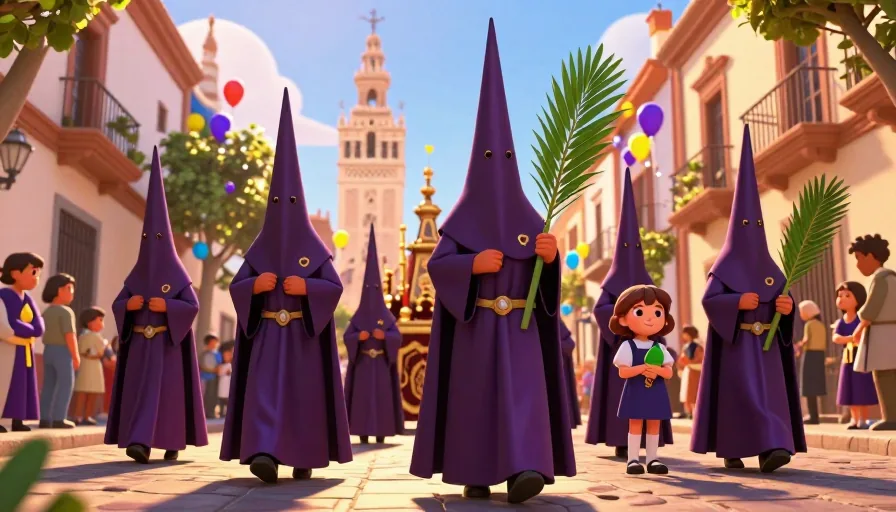
- Usage: Commonly used to describe the week-long celebrations and processions.
- Example: 'Durante la Semana Santa, participamos en varias procesiones.' (During Holy Week, we participate in several processions.)
The History Behind the Word 'Pascua'
The term 'Pascua' has a fascinating etymological root. It comes from the Hebrew word 'Pesach,' which means 'to pass over.' This refers to the biblical story of the Israelites being spared from the plague of the firstborn during the Exodus. The connection to the Jewish Passover highlights the shared religious heritage between Christianity and Judaism.
Linguistic Evolution
- Hebrew: 'Pesach' (Passover)
- Latin: 'Pascha' (adopted by early Christians)
- Spanish: 'Pascua' (evolved from Latin)

Learn Languages with YouTube
Watch videos in your target language, auto-capture words into flashcards, and track your progress — all in one place.
See How It Works →Essential Spanish Phrases for Easter Celebrations
Learning common Spanish phrases related to Easter can enrich your language skills and cultural understanding. Here are some essential phrases and vocabulary:
Greetings
- ¡Feliz Pascua!: Happy Easter!
- ¡Felices Pascuas!: Happy Easters! (used to wish someone a happy Easter season)
- ¡Feliz Semana Santa!: Happy Holy Week!
Vocabulary
- Procesión: Procession (a common event during Semana Santa)
- Monumento: Monument (often refers to the altars set up during Holy Week)
- Domingo de Resurrección: Resurrection Sunday (Easter Sunday)
- Jueves Santo: Holy Thursday
- Viernes Santo: Good Friday
Contextual Examples
- Religious Context: 'El Domingo de Resurrección es un día de gran alegría para los cristianos.' (Resurrection Sunday is a day of great joy for Christians.)
- General Holiday Context: 'Durante la Pascua, muchas familias se reúnen para celebrar.' (During Easter, many families gather to celebrate.)
How to Use the Correct Terminology in Different Contexts
Understanding when to use 'Pascua' vs. 'Semana Santa' can enhance your communication skills. Here's a comparative guide:
When to Use 'Pascua'
- Religious celebrations and services
- General holiday greetings
- Referring to the broader Easter season
When to Use 'Semana Santa'
- Describing the week-long celebrations and processions
- Referring to specific events during Holy Week
- Cultural and traditional activities
Mini Drill: Choose the Correct Term
- We attend a special mass during the Easter season.
- Pascua
- We participate in processions during the week leading up to Easter.
- Semana Santa
- We celebrate the resurrection of Jesus Christ.
- Pascua
- We observe the traditional events and activities during Holy Week.
- Semana Santa
Checklist for Mastering Easter Vocabulary in Spanish
- Learn the direct translations of 'Easter' and 'Holy Week' in Spanish.
- Understand the historical and cultural significance of 'Pascua.'
- Practice using 'Pascua' and 'Semana Santa' in different contexts.
- Memorize common greetings and phrases related to Easter.
- Participate in cultural activities and processions during Semana Santa.
By following this checklist, you can deepen your understanding of Easter in the Spanish language and enrich your cultural experience.
FAQ
Is 'Pascua' only used in religious contexts?
No, 'Pascua' can be used in both religious and general holiday contexts. It refers to the Easter season and the celebrations surrounding it. For example, you can say '¡Feliz Pascua!' to wish someone a happy Easter, regardless of the religious context.
What is the difference between 'Pascua' and 'Semana Santa'?
'Pascua' refers to the Easter season and the religious celebrations, while 'Semana Santa' specifically refers to the week leading up to Easter Sunday. 'Semana Santa' is often associated with processions and cultural events.
Can 'Pascua' be used to refer to the Jewish Passover?
While 'Pascua' has its roots in the Hebrew word 'Pesach,' which refers to the Jewish Passover, in modern Spanish, 'Pascua' is primarily used to refer to the Christian Easter. The Jewish Passover is typically referred to as 'Pésaj' in Spanish.
Related phrases
Start with Metheus
Watch videos in your target language, auto-capture words into flashcards, and track your progress — all in one place.
Get Started →

