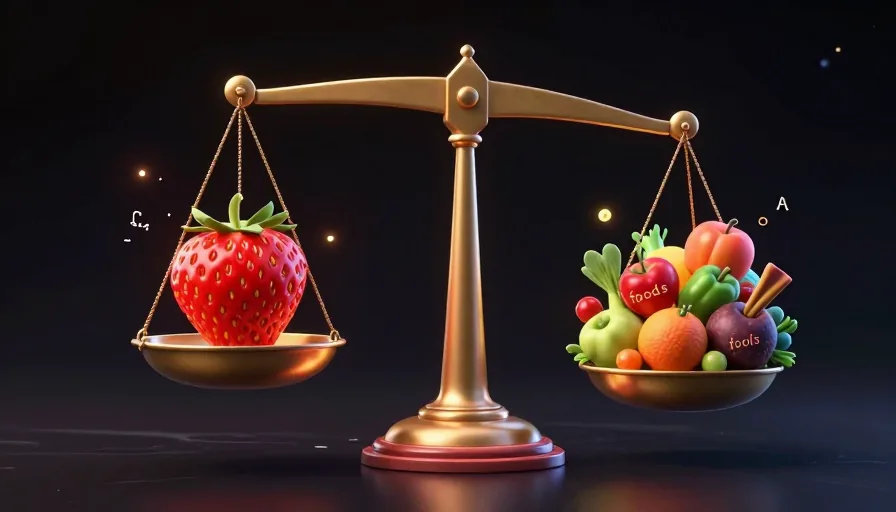
English learners often struggle with the distinction between countable and uncountable nouns, particularly when it comes to the word 'food' and its plural form, 'foods'. This guide will help you understand when to use 'food' and when to use 'foods' correctly.
Understanding Countable vs. Uncountable Nouns in English
Before diving into the specifics of 'food' and 'foods', it's essential to grasp the basic difference between countable and uncountable nouns.
- Countable nouns are things that can be counted. They have a plural form and can be used with numbers. Examples include 'apple', 'book', and 'car'.
- Uncountable nouns are things that cannot be counted individually. They usually do not have a plural form and are not used with numbers. Examples include 'milk', 'rice', and 'information'.
When to Use 'Food' (Uncountable)
In many contexts, 'food' is used as an uncountable noun. This means you cannot count individual units of 'food'. Instead, you refer to it in a general sense.
Examples of 'Food' as Uncountable
- I love Italian food.
- Food is essential for survival.
- The restaurant serves a variety of food.
Common Mistakes
A common mistake is to use 'foods' when referring to food in a general sense. For example, saying 'I love Italian foods' is incorrect. The correct sentence is 'I love Italian food'.
When to Use 'Foods' (Plural)
The plural form 'foods' is used when referring to different types or kinds of food. This is less common but still important to understand.
Examples of 'Foods' as Plural
- The festival features a variety of international foods.
- She tried many different foods during her trip to Asia.
- The menu includes a wide range of foods from around the world.
Checklist for Using 'Foods'
- Use 'foods' when talking about different types or kinds of food.
- Ensure that the context clearly indicates a variety or types.
- Avoid using 'foods' when referring to food in a general sense.

Learn Languages with YouTube
Watch videos in your target language, auto-capture words into flashcards, and track your progress — all in one place.
See How It Works →Quick Reference: Food vs. Foods
| Context | Use 'Food' | Use 'Foods' |
|---|---|---|
| General reference to food | ✓ | |
| Specific types or kinds of food | ✓ |
Practical Examples and Mini Drills
Example Sentences
- Food is a basic human need. (Correct)
- Foods are essential for a balanced diet. (Incorrect)
- The supermarket has a wide selection of foods. (Correct)
- I enjoy eating food. (Correct)
- The chef prepared various foods for the banquet. (Correct)
Mini Drill
Fill in the blanks with either 'food' or 'foods':
- She loves to cook different kinds of
- Food is a universal language.
- The market offers a variety of
- Food is fuel for the body.
- The restaurant serves a wide range of
Answers
- foods
- food
- foods
- food
- foods
Common Learner Errors Related to This Concept
- Using 'foods' when referring to food in a general sense (e.g., 'I love foods' instead of 'I love food').
- Confusing 'food' with countable nouns (e.g., 'There are many food in the kitchen' instead of 'There is a lot of food in the kitchen').
Conclusion
Understanding the distinction between 'food' and 'foods' is crucial for English learners. By following the guidelines and examples provided in this guide, you can improve your grammar and communicate more effectively. Practice regularly and pay attention to context to master this concept.
FAQ
Why is 'food' usually uncountable?
'Food' is usually uncountable because it refers to a general concept or substance that cannot be counted individually. It is used to talk about food in a broad sense, such as 'I love food' or 'Food is essential for survival'.
When should I use 'foods' instead of 'food'?
Use 'foods' when referring to different types or kinds of food. For example, 'The festival features a variety of international foods' or 'She tried many different foods during her trip to Asia'. The context should clearly indicate a variety or types of food.
Is it correct to say 'I love Italian foods'?
No, it is not correct. 'Food' is uncountable in this context, so the correct sentence is 'I love Italian food'. The plural form 'foods' is not appropriate when referring to food in a general sense.
Related phrases
Start with Metheus
Watch videos in your target language, auto-capture words into flashcards, and track your progress — all in one place.
Get Started →

