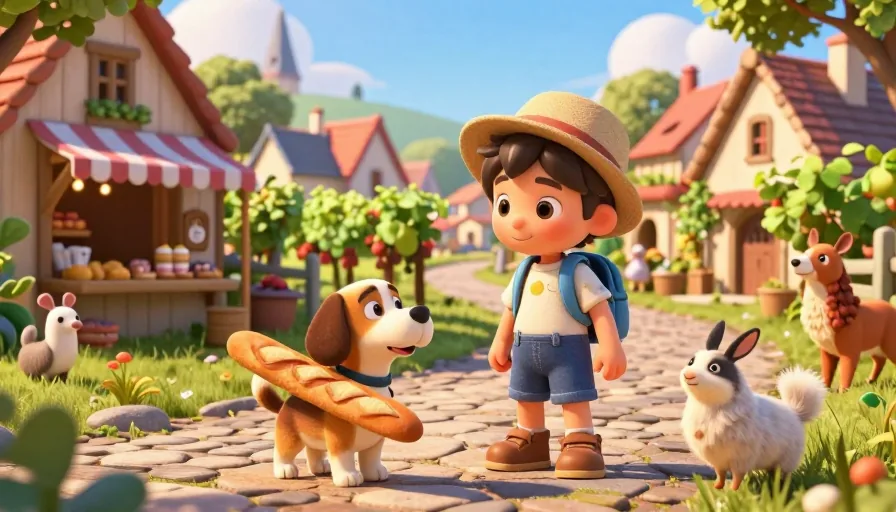
Learning the names of animals in French is a fundamental step in expanding your vocabulary and understanding the language more deeply. This guide will help you master the essential vocabulary for animals in French, covering domestic, wild, and farm animals, along with grammar rules, adjectives, and practical phrases. By the end, you'll be able to discuss animals in various contexts with confidence.
Essential French Vocabulary for Animals: A Beginner's Guide
Before diving into specific categories, let's start with some basic vocabulary. Here are some common animals in French along with their English translations:
- Le chat (the cat)
- Le chien (the dog)
- Le cheval (the horse)
- La vache (the cow)
- Le lion (the lion)
- L'éléphant (the elephant)
Interactive Flashcards
To help you memorize these words, use interactive flashcards. Write the French word on one side and the English translation on the other. Practice daily to reinforce your memory.
Domestic Animals: Learning Words for Pets and Farm Animals
Pets
Pets are a common topic of conversation. Here are some essential words for pets in French:
- Le chat (the cat)
- Le chien (the dog)
- Le poisson rouge (the goldfish)
- Le hamster (the hamster)
- Le lapin (the rabbit)
Farm Animals
Farm animals are also important, especially if you plan to visit rural areas in France. Here are some key terms:
- La vache (the cow)
- Le cochon (the pig)
- La poule (the chicken)
- Le mouton (the sheep)
- Le cheval (the horse)
Mini Drill: Match the Animal to Its Sound
Match the animal to the sound it makes in French:
- Le chat
- Le chien
- La vache
- Le cochon
- La poule
- Miaule
- Aboie
- Meugle
- Grogne
- Caquette
Wild Animals: Discovering Vocabulary for the Natural World
Wild animals are fascinating and often discussed in French media and literature. Here are some common wild animals in French:
- Le lion (the lion)
- L'éléphant (the elephant)
- Le tigre (the tiger)
- Le serpent (the snake)
- L'ours (the bear)
Contextual Sentences
Practice using these words in sentences to understand their context better:
- Le lion est le roi de la jungle. (The lion is the king of the jungle.)
- L'éléphant est connu pour sa mémoire exceptionnelle. (The elephant is known for its exceptional memory.)
- Le tigre est un animal dangereux. (The tiger is a dangerous animal.)
- Le serpent est souvent craint par les humains. (The snake is often feared by humans.)
- L'ours hiberne pendant l'hiver. (The bear hibernates during the winter.)

Learn Languages with YouTube
Watch videos in your target language, auto-capture words into flashcards, and track your progress — all in one place.
See How It Works →Gender and Pluralization Rules for Common Animal Nouns in French
Understanding gender and pluralization is crucial for mastering animal vocabulary in French. Here are some key rules:
- Most animal nouns ending in -e are feminine (e.g., la vache, la poule).
- Most animal nouns ending in -on or -in are masculine (e.g., le lion, le cochon).
- To pluralize, add -s to the singular form (e.g., les chats, les chiens).
Checklist for Gender and Pluralization
- Identify the gender of each animal noun.
- Practice pluralizing each noun.
- Use context sentences to reinforce understanding.
Common Adjective Usage Related to Animals
Adjectives help describe animals more vividly. Here are some common adjectives used with animals in French:
- Grand (big)
- Petit (small)
- Mignon (cute)
- Rapide (fast)
- Lent (slow)
Practical Phrases
Use these adjectives in practical phrases to describe animals:
- Le chat est petit et mignon. (The cat is small and cute.)
- Le lion est grand et rapide. (The lion is big and fast.)
- Le serpent est lent et dangereux. (The snake is slow and dangerous.)
Describing Animals: Essential Adjectives and Phrases
Cultural Context: How Animals Are Discussed in French Media or Daily Life
In French media and daily life, animals are often discussed in various contexts. For example, in children's stories, animals are often personified and given human-like qualities. In news reports, animals might be discussed in the context of conservation efforts or wildlife documentaries.
Practical Phrases for Describing Animals in Context
- Dans la ferme, il y a beaucoup de vaches et de cochons. (On the farm, there are many cows and pigs.)
- Le lion est le roi de la jungle dans cette histoire. (The lion is the king of the jungle in this story.)
- Les éléphants sont en danger à cause de la chasse illégale. (Elephants are in danger because of illegal hunting.)
Common Mistakes to Avoid
- Mistake: Using the wrong gender for an animal noun.
- Correct: Le chat (masculine) vs. La chatte (feminine)
- Mistake: Forgetting to pluralize nouns correctly.
- Correct: Les chats (plural) vs. Le chat (singular)
- Mistake: Misusing adjectives in context.
- Correct: Le chien est petit et mignon. (The dog is small and cute.)
Conclusion
Mastering animal vocabulary in French involves learning core words, understanding grammar rules, and practicing with contextual sentences. By following this guide, you'll be well on your way to discussing animals in French with confidence. Happy learning!
FAQ
How do I remember the gender of French animal nouns?
To remember the gender of French animal nouns, focus on the ending of the word. Most nouns ending in **-e** are feminine, while those ending in **-on** or **-in** are masculine. Practice with flashcards and contextual sentences to reinforce your memory.
What are some common mistakes to avoid when learning animal vocabulary in French?
Common mistakes include using the wrong gender for animal nouns, forgetting to pluralize nouns correctly, and misusing adjectives in context. Practice regularly and use contextual sentences to avoid these errors.
How can I practice using animal vocabulary in French?
Practice using animal vocabulary by creating flashcards, using contextual sentences, and engaging in conversations about animals. Listen to French media and stories to hear how animals are discussed in different contexts.
Related phrases
Start with Metheus
Watch videos in your target language, auto-capture words into flashcards, and track your progress — all in one place.
Get Started →

