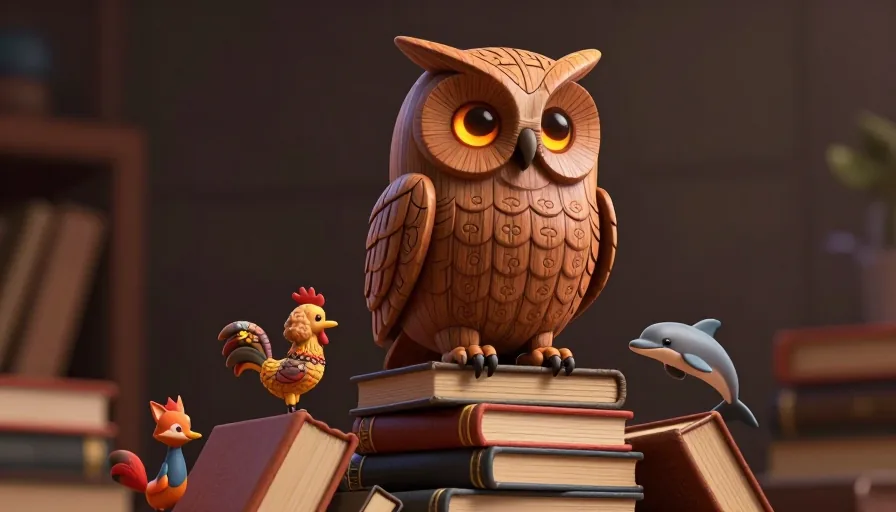
Learning the names of French language animals is a fun and practical way to expand your vocabulary. Whether you're a beginner or looking to refine your skills, understanding animal names in French can enhance your conversational abilities and cultural awareness. This guide provides a comprehensive list of animal vocabulary, categorized by type, along with pronunciation tips and practical usage examples.
Common Pets in French
Pets are a common topic in everyday conversation. Knowing the names of common pets in French can help you discuss your furry friends with locals. Here are some essential vocabulary items:
- Chat (shah) - Cat
- Chien (shen) - Dog
- Poisson (pwah-son) - Fish
- Oiseau (wah-zoh) - Bird
- Hamster (ahm-stair) - Hamster
- Lapin (lah-pahn) - Rabbit
Pronunciation Tip: Pay attention to the nasal sounds in French, such as the 'n' in 'chat' and 'chien.'
Example:
J'ai un chat et un chien.
I have a cat and a dog.
Mini Drill:
Try describing your pet in French. Use the sentence structure J'ai un/une [animal] (I have a [animal]).
Farm Animals and Barnyard Vocabulary
Farm animals are another important category. Whether you're visiting a farm or discussing agriculture, knowing these terms is essential.
- Vache (vash) - Cow
- Poulet (poo-lay) - Chicken
- Porc (pork) - Pig
- Cheval (shuh-vahl) - Horse
- Mouton (moo-ton) - Sheep
- Chèvre (shuh-vruh) - Goat
Pronunciation Tip: The 'ch' in 'cheval' and 'chèvre' is pronounced like 'sh.'
Example:
La ferme a beaucoup de vaches et de poulets.
The farm has many cows and chickens.
Mini Drill:
Practice naming farm animals in French. Use the sentence structure La ferme a [nombre] [animal] (The farm has [number] [animal]).
Wild Animals and Zoo Animals in French
Wild animals and zoo animals are fascinating topics for conversation. Here are some key terms:
- Lion (lee-ohn) - Lion
- Tigre (tee-gruh) - Tiger
- Éléphant (ay-leh-fahn) - Elephant
- Girafe (zhee-rahf) - Giraffe
- Zèbre (zeb-ruh) - Zebra
- Kangourou (kang-goo-roo) - Kangaroo
Pronunciation Tip: The 'ph' in 'éléphant' is silent, so it's pronounced 'ay-leh-fahn.'
Example:
Le zoo a un lion et une girafe.
The zoo has a lion and a giraffe.
Mini Drill:
Describe a trip to the zoo in French. Use the sentence structure Le zoo a [animal] (The zoo has [animal]).

Learn Languages with YouTube
Watch videos in your target language, auto-capture words into flashcards, and track your progress — all in one place.
See How It Works →Birds and Flying Creatures
Birds and other flying creatures are a delightful part of nature. Here are some common terms:
- Aigle (ay-gluh) - Eagle
- Colibri (koh-lee-bree) - Hummingbird
- Mouche (moosh) - Fly
- Papillon (pah-pee-yohn) - Butterfly
- Cigale (see-gahl) - Cicada
- Libellule (lee-bell-ool) - Dragonfly
Pronunciation Tip: The 'll' in 'libellule' is pronounced like 'y.'
Example:
J'ai vu un aigle et un colibri.
I saw an eagle and a hummingbird.
Mini Drill:
Describe a bird-watching experience in French. Use the sentence structure J'ai vu [animal] (I saw [animal]).
Marine Animals and Aquatic Life
Marine animals and aquatic life are essential vocabulary for discussing the ocean and its inhabitants.
- Baleine (bah-layn) - Whale
- Requin (ruh-keen) - Shark
- Poisson (pwah-son) - Fish
- Crabe (krahb) - Crab
- Méduse (meh-dyooz) - Jellyfish
- Dauphin (doh-fahn) - Dolphin
Pronunciation Tip: The 'ph' in 'dauphin' is silent, so it's pronounced 'doh-fahn.'
Example:
L'océan est rempli de baleines et de requins.
The ocean is full of whales and sharks.
Mini Drill:
Describe an underwater adventure in French. Use the sentence structure L'océan est rempli de [animal] (The ocean is full of [animal]).
Checklist for Mastering French Animal Vocabulary
- Pets: Can you name at least 5 common pets in French?
- Farm Animals: Can you describe a farm scene using French animal vocabulary?
- Wild Animals: Can you name 5 wild animals and use them in a sentence?
- Birds: Can you describe a bird-watching experience in French?
- Marine Animals: Can you name 5 marine animals and use them in a sentence?
Common Mistakes to Avoid
- Mispronunciation: Pay attention to the pronunciation tips provided. Mispronouncing words can lead to misunderstandings.
- Overgeneralization: Don't assume that all animal names follow the same pattern. For example, 'chat' and 'chien' are exceptions to the general rule of gender in French.
- Ignoring Context: Practice using animal vocabulary in context. Simply memorizing lists is not enough.
Practical Examples and Usage Scenarios
- At the Pet Store: Je cherche un poisson pour mon aquarium. I am looking for a fish for my aquarium.
- On a Farm Visit: La ferme a beaucoup de vaches et de poulets. The farm has many cows and chickens.
- At the Zoo: Le zoo a un lion et une girafe. The zoo has a lion and a giraffe.
- Bird-Watching: J'ai vu un aigle et un colibri. I saw an eagle and a hummingbird.
- At the Aquarium: L'aquarium est rempli de poissons et de requins. The aquarium is full of fish and sharks.
Conclusion
Mastering French language animals vocabulary is a rewarding journey that enhances your language skills and cultural understanding. By practicing pronunciation, using context, and avoiding common mistakes, you can confidently discuss animals in French. Happy learning!
FAQ
How can I improve my pronunciation of French animal names?
Practice regularly using audio resources and pay attention to pronunciation tips. Repeat the words aloud and listen to native speakers to refine your pronunciation.
What are some common mistakes to avoid when learning French animal vocabulary?
Avoid mispronunciation, overgeneralization, and ignoring context. Make sure to practice using the vocabulary in real-life scenarios to reinforce your learning.
How can I use French animal vocabulary in everyday conversation?
Incorporate animal names into your daily conversations by describing your pets, discussing farm visits, or talking about nature documentaries. This will help you practice and remember the vocabulary more effectively.
Related phrases
Start with Metheus
Watch videos in your target language, auto-capture words into flashcards, and track your progress — all in one place.
Get Started →

