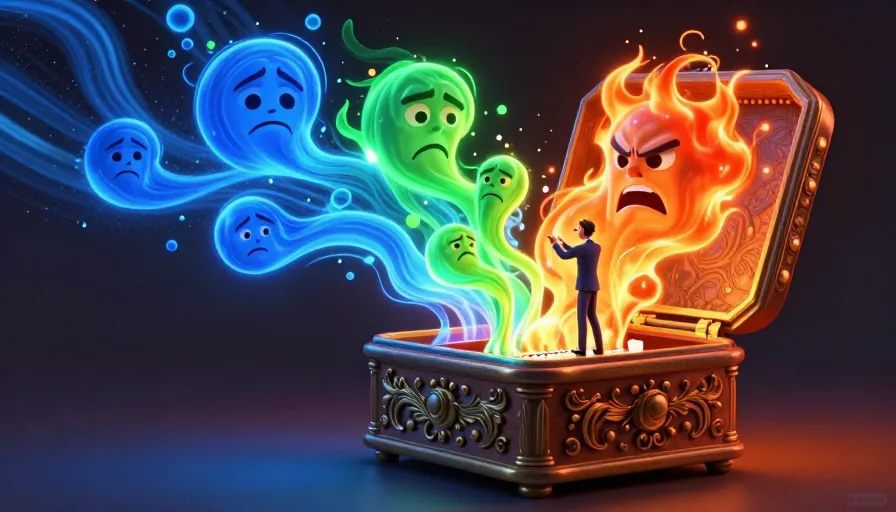
Mastering French emotions involves more than just memorizing vocabulary; it requires understanding the nuances of grammatical structures and idiomatic expressions. This guide will help you express your feelings naturally and fluently in French, moving beyond basic vocabulary to achieve conversational mastery.
Mastering the Core Structures: Être vs. Se Sentir
Understanding the difference between être and se sentir is crucial for expressing emotions accurately. Être is used for permanent or long-term states, while se sentir is used for temporary or fleeting feelings.
Examples:
- Être: Je suis heureux. (I am happy.)
- Se sentir: Je me sens fatigué. (I feel tired.)
Mini Drill:
Translate the following sentences into French, choosing the correct verb:
- I am sad.
- I feel excited.
- She is angry.
- He feels nervous.
Building Your Emotional Vocabulary: Positive vs. Negative Expressions
Expanding your emotional vocabulary is essential for expressing a range of feelings. Here are some key words for positive and negative emotions:
Positive Emotions:
- Content (satisfied)
- Heureux (happy)
- Joyeux (joyful)
- Enthousiaste (enthusiastic)
Negative Emotions:
- Triste (sad)
- Fatigué (tired)
- Enervé (annoyed)
- Stressé (stressed)
Practical Example:
Imagine you're describing a great day to a friend:
- J'ai passé une journée formidable. J'étais content et joyeux. (I had a fantastic day. I was satisfied and joyful.)

Learn Languages with YouTube
Watch videos in your target language, auto-capture words into flashcards, and track your progress — all in one place.
See How It Works →Navigating Nuance: Idioms and Natural Conversational Flow
Idiomatic expressions add depth and naturalness to your conversations. Here are some common idioms related to emotions:
- Être sur un petit nuage (to be on cloud nine)
- Avoir le cafard (to have the blues)
- Être à cran (to be on edge)
- Avoir le cœur lourd (to have a heavy heart)
Practical Example:
Describe a situation where you felt extremely happy:
- Hier, j'étais sur un petit nuage parce que j'ai reçu une bonne nouvelle. (Yesterday, I was on cloud nine because I received good news.)
Grammar Deep Dive: Mastering Gender Agreement for French Emotions
Adjectives describing emotions must agree in gender and number with the noun they modify. This rule applies to both positive and negative emotions.
Examples:
- Une fille heureuse (a happy girl)
- Un garçon heureux (a happy boy)
- Des amis tristes (sad friends)
Checklist for Gender Agreement:
- Identify the noun being described.
- Determine if the noun is masculine, feminine, or plural.
- Adjust the adjective to match the noun's gender and number.
Practical Examples of Asking and Answering About Someone's Feelings
Opening up conversations about feelings requires a natural flow. Here are some practical examples:
Asking About Feelings:
- Comment te sens-tu aujourd'hui? (How are you feeling today?)
- Est-ce que tu es content(e)? (Are you happy?)
- Pourquoi es-tu triste? (Why are you sad?)
Answering About Feelings:
- Je me sens bien, merci. (I feel good, thank you.)
- Je suis un peu stressé(e). (I am a bit stressed.)
- Je suis très heureux(se) parce que... (I am very happy because...)
Conversational Flow Example:
Friend: Comment te sens-tu aujourd'hui? You: Je me sens un peu fatigué(e), mais ça va. Et toi? (I feel a bit tired, but I'm okay. And you?)
Conclusion
Mastering French emotions involves understanding core grammatical structures, expanding your vocabulary, and using idiomatic expressions naturally. By practicing these elements, you'll be able to express your feelings more fluently and engage in more meaningful conversations. Start incorporating these tips into your language learning routine today!
FAQ
What is the difference between 'être' and 'se sentir' when expressing emotions in French?
The verb 'être' is used for permanent or long-term emotional states, while 'se sentir' is used for temporary or fleeting feelings. For example, 'Je suis heureux' (I am happy) uses 'être' for a general state of happiness, whereas 'Je me sens fatigué' (I feel tired) uses 'se sentir' for a temporary feeling of tiredness.
How do I know which gender to use for emotion adjectives in French?
Emotion adjectives in French must agree in gender and number with the noun they modify. For example, 'une fille heureuse' (a happy girl) uses the feminine form of 'heureux,' while 'un garçon heureux' (a happy boy) uses the masculine form. Always match the adjective to the noun's gender and number.
What are some common idiomatic expressions for expressing emotions in French?
Some common idiomatic expressions include 'être sur un petit nuage' (to be on cloud nine), 'avoir le cafard' (to have the blues), 'être à cran' (to be on edge), and 'avoir le cœur lourd' (to have a heavy heart). These expressions add depth and naturalness to your conversations.
Related phrases
Start with Metheus
Watch videos in your target language, auto-capture words into flashcards, and track your progress — all in one place.
Get Started →

