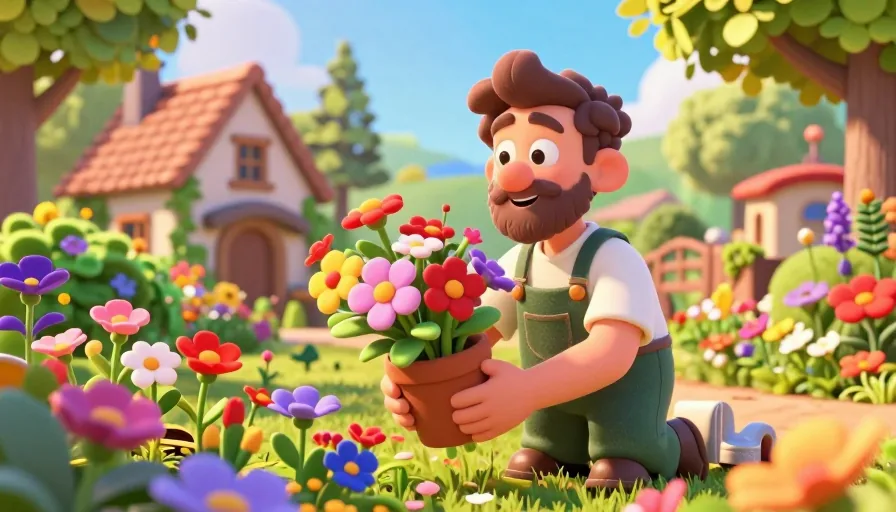
French flower words are not only essential for describing the beauty of nature but also for enhancing your French vocabulary. Whether you're planning a trip to a French garden or simply want to impress your French-speaking friends, this guide will help you master the essential French flower words with audio pronunciations, contextual vocabulary, and practical usage examples.
Essential French Flower Vocabulary: From Garden to Bouquet
Common French Flower Names
Here is a list of common French flower names that you should know:
- Rose (roze) - Rose
- Lavande (lah-vahnd) - Lavender
- Tulipe (too-leep) - Tulip
- Jacinthe (zhah-seen) - Hyacinth
- Pensée (pahn-seh) - Pansy
- Marguerite (mahr-geh-reet) - Daisy
- Orchidée (or-kee-day) - Orchid
- Lys (lee) - Lily
- Chèvrefeuille (shuh-vruh-fwee) - Honeysuckle
- Muguet (moo-gay) - Lily of the Valley
Seasonal French Flowers
Flowers bloom at different times of the year. Here are some seasonal French flowers:
- Printemps (Spring)
- Crocus (kroh-kus) - Crocus
- Narcisse (nar-sees) - Daffodil
- Jonc (zhohnk) - Rush
- Été (Summer)
- Coquelicot (koh-keh-lee-koh) - Cornflower
- Bleuet (bluh-ay) - Cornflower
- Pivoine (pee-vwah) - Peony
- Automne (Autumn)
- Chrysanthème (kree-zan-tem) - Chrysanthemum
- Aster (ah-stehr) - Aster
- Dahlie (dah-lee) - Dahlia
- Hiver (Winter)
- Poinsettia (pwah-neh-see-ah) - Poinsettia
- Hellebore (el-leh-bore) - Hellebore
- Mimosa (mee-moh-zah) - Mimosa
French Flower Words for Bouquets and Arrangements
When describing bouquets and arrangements, you might need these terms:
- Bouquet (boo-kay) - Bouquet
- Fleuriste (fluh-ree-st) - Florist
- Composition florale (kom-po-zee-syohn floh-ral) - Floral arrangement
- Couronne (koo-rohn) - Wreath
- Boutonnière (boo-toh-nyair) - Boutonniere
- Corsage (kor-sahzh) - Corsage
Pronunciation Guide: Mastering the Sounds of French Flowers
Pronunciation is key to sounding like a native speaker. Here are some tips and audio links to help you master the sounds of French flower words:
Tips for Pronunciation
- Listen and Repeat: Use the audio links provided to listen to the pronunciation and repeat after the speaker.
- Break it Down: Break down the words into syllables and practice each part.
- Record Yourself: Record yourself saying the words and compare it to the audio.
- Practice Daily: Consistency is key. Practice a few words each day to improve your pronunciation.
Flower Terminology: Understanding Perennials vs. Annuals
Understanding the difference between perennials and annuals is crucial for gardeners and language learners alike.
Perennials vs. Annuals
- Perennials: These are plants that live for more than two years. Examples include:
- Lavande (Lavender)
- Rose (Rose)
- Orchidée (Orchid)
- Annuals: These are plants that complete their life cycle in one growing season. Examples include:
- Tulipe (Tulip)
- Pensée (Pansy)
- Jacinthe (Hyacinth)
Practical Usage: Describing Your Garden
Imagine you are describing your garden to a French-speaking friend. Here’s how you can use the vocabulary:
- Mon jardin est rempli de roses et de lavande. (My garden is filled with roses and lavender.)
- J'ai planté des tulipes et des jacinthes cette année. (I planted tulips and hyacinths this year.)
- Les pivoines sont mes fleurs préférées. (Peonies are my favorite flowers.)
Mini Drill: Describe Your Favorite Flower
Think about your favorite flower and describe it in French. Use the vocabulary you’ve learned and try to include the type of flower (perennial or annual) and where it grows best.

Learn Languages with YouTube
Watch videos in your target language, auto-capture words into flashcards, and track your progress — all in one place.
See How It Works →Practical Usage: Ordering Flowers in French
When ordering flowers in French, you might need to use specific vocabulary. Here’s a checklist to help you:
Checklist for Ordering Flowers
- Know the Names: Make sure you know the names of the flowers you want to order.
- Ask for Recommendations: Ask the florist for recommendations based on the occasion.
- Specify the Arrangement: Specify the type of arrangement you want (bouquet, wreath, etc.).
- Confirm the Price: Confirm the price and any additional costs (delivery, etc.).
- Practice the Conversation: Practice the conversation with a friend or use a language learning app.
Example Conversation
- Vous: Bonjour, je voudrais commander un bouquet de roses rouges. (Hello, I would like to order a bouquet of red roses.)
- Fleuriste: Bien sûr, pour quelle occasion? (Of course, for what occasion?)
- Vous: C'est pour l'anniversaire de ma mère. (It's for my mother's birthday.)
- Fleuriste: Parfait, nous avons des roses rouges magnifiques. Voulez-vous ajouter des fleurs supplémentaires? (Perfect, we have beautiful red roses. Would you like to add more flowers?)
- Vous: Oui, ajoutez quelques tulipes blanches, s'il vous plaît. (Yes, add some white tulips, please.)
- Fleuriste: Très bien, cela fera 50 euros. Voulez-vous une livraison? (Very well, that will be 50 euros. Would you like delivery?)
- Vous: Oui, s'il vous plaît. (Yes, please.)
Practical Usage: Talking About Flowers in Different Contexts
Flowers are not just for gardens and bouquets. Here are some other contexts where you might use French flower words:
Flowers in Literature and Art
- Les Fleurs du Mal by Charles Baudelaire is a famous collection of poems that features many flower references.
- Impression, Sunrise by Claude Monet features water lilies, which are known as nénuphars in French.
Flowers in French Culture
- La Fête des Mères (Mother's Day) is celebrated in France with flowers, especially muguet (lily of the valley).
- La Fête de la Musique (Music Day) often features floral decorations and arrangements.
Flowers in French Cuisine
- Lavande (Lavender) is used in French cuisine to flavor honey and other dishes.
- Rose (Rose) water is used in various desserts and beverages.
Practical Usage: French Flower Idioms
Learning idioms can help you sound more fluent. Here are some French flower idioms:
- Cueillir des fleurs (To pick flowers) - To take advantage of an opportunity.
- Être en fleur (To be in bloom) - To be in good health or in a good mood.
- Avoir la tête dans les fleurs (To have your head in the flowers) - To be daydreaming or not paying attention.
Mini Drill: Use an Idiom in a Sentence
Choose one of the idioms above and use it in a sentence. Try to create a context where the idiom makes sense.
Conclusion
Mastering French flower words can enhance your vocabulary and cultural understanding. With this comprehensive guide, you have the tools to describe flowers, order bouquets, and even discuss flowers in literature and art. Practice regularly and use the audio links to improve your pronunciation. Happy learning!
FAQ
How can I practice French flower words effectively?
To practice French flower words effectively, use the audio links provided to listen to the pronunciation and repeat after the speaker. Break down the words into syllables, record yourself, and practice daily. Additionally, try to use the words in sentences and describe your favorite flowers or garden in French.
What is the difference between perennials and annuals in French?
Perennials are plants that live for more than two years, while annuals complete their life cycle in one growing season. Examples of perennials include lavande (lavender) and rose (rose), while examples of annuals include tulipe (tulip) and pensée (pansy).
How do I order flowers in French?
To order flowers in French, know the names of the flowers you want, ask for recommendations based on the occasion, specify the type of arrangement, confirm the price, and practice the conversation. Use the checklist and example conversation provided to help you.
Related phrases
Start with Metheus
Watch videos in your target language, auto-capture words into flashcards, and track your progress — all in one place.
Get Started →

