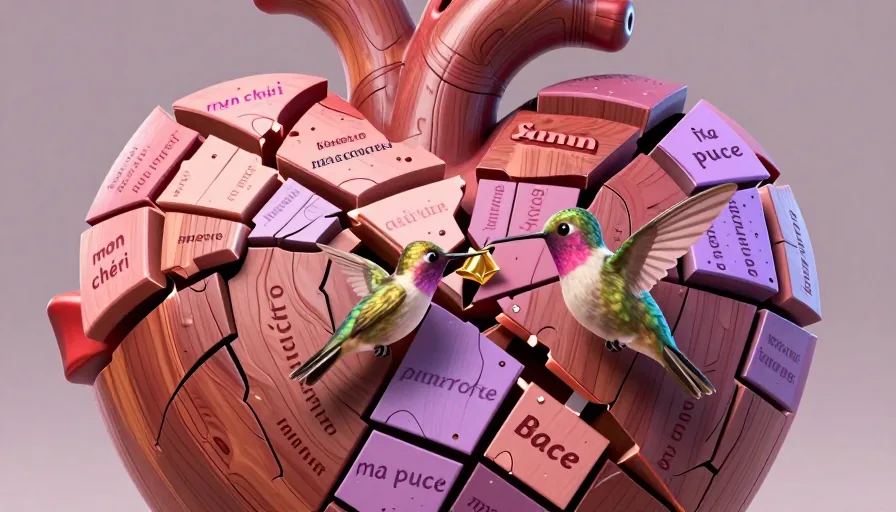
Endearment in French is a beautiful way to express affection, love, and closeness. Whether you're looking to impress a romantic partner, connect with family, or build stronger friendships, understanding and using French endearments can significantly enhance your communication. This guide will walk you through the different types of endearments, their cultural context, and how to use them effectively.
The Sweetest Terms: Romantic Endearments
Romantic endearments in French are often the most expressive and intimate. Here are some of the most common terms and how to use them:
Mon Amour
Mon amour is a classic term of endearment that translates to 'my love.' It's a versatile phrase that can be used in various romantic contexts.
Example:
Je t'aime, mon amour. (I love you, my love.)
Ma Chérie / Mon Chéri
Ma chérie (for a woman) and mon chéri (for a man) mean 'my dear.' These terms are often used to express affection and tenderness.
Example:
Bonjour, ma chérie. Comment ça va? (Good morning, my dear. How are you?)
Mon Cœur
Mon cœur means 'my heart.' It's a deeply affectionate term that conveys a strong emotional connection.
Example:
Tu es mon cœur, et je t'aime pour toujours. (You are my heart, and I love you forever.)
Affectionate Nicknames for Family and Friends
Endearments aren't just for romantic relationships. French also has a rich vocabulary for expressing affection within families and friendships.
Mon Chou
Mon chou translates to 'my cabbage,' but it's used affectionately to mean 'my dear' or 'my sweetheart.' It's a term often used between friends and family members.
Example:
Salut, mon chou! Comment ça va? (Hi, my dear! How are you?)
Ma Puce
Ma puce means 'my flea,' but it's a term of endearment used to express affection, often between parents and children or close friends.
Example:
Bonne nuit, ma puce. (Good night, my dear.)
Mon Lapin
Mon lapin means 'my rabbit' and is a playful term of endearment often used between friends or in a romantic context.
Example:
À bientôt, mon lapin! (See you soon, my dear!)

Learn Languages with YouTube
Watch videos in your target language, auto-capture words into flashcards, and track your progress — all in one place.
See How It Works →Beyond the Basics: Understanding the Nuances of French Endearment
French endearments can convey different levels of intimacy and affection. Understanding these nuances can help you choose the right term for the right situation.
Level of Intimacy
Some endearments, like mon amour and mon cœur, are deeply intimate and are typically reserved for romantic partners. Others, like mon chou and ma puce, are more casual and can be used among friends and family.
Cultural Context
In French culture, endearments are often used in everyday conversations to express closeness and affection. They are not limited to romantic contexts and can be heard in various social settings, from family gatherings to friendly chats.
Pronunciation Guides
Pronunciation is key to sounding natural and authentic. Here are some pronunciation guides for the endearments mentioned:
- Mon amour: /mɔ̃.n‿a.muʁ/
- Ma chérie: /ma ʃe.ʁi/
- Mon cœur: /mɔ̃ kœʁ/
- Mon chou: /mɔ̃ ʃu/
- Ma puce: /ma pys/
- Mon lapin: /mɔ̃ la.pɛ̃/
For audio resources, you can visit Forvo or other language learning platforms that offer pronunciation guides.
Interactive Usage Examples
To help you understand the tone and context of each endearment, here are some interactive usage examples:
Romantic Scenario
Imagine you're on a romantic date with your partner. You might say:
Je t'aime, mon cœur. Tu es tout pour moi. (I love you, my heart. You are everything to me.)
Familial Scenario
When talking to a family member, you might use:
Bonjour, ma puce. Comment ça va? (Good morning, my dear. How are you?)
Friendly Scenario
With a close friend, you might say:
Salut, mon chou! Ça fait longtemps qu'on ne s'est pas vus. (Hi, my dear! It's been a while since we last saw each other.)
Evolution and Regional Variations
French endearments have evolved over time and can vary by region. For example, mon chou is more commonly used in France, while ma puce is popular in Quebec. Understanding these variations can help you connect more authentically with French speakers from different regions.
Modern Usage
In modern French, endearments are often used in a playful and casual manner. They are not just limited to romantic contexts and can be heard in various social settings.
Regional Variations
- France: Mon chou is commonly used.
- Quebec: Ma puce is more popular.
- Belgium: Mon lapin is frequently heard.
Practical Checklist for Using French Endearments
- Identify the Relationship: Determine the type of relationship (romantic, familial, friendly) to choose the appropriate endearment.
- Understand the Context: Consider the social setting and the level of intimacy to select the right term.
- Practice Pronunciation: Use audio resources to practice pronunciation and sound natural.
- Observe and Learn: Pay attention to how native speakers use endearments in different contexts.
- Be Authentic: Use endearments that feel genuine and comfortable to you.
Mini Drills for Practice
- Romantic Drill: Write a short dialogue using mon amour and mon cœur in a romantic context.
- Familial Drill: Create a conversation using mon chou and ma puce with a family member.
- Friendly Drill: Practice a friendly chat using mon lapin and mon chou with a friend.
Integration of Audio/Video Examples
For a more immersive learning experience, integrate audio and video examples. Websites like Forvo and YouTube offer pronunciation guides and real-life usage examples.
By mastering endearment in French, you'll not only enhance your language skills but also deepen your connections with French speakers. Whether you're expressing love, affection, or friendship, these terms will help you convey your emotions with authenticity and charm.
FAQ
Are French endearments only used in romantic contexts?
No, French endearments are used in various contexts, including familial and friendly settings. Terms like *mon chou* and *ma puce* are commonly used among friends and family members to express affection and closeness.
How do I know which endearment to use?
Choosing the right endearment depends on the type of relationship and the level of intimacy. Romantic endearments like *mon amour* and *mon cœur* are deeply intimate, while terms like *mon chou* and *ma puce* are more casual and can be used among friends and family.
Can I use endearments in professional settings?
It's generally best to avoid using endearments in professional settings, as they can be seen as too informal or inappropriate. Stick to more formal terms of address in professional contexts.
Related phrases
Start with Metheus
Watch videos in your target language, auto-capture words into flashcards, and track your progress — all in one place.
Get Started →

