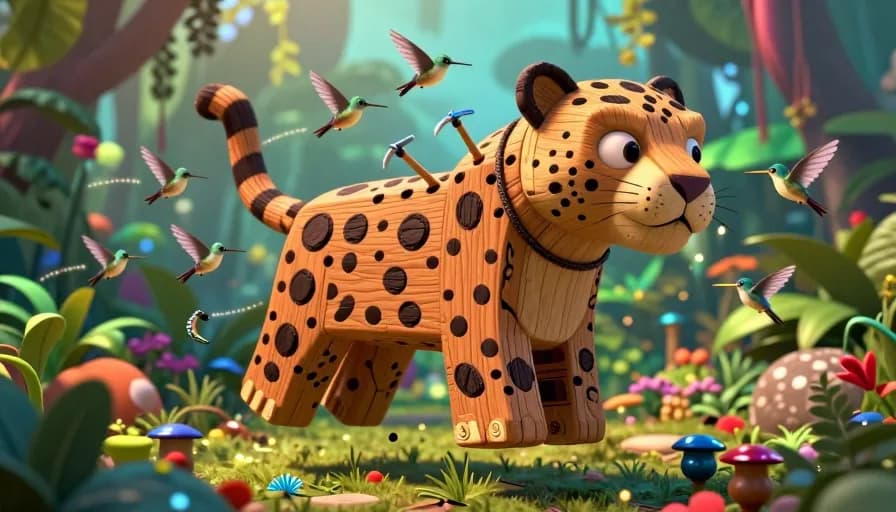
Spanish speakers joke with grammar itself: they tell you that a crazy person is like a goat (estar como una cabra), that boredom is like being under a tin can (estar como un quico), and that a scammer sells you cat for hare (dar gato por liebre). Idioms are the fastest shortcut from textbook Spanish to laughing-with-natives Spanish. This guide explains 25 of the funniest, with the image, the meaning, and the moment to use each one.
The Animal Kingdom of Spanish Idioms
Spanish humor loves animals, especially exaggerated comparisons:
- Estar como una cabra (to be like a goat) — to be crazy, in a hilarious way. Mi tía está como una cabra, habla con las plantas.
- Hacer el ganso (to do the goose) — to clown around, to act silly in public. Deja de hacer el ganso, estamos en una boda.
- Ser un gallina (to be a chicken) — to be cowardly. No seas gallina y tírate.
- Tener memoria de pez (to have a fish’s memory) — to forget everything instantly.
- Cada loco con su tema (every crazy person with their own topic) — said when someone insists on their own obsession mid-conversation.
The goat idiom wins the best image-to-meaning award: a goat wandering the mountainside, ignoring social conventions, is the mental picture of eccentricity.
Food Idioms: Eating as Metaphor for Everything
Food runs through Spanish idioms like olive oil through a paella:
- Ponerse las botas (to put on the boots) — to eat absolutely everything, with joy. En la boda me puse las botas.
- Estar hecho polvo (to be made of dust) — to be exhausted. Después del partido estoy hecho polvo.
- ¡Qué salero! (what salt!) — said of someone charming, loaded with grace. Salt = charm in Spanish culture.
- Ser un pan (to be a bread) — to be a sweetheart. Su novio es un pan.
- Dar la lata (to give the tin can) — to keep bothering someone insistently. Mi hermana me da la lata con su dieta.
- Tener buen sazón (to have good seasoning) — to be a good cook, or good at life.
Ponerse las botas is the perfect party idiom: a phrase about footwear turns into a compliment about appetite.
Idioms That Describe Annoyance with a Smile
Spaniards have dozens of ways to say ‘I’m fed up’ without ever sounding polite about it:
- Estar hasta las narices (to be up to one’s nose) — completely fed up. Estoy hasta las narices de trabajar los sábados.
- Estar hasta la coronilla (to be up to one’s crown) — the politer version, still funny.
- No tener dos dedos de frente (to not have two fingers of forehead) — to lack common sense.
- Tomar el pelo (to take the hair) — to pull someone’s leg. ¡Me estás tomando el pelo!
- Dar gato por liebre (to give cat for hare) — to cheat someone, to sell a fake as the real thing.
- Ser un cuento chino (to be a Chinese tale) — something unbelievable, a tall tale.
The images are the joke: your nose is the ceiling of patience, your forehead a measure of intelligence, and forgeries become swapped livestock.

Learn Languages with YouTube
Watch videos in your target language, auto-capture words into flashcards, and track your progress — all in one place.
Start Free →The Classics: Everyday Idioms You Cannot Avoid
Some idioms are so common that avoiding them means sounding like a robot:
- Me da igual (it gives me equal) — I don’t care either way.
- Ser pan comido (to be eaten bread) — to be a piece of cake. El examen fue pan comido.
- A palabras necias, oídos sordos (to foolish words, deaf ears) — don’t listen to nonsense.
- Más vale tarde que nunca — better late than never, the proverb Spain shares with the world.
- Estar en las nubes (to be in the clouds) — to be daydreaming.
- Llover sobre mojado (to rain on wet ground) — a problem piling onto problems.
- Echar una mano (to throw a hand) — to help out. ¿Me echas una mano con esto?
These cross every register from formal (más vale tarde que nunca) to utterly casual (me da igual), making them the safest idioms to deploy early.
Regional Gems: Know Where the Joke Lives
Some expressions are passports to specific territories:
- Mexico: ¿Qué pedo? (what fart?) — what’s up, plus its family: no pedo (no problem), echar el pedo (to party).
- Argentina: ¿Qué onda? and estar al pedo (to be doing nothing useful).
- Spain: estar como un quico (to be like a tin-can mascot) — to be incredibly bored.
- Colombia: dar papaya (to give papaya) — to leave yourself exposed to being scammed. No des papaya con el celular en la calle.
- Chile: ser bacán (to be great), estar pajareando (to be messing around).
- Peru: estar pal boleta (to be for the bill) — to be in bad shape, exhausted or broke.
Using the local idiom in the local country is the fastest way to make natives laugh with you instead of at you.
How to Use Idioms Without Sounding Like a Meme
Three rules keep your idiom usage natural:
- Never translate first. Learn the situation, not the English equivalent: estar hecho polvo belongs to tiredness, not to pollution.
- Start with the safe set. Pan comido, tomar el pelo, me da igual, echar una mano are welcome in any register and any accent.
- Watch the tone. Ser un gallina is playful teasing; estar hasta las narices is strong; dar gato por liebre accuses someone of cheating.
Idioms are the seasoning, not the meal: use them on top of solid, clear Spanish and they land every time.
The Verdict
The best comedy in Spanish is baked into its grammar: a goat for eccentricity, boots for gluttony, cat for hare for every scammer in the marketplace. Learn the image, the situation, and the register, and you will make natives laugh in any Spanish-speaking country.
Metheus turns idioms into memory: save each expression while hovering over subtitles, get the literal image next to the real meaning, and review your collection later until the timing becomes instinct.
FAQ
Why are Spanish idioms so hard to translate?
Because most are built on cultural references that have no English equivalent: estar como una cabra (to be like a goat, meaning crazy) only works in a culture where goats have a reputation. The humor is in the image, not the words.
What is the funniest Spanish idiom?
Learners consistently laugh hardest at ponerse las botas (literally to put on the boots, meaning to stuff yourself with food), estar hasta las narices (to be up to one’s nose, meaning fed up), and no tener dos dedos de frente (not to have two fingers of forehead, meaning to lack common sense).
Can I use Spanish idioms in any country?
Most are common across Spain and Latin America, but frequency varies. Expressions like tomar el pelo (to pull someone’s leg) work everywhere, while others like estar como un quico are Spain-only and regional expressions like dar papaya belong to Colombia. Note the origin before using them abroad.
How do I learn idioms without sounding weird?
Learn the image and the exact situation before the literal meaning. Each idiom carries a register: some are affectionate, some insulting, some just silly. If you use a strong one lightly, natives forgive you as a learner, but context is what makes the timing funny.
Do Spanish speakers actually use these idioms?
Yes, constantly. Daily conversation in any Spanish-speaking city is saturated with them: me da igual, dar la lata, estar hecho polvo appear in casual speech within minutes. You will rarely read them in news, but you will hear them everywhere else.
Related phrases
Language learning in 2026 isn't about finishing daily streaks. The fastest path to fluency combines three elements: comprehensible input from real media you enjoy, active vocabulary capture while consuming that content, and spaced repetition to lock words into long-term memory. Gamified apps build the habit. Immersion tools build the fluency. The most effective learners use both—in that order.
Start with Metheus
Watch videos in your target language, auto-capture words into flashcards, and track your progress — all in one place.
Get Started Free →