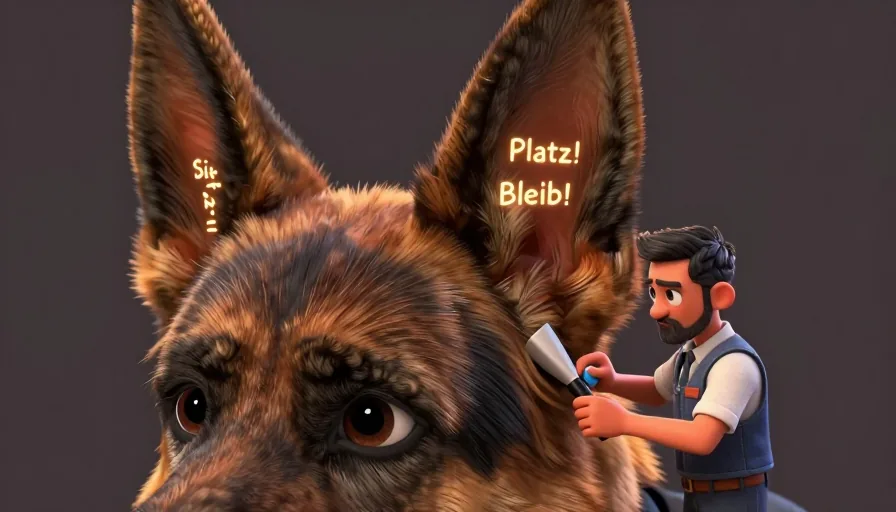
Effective communication is key to successful dog training, and learning German canine commands can enhance your bond with your furry friend. This guide will equip you with essential commands, pronunciation tips, and cultural insights to make your training sessions more effective and enjoyable.
The Basics: Essential German Dog Commands
Start with the fundamentals to build a strong foundation for your dog's understanding of German commands.
Sit (Sitz)
Pronunciation: /zits/
Command: Sitz!
Usage: Use this command to teach your dog to sit on command. It's useful in various situations, such as before meals, when greeting people, or to calm your dog down.
Example: Say "Sitz!" in a firm but gentle tone while holding a treat above your dog's nose. Slowly move your hand backward, encouraging your dog to sit. Reward with the treat and praise.
Stay (Bleib)
Pronunciation: /blayb/
Command: Bleib!
Usage: This command is crucial for teaching your dog to remain in a specific position until released.
Example: Ask your dog to sit, then say "Bleib!" while taking a step back. If your dog stays, reward with a treat and praise. Gradually increase the distance and distractions.
Come (Hier)
Pronunciation: /heer/
Command: Hier!
Usage: Use this command to call your dog to you, ensuring they return safely in various situations.
Example: With your dog on a leash, say "Hier!" in an enthusiastic tone and gently tug the leash. Reward with a treat and praise when your dog comes to you. Practice in different environments to generalize the command.
Down (Platz)
Pronunciation: /plats/
Command: Platz!
Usage: This command instructs your dog to lie down, which is helpful for calming and controlling behaviors.
Example: Hold a treat in your closed fist near your dog's nose. Slowly move your hand to the ground, encouraging your dog to follow with their nose. Slide your hand along the ground to get your dog to lie down. Say "Platz!" and reward with the treat and praise.
Heel (Fuß)
Pronunciation: /foos/
Command: Fuß!
Usage: Use this command to teach your dog to walk beside you without pulling on the leash.
Example: With your dog on a leash, say "Fuß!" and start walking. Keep the leash short and hold it close to your body. Reward your dog with treats and praise for walking beside you without pulling.

Learn Languages with YouTube
Watch videos in your target language, auto-capture words into flashcards, and track your progress — all in one place.
See How It Works →Advanced Commands for Specific Situations
Once your dog has mastered the basics, introduce more advanced commands to enhance communication and control.
Leave It (Lass es)
Pronunciation: /las es/
Command: Lass es!
Usage: This command teaches your dog to ignore distractions or dangerous items.
Example: Place a treat in both hands. Show your dog one closed fist with the treat inside and say "Lass es!" Ignore the behaviors your dog uses to get the treat. Once your dog stops trying, give them the treat from the other hand. Repeat until your dog moves away from the first fist when you say "Lass es!"
Drop It (Gib her)
Pronunciation: /gib her/
Command: Gib her!
Usage: Use this command to teach your dog to release items from their mouth, which is essential for safety and control.
Example: Give your dog a toy and say "Gib her!" while offering a treat. Most dogs will drop the toy to get the treat. Praise and reward your dog for dropping the toy.
Quiet (Ruhig)
Pronunciation: /roo-ik/
Command: Ruhig!
Usage: This command helps to control excessive barking and calm your dog down.
Example: When your dog starts barking, say "Ruhig!" in a calm but firm voice. Wait for your dog to stop barking, even if it's just a brief pause. Reward with a treat and praise. Gradually increase the duration of quiet behavior before rewarding.
Pronunciation Guide: Mastering German Dog Commands
Accurate pronunciation is crucial for effective communication with your dog. Use the following phonetic guide to master German canine commands.
| English Command | German Command | Pronunciation | Phonetic Spelling |
|---|---|---|---|
| Sit | Sitz | /zits/ | zits |
| Stay | Bleib | /blayb/ | blayb |
| Come | Hier | /heer/ | heir |
| Down | Platz | /plats/ | plats |
| Heel | Fuß | /foos/ | foos |
| Leave It | Lass es | /las es/ | las es |
| Drop It | Gib her | /gib her/ | gib her |
| Quiet | Ruhig | /roo-ik/ | roo-ik |
Cultural Context: Dog Training in German-Speaking Regions
Understanding the cultural context of dog training in German-speaking regions can provide valuable insights into effective communication and training methods.
In Germany, dog training is often focused on precision and consistency. German commands are typically short, clear, and direct, reflecting the cultural emphasis on efficiency and order. Positive reinforcement methods, such as treats and praise, are commonly used to encourage desired behaviors.
German dog trainers often emphasize the importance of socialization and early training to prevent behavioral issues. Puppies are typically introduced to various environments, people, and animals to help them grow into well-adjusted adult dogs.
Building a Positive Training Relationship
A strong, positive relationship with your dog is essential for effective training. Use the following tips to build a bond with your dog while teaching German canine commands.
Consistency is Key
Consistency in commands, rewards, and expectations helps your dog understand what is expected of them. Use the same commands and rewards consistently to avoid confusion.
Positive Reinforcement
Reward your dog with treats, praise, or playtime when they respond correctly to commands. Positive reinforcement encourages your dog to repeat desired behaviors.
Patience and Persistence
Training takes time and patience. Be persistent in your training efforts, and don't be discouraged if your dog doesn't master a command immediately. Keep practicing, and celebrate small improvements.
Gradual Progression
Gradually increase the difficulty and distractions in training sessions as your dog becomes more proficient. This helps your dog generalize commands to different situations and environments.
Mini Drill: Practice Makes Perfect
Create a mini drill to practice German canine commands with your dog. Choose a quiet, distraction-free environment and follow these steps:
- Start with the basic commands (Sit, Stay, Come, Down, Heel).
- Give each command clearly and firmly, using the correct pronunciation.
- Reward your dog with a treat and praise when they respond correctly.
- Gradually increase the difficulty by adding distractions or increasing the distance between you and your dog.
- Practice each command multiple times before moving on to the next one.
- End the session on a positive note, even if your dog hasn't mastered every command.
Checklist: Essential German Dog Commands
Use this checklist to track your dog's progress in learning German canine commands.
- Sitz (Sit)
- Bleib (Stay)
- Hier (Come)
- Platz (Down)
- Fuß (Heel)
- Lass es (Leave It)
- Gib her (Drop It)
- Ruhig (Quiet)
Conclusion
Learning German canine commands can significantly enhance your communication with your dog and strengthen your bond. By mastering essential commands, understanding pronunciation, and incorporating cultural context, you'll be well on your way to effective and enjoyable dog training sessions. Remember to be consistent, patient, and positive in your training efforts, and celebrate your dog's progress along the way.
FAQ
Why should I use German commands instead of English commands?
Using German commands can provide a unique and engaging way to communicate with your dog. It can also help you learn a new language while training your dog. Additionally, German commands are often short, clear, and direct, which can make them easier for dogs to understand and respond to.
How long does it take for a dog to learn German commands?
The time it takes for a dog to learn German commands varies depending on the dog's age, breed, and individual learning abilities. With consistent practice and positive reinforcement, most dogs can learn basic commands within a few weeks to a few months. Advanced commands may take longer to master.
What if my dog doesn't respond to German commands?
If your dog doesn't respond to German commands, it's essential to be patient and persistent in your training efforts. Ensure that you're using clear, consistent commands and rewards, and gradually increase the difficulty of training sessions. If your dog continues to struggle, consider consulting a professional dog trainer for personalized guidance and support.
Related phrases
Start with Metheus
Watch videos in your target language, auto-capture words into flashcards, and track your progress — all in one place.
Get Started →

