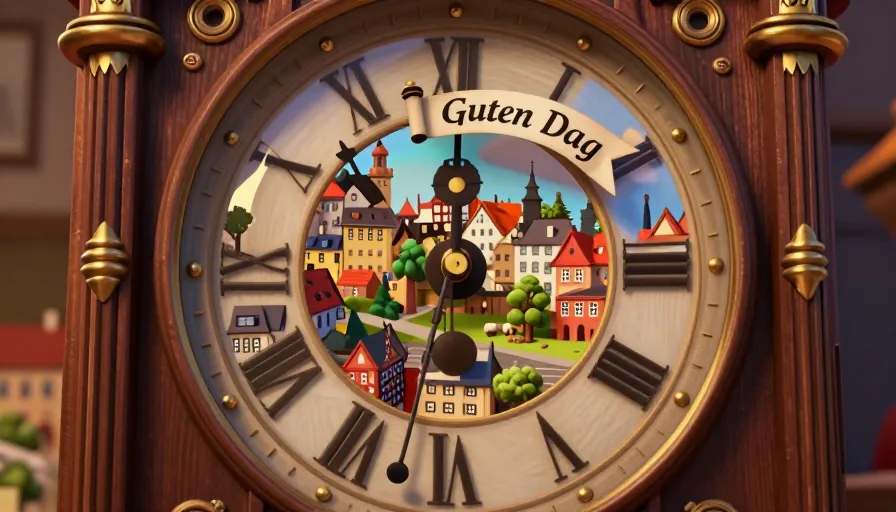
guten tagen: guía práctica y clara para dominar este tema en contexto real.
Mastering 'Guten Tag': The Ultimate Guide to Using This German Greeting Effectively
In German, 'Guten Tag' is more than just a greeting; it's a cultural cornerstone that opens doors to meaningful conversations. Whether you're a beginner or looking to refine your skills, understanding how and when to use 'Guten Tag' can significantly enhance your language learning journey. This guide will delve into the meaning and usage of 'Guten Tag' in different contexts, cultural nuances, and practical examples to help you master this essential phrase.
Understanding 'Guten Tag': More Than Just a Greeting
'Guten Tag' literally translates to 'good day' in English. It is a formal greeting used throughout the day, from morning until late afternoon. Unlike 'Hallo,' which is more casual and can be used at any time, 'Guten Tag' carries a sense of formality and respect. This greeting is commonly used in professional settings, such as offices, schools, and formal events. It is also appropriate when addressing someone you don't know well or someone in a position of authority.
Mini Drill: Formal vs. Informal Greetings
- Formal Greeting: 'Guten Tag, Herr Müller.' (Good day, Mr. Müller.)
- Informal Greeting: 'Hallo, Anna.' (Hello, Anna.)
When to Use 'Guten Tag': Contextual Guide
Morning Greetings
In the morning, 'Guten Tag' can be used interchangeably with 'Guten Morgen' (good morning). However, 'Guten Tag' is more versatile and can be used throughout the day. For example, if you arrive at work at 9 AM, you might say 'Guten Morgen' to your colleagues, but if you greet someone at 11 AM, 'Guten Tag' is more appropriate.
Afternoon Greetings
'Guten Tag' is also used in the afternoon. If you meet someone at 3 PM, 'Guten Tag' is the perfect greeting. It maintains a formal tone and is suitable for both professional and semi-formal settings.
Evening Greetings
After 6 PM, 'Guten Tag' is less common. Instead, you might use 'Guten Abend' (good evening) or 'Hallo' in more casual settings. However, in formal situations, 'Guten Tag' can still be used until late afternoon.
Checklist: When to Use 'Guten Tag'
- Morning (until 12 PM): Use 'Guten Tag' or 'Guten Morgen'
- Afternoon (until 6 PM): Use 'Guten Tag'
- Evening (after 6 PM): Use 'Guten Abend' or 'Hallo'
- Formal Settings: Always use 'Guten Tag'
- Informal Settings: Use 'Hallo' or 'Guten Tag' depending on the time of day
Cultural Nuances Behind the Greeting
Formality and Respect
Germans value formality and respect in their greetings. 'Guten Tag' is a way to show respect and acknowledge the other person's presence. It is essential to use the correct greeting based on the time of day and the context. For example, addressing someone with 'Guten Tag' in the evening might be seen as inappropriate or outdated.
Body Language and Tone
When using 'Guten Tag,' pay attention to your body language and tone. A friendly smile and a slight bow or nod can enhance the greeting. The tone should be polite and respectful, reflecting the formality of the phrase.
Related Phrases and Etiquette
- Guten Morgen: Good morning (used until around 12 PM)
- Guten Abend: Good evening (used after 6 PM)
- Hallo: Hello (casual greeting used at any time)
- Tschüss: Goodbye (casual farewell)
- Auf Wiedersehen: Goodbye (formal farewell)
Example Conversations
-
Formal Setting:
- You: Guten Tag, Herr Schmidt. Wie geht's? (Good day, Mr. Schmidt. How are you?)
- Herr Schmidt: Guten Tag. Mir geht's gut, danke. Und Ihnen? (Good day. I'm fine, thank you. And you?)
-
Informal Setting:
- You: Hallo, Anna. Wie geht's? (Hello, Anna. How are you?)
- Anna: Hallo. Mir geht's gut, danke. Und dir? (Hello. I'm fine, thank you. And you?)

Learn Languages with YouTube
Watch videos in your target language, auto-capture words into flashcards, and track your progress — all in one place.
See How It Works →Practical Examples and Scenarios
Starting a Conversation
When starting a conversation, 'Guten Tag' can be followed by a polite inquiry about the other person's well-being. For example:
- You: Guten Tag, Frau Müller. Wie geht's? (Good day, Mrs. Müller. How are you?)
- Frau Müller: Guten Tag. Mir geht's gut, danke. Und Ihnen? (Good day. I'm fine, thank you. And you?)
Formal Settings
In formal settings, such as business meetings or academic conferences, 'Guten Tag' is the appropriate greeting. It sets a professional tone and shows respect for the other person's position. For example:
- You: Guten Tag, Herr Professor. Danke, dass Sie Zeit für mich haben. (Good day, Professor. Thank you for taking the time to meet with me.)
- Herr Professor: Guten Tag. Es ist mir ein Vergnügen. (Good day. It is my pleasure.)
Checklist: Using 'Guten Tag' in Different Scenarios
- Business Meetings: Use 'Guten Tag' followed by a polite inquiry.
- Academic Settings: Use 'Guten Tag' to address professors or supervisors.
- Social Events: Use 'Guten Tag' in formal social settings, such as weddings or formal dinners.
- Everyday Interactions: Use 'Guten Tag' in everyday interactions, such as greeting neighbors or colleagues.
How to Practice Using 'Guten Tag' with Native Speakers
Practicing with native speakers is the best way to master 'Guten Tag' and other German greetings. Here are some tips to help you get started:
Find a Language Exchange Partner
Websites like Tandem and HelloTalk connect you with native German speakers who want to learn your language. You can practice 'Guten Tag' and other greetings in a real-life context.
Join Language Learning Communities
Join online communities, such as Reddit's r/German or language learning forums, where you can practice with native speakers and get feedback on your pronunciation and usage.
Use Language Learning Apps
Apps like Metheus.app offer interactive lessons and practice exercises to help you master 'Guten Tag' and other German greetings. You can also connect with native speakers for one-on-one practice sessions.
Mini Drill: Practice Conversations
-
Greeting a Colleague:
- You: Guten Tag, Herr Schmidt. Wie geht's? (Good day, Mr. Schmidt. How are you?)
- Herr Schmidt: Guten Tag. Mir geht's gut, danke. Und Ihnen? (Good day. I'm fine, thank you. And you?)
-
Greeting a Professor:
- You: Guten Tag, Herr Professor. Danke, dass Sie Zeit für mich haben. (Good day, Professor. Thank you for taking the time to meet with me.)
- Herr Professor: Guten Tag. Es ist mir ein Vergnügen. (Good day. It is my pleasure.)
By practicing with native speakers and using these tips, you can master 'Guten Tag' and other German greetings, enhancing your language learning journey and cultural understanding.
Conclusion
Mastering 'Guten Tag' is more than just learning a phrase; it's about understanding the cultural nuances and context in which it is used. By following this guide, you can effectively use 'Guten Tag' in various settings, from formal business meetings to casual social events. Practice with native speakers, pay attention to body language and tone, and use the correct greeting based on the time of day and context. With these tips and examples, you'll be well on your way to mastering 'Guten Tag' and enhancing your German language skills.
FAQ
Is 'Guten Tag' only used in formal settings?
While 'Guten Tag' is commonly used in formal settings, it can also be used in semi-formal and everyday interactions. The key is to use it appropriately based on the time of day and the context. For example, you can use 'Guten Tag' to greet a neighbor or colleague in the afternoon, but 'Hallo' might be more appropriate in a casual evening setting.
Can I use 'Guten Tag' in the evening?
'Guten Tag' is less common in the evening. After 6 PM, it is more appropriate to use 'Guten Abend' (good evening) or 'Hallo' in more casual settings. However, in formal situations, 'Guten Tag' can still be used until late afternoon.
What if I make a mistake using 'Guten Tag'?
Making mistakes is a natural part of language learning. If you use 'Guten Tag' inappropriately, simply correct yourself and continue the conversation. Native speakers will appreciate your effort to use the correct greeting and may even help you improve.
Related phrases
Start with Metheus
Watch videos in your target language, auto-capture words into flashcards, and track your progress — all in one place.
Get Started →

