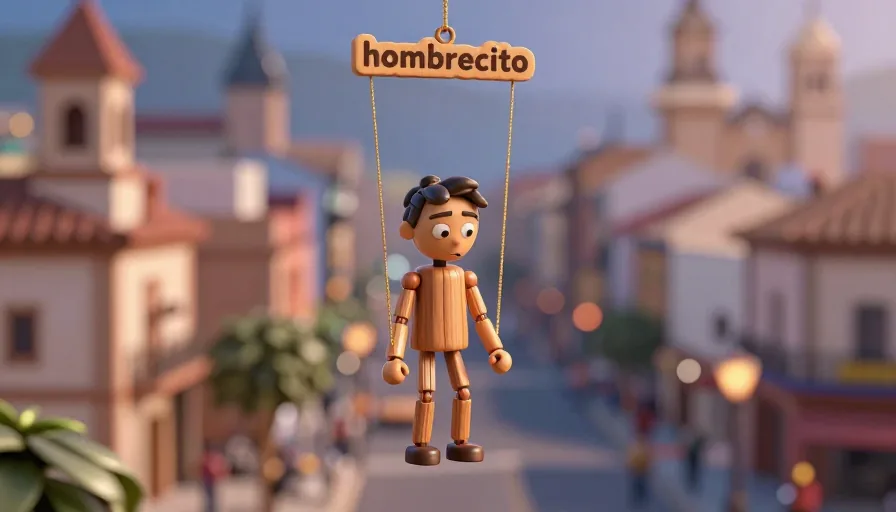
Understanding 'Hombrecito' in English: Translation and Cultural Context
When learning Spanish, you might come across the term hombrecito. This word, when translated to English, can mean 'little man' or 'little guy'. However, understanding its cultural context and usage is crucial for effective communication. This guide will explore the direct translation, contextual usage, cultural nuances, and provide example sentences to help you use 'hombrecito' appropriately in English conversations.
What is 'Hombrecito' Literally Translated to?
The literal translation of 'hombrecito' is 'little man' or 'little guy'. This term is derived from the Spanish words 'hombre' (man) and the diminutive suffix '-cito', which indicates something small or endearing. However, the usage of 'hombrecito' goes beyond a simple literal translation. It often carries connotations of affection, familiarity, or even a sense of endearment.
Pronunciation Guide
To pronounce 'hombrecito' correctly, follow these steps:
- hombre: /ˈɔm.bɾe/ (like 'home-bray')
- -cito: /ˈθi.to/ (like 'see-to')
Putting it together, 'hombrecito' is pronounced as /om.bɾeˈθi.to/.
Understanding the Context: When and Why is 'Hombrecito' Used?
Age and Affection
'Hombrecito' is often used to refer to young boys or young men, especially in an affectionate or endearing context. For example, a parent might call their son 'hombrecito' to express pride or affection. In English, this might be similar to saying 'little man' or 'big boy' to a child.
Informal Address
The term can also be used as an informal address to a man, similar to saying 'buddy' or 'pal' in English. However, it's important to note that the use of 'hombrecito' in this context can vary depending on the region and the relationship between the speakers.
Cultural Nuances
In Spanish-speaking contexts, 'hombrecito' is generally perceived as a term of endearment. It can be used to express affection, pride, or even a sense of familiarity. However, it's important to use this term appropriately, as it can also be perceived as patronizing or disrespectful if used in the wrong context.

Learn Languages with YouTube
Watch videos in your target language, auto-capture words into flashcards, and track your progress — all in one place.
See How It Works →Using 'Hombrecito' in English Conversation: Contextual Examples
Example Sentences
-
Affectionate Context:
- Spanish: ¡Mira qué hombrecito está hecho tu hijo!
- English: Look how much your son has grown!
- Explanation: In this context, 'hombrecito' is used to express pride and affection towards a child who has grown up.
-
Informal Address:
- Spanish: ¿Qué tal, hombrecito? ¿Cómo estás?
- English: Hey buddy, how are you?
- Explanation: Here, 'hombrecito' is used as an informal address to a friend or acquaintance.
Mini Drill: Fill in the Blanks
Complete the following sentences using 'hombrecito' in the appropriate context:
-
¡Qué _______ está hecho tu hermano!
- a) hombrecito
- b) hombre
- c) hombrecito
- d) hombrecito
-
¿Qué tal, _______? ¿Cómo estás?
- a) hombre
- b) hombrecito
- c) hombrecito
- d) hombrecito
Checklist: Using 'Hombrecito' Appropriately
- Understand the context in which 'hombrecito' is used.
- Use 'hombrecito' in an affectionate or informal context.
- Avoid using 'hombrecito' in formal or professional settings.
- Be aware of regional variations and cultural nuances.
Comparing 'Hombrecito' with Similar English Terms
Little Boy vs. Hombrecito
- Little Boy: Generally refers to a young male child. It can be used in both formal and informal contexts.
- Hombrecito: Refers to a young boy or young man in an affectionate or informal context. It's not typically used in formal settings.
Young Man vs. Hombrecito
- Young Man: Refers to a male who is no longer a boy but not yet an adult. It can be used in both formal and informal contexts.
- Hombrecito: Can refer to a young man in an affectionate or informal context, but it's more commonly used to refer to a young boy.
Common Mistakes to Avoid
- Using 'Hombrecito' in Formal Settings: Avoid using 'hombrecito' in formal or professional settings, as it can be perceived as disrespectful or inappropriate.
- Misinterpreting the Context: Be aware of the context in which 'hombrecito' is used. It's important to understand the cultural nuances and regional variations.
- Overusing 'Hombrecito': While 'hombrecito' can be a term of endearment, overusing it can make it lose its meaning or be perceived as patronizing.
Conclusion
Understanding the translation and cultural context of 'hombrecito' is essential for effective communication in Spanish. By following the guidelines and examples provided in this article, you can use 'hombrecito' appropriately in English conversations. Remember to consider the context, cultural nuances, and regional variations when using this term.
FAQ
Can 'hombrecito' be used to refer to an adult man?
While 'hombrecito' can technically refer to any man, it is more commonly used to refer to young boys or young men in an affectionate or informal context. Using it to refer to an adult man might be perceived as disrespectful or patronizing.
Is 'hombrecito' a gender-neutral term?
No, 'hombrecito' is a masculine noun and is used to refer to males only. The feminine equivalent would be 'mujercita' (little woman).
Can 'hombrecito' be used in formal settings?
No, 'hombrecito' is generally used in informal or affectionate contexts. Using it in formal settings might be perceived as disrespectful or inappropriate.
Related phrases
Start with Metheus
Watch videos in your target language, auto-capture words into flashcards, and track your progress — all in one place.
Get Started →

