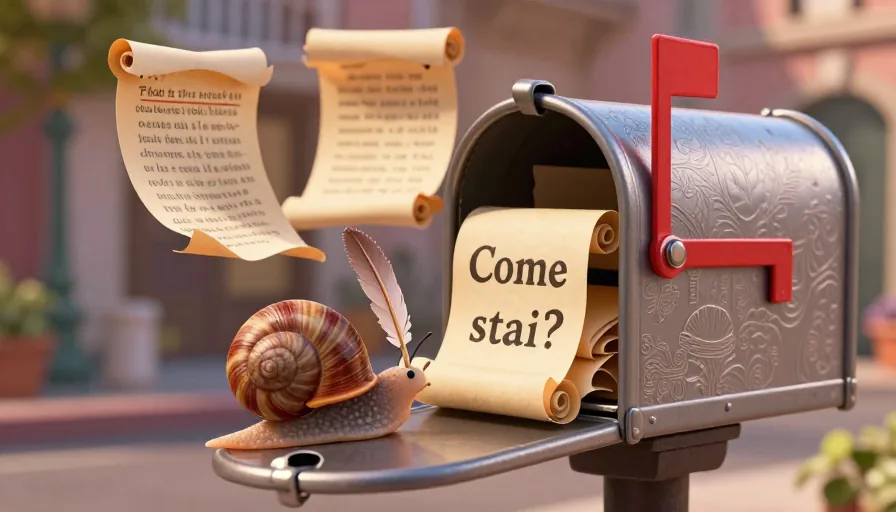
When learning Italian, one of the first phrases you'll want to master is how r u in italian. This guide will walk you through the nuances of asking 'how are you' in Italian, covering formal, informal, and contextual uses. We'll also provide pronunciation tips and video examples to help you sound like a native.
The Basics: Formal vs. Informal Greetings
In Italian, the way you ask 'how are you' can vary greatly depending on the formality of the situation. Here are the basics:
-
Formal: Use 'Come sta?' when addressing someone you don't know well or someone in a position of authority. This is the equivalent of saying 'How are you?' in a formal context.
-
Pronunciation: /ˈko.me ˈsta/
-
Informal: Use 'Come stai?' when talking to friends, family, or people your own age. This is the casual way to ask 'how are you'.
-
Pronunciation: /ˈko.me ˈsta.i/
Checklist for Formal vs. Informal Greetings
- Use 'Come sta?' for formal situations.
- Use 'Come stai?' for informal situations.
- Practice the pronunciation of both phrases.
Nuances of Depth: From 'Come va?' to 'Come si sente?'
Italian has several ways to ask 'how are you' that convey different levels of depth and concern. Here are a few examples:
-
Come va?: This phrase is more casual and translates to 'How's it going?'. It's a friendly way to check in on someone.
-
Pronunciation: /ˈko.me ˈva/
-
Come sta?: As mentioned earlier, this is the formal way to ask 'How are you?'.
-
Pronunciation: /ˈko.me ˈsta/
-
Come stai?: This is the informal way to ask 'How are you?'.
-
Pronunciation: /ˈko.me ˈsta.i/
-
Come si sente?: This phrase translates to 'How do you feel?' and is used when you want to show genuine concern for someone's well-being.
-
Pronunciation: /ˈko.me si ˈsen.te/
Mini Drill: Match the Phrase to the Context
- 'Come va?' - Casual check-in with a friend.
- 'Come sta?' - Greeting a colleague at work.
- 'Come stai?' - Asking a friend how they are.
- 'Come si sente?' - Checking in on someone who is sick.

Learn Languages with YouTube
Watch videos in your target language, auto-capture words into flashcards, and track your progress — all in one place.
See How It Works →When to Use Which: Contextual Guide
Understanding when to use each phrase is crucial for sounding natural in Italian. Here's a quick guide:
| Phrase | Context | Example Situation |
|---|---|---|
| Come va? | Casual, friendly check-in | Asking a friend how they are doing. |
| Come sta? | Formal, polite inquiry | Greeting a colleague or superior. |
| Come stai? | Informal, friendly check-in | Asking a friend or family member. |
| Come si sente? | Showing genuine concern for someone's well-being | Checking in on a sick friend. |
Pronunciation Spotlight: Mastering the Italian Sound
Pronunciation is key to sounding natural in Italian. Here are some tips and video examples to help you master the phrases:
-
Come va?
-
Come sta?
-
Come stai?
-
Come si sente?
Pronunciation Tips
- Practice each phrase slowly and focus on the vowel sounds.
- Listen to native speakers and mimic their intonation.
- Use language learning apps to practice pronunciation.
Common Conversational Responses
Knowing how to respond to 'how are you' in Italian is just as important as knowing how to ask. Here are some common responses:
- Bene, grazie. E lei/voi?: I'm fine, thank you. And you? (Formal)
- Bene, grazie. E tu?: I'm fine, thank you. And you? (Informal)
- Così così: So-so
- Non c'è male: Not bad
- Male: Bad
Practice Drill: Responding to 'How Are You?'
- Respond to 'Come sta?' with 'Bene, grazie. E lei?'
- Respond to 'Come stai?' with 'Bene, grazie. E tu?'
- Respond to 'Come va?' with 'Così così'
By mastering these phrases and understanding the nuances, you'll be well on your way to sounding like a native Italian speaker. Buona fortuna!
FAQ
Is 'Come stai?' always informal?
'Come stai?' is generally informal, but it can be used in semi-formal contexts with people you know well, such as colleagues or acquaintances. For very formal situations, 'Come sta?' is more appropriate.
Can I use 'Come va?' in a formal setting?
'Come va?' is too casual for formal settings. Stick to 'Come sta?' for formal greetings. 'Come va?' is better suited for friends and casual acquaintances.
How do I respond if someone asks 'Come si sente?'
If someone asks 'Come si sente?', they are showing genuine concern for your well-being. You can respond with 'Bene, grazie' (I'm fine, thank you) or be more specific about how you feel, such as 'Un po' stanco' (A bit tired) or 'Molto bene' (Very well).
Related phrases
Start with Metheus
Watch videos in your target language, auto-capture words into flashcards, and track your progress — all in one place.
Get Started →

