How to Say Excuse Me in French: Mastering Polite Interjections
Learning how to say excuse me in French is essential for navigating social situations with ease. This guide will equip you with the most common phrases, contextual usage, and pronunciation tips to help you communicate effectively in French.
The Essential French Phrases for 'Excuse Me'
The most common ways to say 'excuse me' in French are Excusez-moi and Pardon. These phrases are versatile and can be used in various situations. Here’s a breakdown:
-
Excusez-moi: This is the most formal way to say 'excuse me.' It is used in polite settings, such as addressing someone you don’t know well or in professional environments.
-
Example: You bump into someone on the street.
- You: Excusez-moi, je ne vous avais pas vu.
- Translation: Excuse me, I didn’t see you.
-
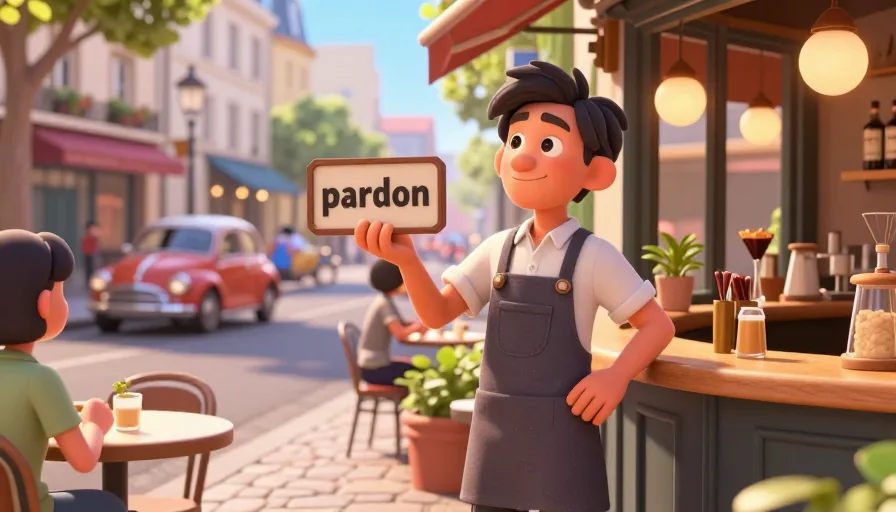
Pardon: This is more informal and can be used in casual settings or with friends and family.
-
Example: You accidentally step on someone’s foot.
- You: Pardon, je ne l’ai pas fait exprès.
- Translation: Sorry, I didn’t mean to.
Choosing the Right Level of Politeness: Formal vs. Informal
Understanding when to use formal vs. informal phrasing is crucial in French culture. French society values politeness, and using the correct level of formality can make a significant difference in how you are perceived.
Formal Phrases
-
Excusez-moi: As mentioned, this is the go-to phrase for formal situations. It shows respect and courtesy.
-
Example: You need to get past someone in a crowded room.
- You: Excusez-moi, pourriez-vous me laisser passer, s'il vous plaît?
- Translation: Excuse me, could you let me pass, please?
Informal Phrases
-
Pardon: This is more casual and can be used with friends, family, or in less formal settings.
-
Example: You accidentally interrupt someone.
- You: Pardon, je ne voulais pas t’interrompre.
- Translation: Sorry, I didn’t mean to interrupt you.
Beyond 'Excusez-moi': Other Useful French Interjections
In addition to Excusez-moi and Pardon, there are other useful interjections that can help you navigate various situations.
Interrupting Someone
-
Je m’excuse: This phrase is used when you need to interrupt someone politely.
-
Example: You are in a meeting and need to interrupt the speaker.
- You: Je m’excuse, mais pourrais-je poser une question?
- Translation: I’m sorry, but could I ask a question?
Asking for Directions
-
Pourriez-vous m’aider, s'il vous plaît?: This phrase is used when you need assistance, such as asking for directions.
-
Example: You are lost and need help finding your way.
- You: Pourriez-vous m’aider, s'il vous plaît? Je cherche la rue principale.
- Translation: Could you help me, please? I’m looking for the main street.
Apologizing for a Mistake
-
Je suis désolé(e): This phrase is used to apologize for a mistake or inconvenience.
-
Example: You accidentally spill a drink on someone.
- You: Je suis désolé(e), c’était un accident.
- Translation: I’m sorry, it was an accident.

Learn Languages with YouTube
Watch videos in your target language, auto-capture words into flashcards, and track your progress — all in one place.
See How It Works →Pronunciation Guide for the Key Phrases
Correct pronunciation is key to effective communication. Here’s a guide to help you pronounce the essential phrases correctly:
-
Excusez-moi: /ɛk.sky.ze.mwa/
- Breakdown: Ex-cu-sez-mwa
-
Pardon: /par.dɔ̃/
- Breakdown: Par-don
-
Je m’excuse: /ʒə mɛk.syz/
- Breakdown: Zhuh mek-syuz
-
Pourriez-vous m’aider, s'il vous plaît?: /pu.ʁɛ.vu mɛ.dɛ, sil vu plɛ/
- Breakdown: Poo-reh-vu meh-deh, seal voo pleh
-
Je suis désolé(e): /ʒə sɥi de.zɔ.le/
- Breakdown: Zhuh swee deh-zoh-leh
Comparison Chart: Formal vs. Informal Usage Scenarios
| Situation | Formal Phrase | Informal Phrase |
|---|---|---|
| Bumping into someone | Excusez-moi | Pardon |
| Interrupting someone | Je m’excuse | Pardon |
| Asking for directions | Pourriez-vous m’aider, s'il vous plaît? | Pourriez-vous m’aider? |
| Apologizing for a mistake | Je suis désolé(e) | Désolé(e) |
Cultural Context: When Politeness Levels Change the Phrasing
French culture places a high value on politeness and respect. Understanding when to use formal vs. informal phrases can help you navigate social situations more effectively. Here are some tips:
-
Formal Settings: Use formal phrases in professional environments, when addressing elders, or when you are unsure of the level of familiarity.
-
Example: You are in a business meeting and need to interrupt the speaker.
- You: Excusez-moi, mais pourrais-je poser une question?
- Translation: Excuse me, but could I ask a question?
-
Informal Settings: Use informal phrases with friends, family, or in casual settings.
-
Example: You are at a party and need to get past someone.
- You: Pardon, je peux passer?
- Translation: Sorry, can I get past?
Mini Drills and Checklist for Mastery
Mini Drill: Practice Pronunciation
- Listen to the pronunciation of each phrase and repeat it aloud.
- Record yourself saying the phrases and compare it to the correct pronunciation.
- Practice with a language partner or tutor to get feedback.
Checklist for Mastery
- I can pronounce Excusez-moi and Pardon correctly.
- I understand when to use formal vs. informal phrases.
- I can use Je m’excuse to interrupt someone politely.
- I can ask for directions using Pourriez-vous m’aider, s'il vous plaît?
- I can apologize using Je suis désolé(e).
Conclusion
Mastering how to say excuse me in French is a crucial step in becoming fluent. By understanding the contextual differences and practicing the key phrases, you’ll be well on your way to navigating French social situations with ease. Remember to practice regularly and seek feedback to improve your pronunciation and usage.
FAQ
What is the difference between 'Excusez-moi' and 'Pardon'?
'Excusez-moi' is more formal and is used in polite settings, such as addressing someone you don’t know well or in professional environments. 'Pardon' is more informal and can be used in casual settings or with friends and family.
Can I use 'Pardon' in a formal setting?
While 'Pardon' is more informal, it can be used in formal settings if the situation calls for a quick apology or acknowledgment of a minor inconvenience. However, for more formal interactions, 'Excusez-moi' is generally preferred.
How do I apologize for a mistake in French?
You can use 'Je suis désolé(e)' to apologize for a mistake. This phrase is versatile and can be used in both formal and informal settings. For example, 'Je suis désolé(e), c’était un accident' translates to 'I’m sorry, it was an accident.'
Related phrases
Start with Metheus
Watch videos in your target language, auto-capture words into flashcards, and track your progress — all in one place.
Get Started →

