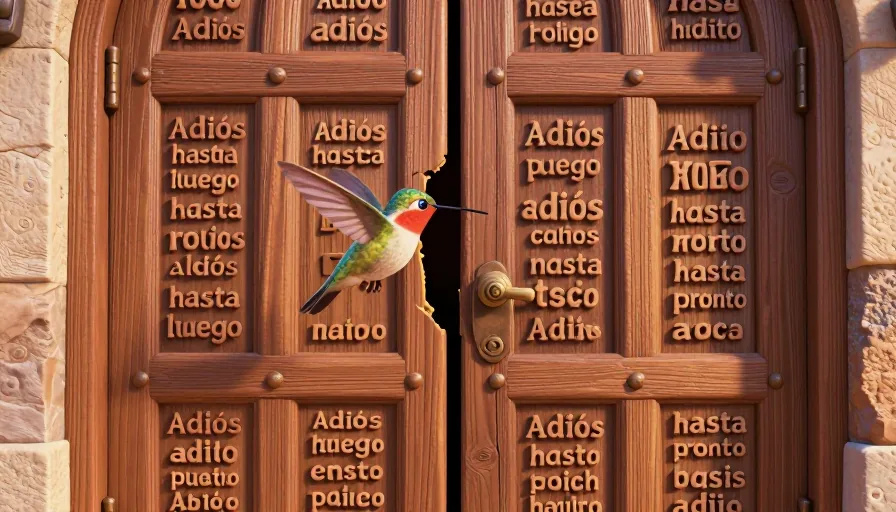
Mastering the art of saying farewell in Spanish is essential for any language learner. Whether you're leaving a formal meeting or rushing to catch a flight, knowing the right phrases can make all the difference. This guide will equip you with the tools to navigate various farewell scenarios with confidence.
Choosing the Right Farewell: Formal vs. Informal
Understanding the context is crucial when choosing the right farewell phrase. In Spanish, the level of formality can significantly impact how your message is received.
Formal Farewell Phrases
In formal settings, such as business meetings or professional environments, it's important to use respectful and polite language. Here are some common formal farewell phrases:
- Adiós: This is a formal way to say goodbye. It's often used in written communication or when addressing someone you don't know well.
- Hasta luego: Literally meaning 'until later,' this phrase is versatile and can be used in both formal and informal contexts. It's a polite way to say goodbye without implying a long absence.
- Hasta mañana: This means 'until tomorrow' and is used when you expect to see the person the next day.
Informal Farewell Phrases
In informal settings, such as with friends or family, you can use more casual phrases. Here are some examples:
- Chao: This is a very casual way to say goodbye, similar to 'bye' in English. It's often used among friends or in informal settings.
- Nos vemos: This phrase means 'see you later' and is commonly used in informal contexts. It implies that you will see the person again soon.
- Cuídate: This means 'take care' and is a friendly way to say goodbye, especially when you won't see the person for a while.
Essential Farewell Phrases for Everyday Use
For everyday use, it's helpful to have a few go-to phrases that can be used in various situations. Here are some essential farewell phrases:
- Hasta luego: As mentioned earlier, this phrase is versatile and can be used in both formal and informal contexts.
- Nos vemos: This is a casual way to say goodbye and is commonly used among friends or in informal settings.
- Adiós: This is a formal way to say goodbye and is often used in written communication or when addressing someone you don't know well.
Mini Drill: Practice Your Farewells
Try practicing these phrases with a friend or language partner. Here's a simple drill to get you started:
- Greet your partner with a formal phrase, such as 'Buenos días' (good morning).
- Use an informal farewell phrase, such as 'Chao'.
- Switch roles and repeat the drill with different phrases.
Saying Goodbye Before a Long Journey
When saying goodbye before a long journey, it's important to choose a phrase that reflects the length of your absence. Here are some phrases to use in this situation:
- Hasta pronto: This means 'see you soon' and is a good choice when you expect to return within a short period.
- Hasta luego: This phrase is versatile and can be used in both formal and informal contexts. It implies that you will see the person again soon.
- Cuídate: This means 'take care' and is a friendly way to say goodbye, especially when you won't see the person for a while.
Checklist for Long Journeys
Before you embark on a long journey, make sure to:
- Choose the right farewell phrase based on the context and your relationship with the person.
- Practice the phrase with a language partner or friend.
- Be mindful of cultural nuances and adjust your language accordingly.

Learn Languages with YouTube
Watch videos in your target language, auto-capture words into flashcards, and track your progress — all in one place.
See How It Works →Quick Ways to Say Goodbye When You're in a Hurry
When you're in a hurry, it's important to choose a quick and efficient farewell phrase. Here are some phrases to use in this situation:
- Chao: This is a very casual way to say goodbye, similar to 'bye' in English. It's often used among friends or in informal settings.
- Nos vemos: This phrase means 'see you later' and is commonly used in informal contexts. It implies that you will see the person again soon.
- Hasta luego: This phrase is versatile and can be used in both formal and informal contexts. It implies that you will see the person again soon.
Mini Drill: Practice Quick Farewells
Try practicing these phrases with a friend or language partner. Here's a simple drill to get you started:
- Greet your partner with a casual phrase, such as 'Hola' (hello).
- Use a quick farewell phrase, such as 'Chao'.
- Switch roles and repeat the drill with different phrases.
Contextual Usage of 'Nos vemos'
The phrase 'Nos vemos' is a versatile and commonly used farewell in Spanish. It literally means 'see you later' and can be used in both formal and informal contexts. However, it's important to understand the nuances of its usage.
When to Use 'Nos vemos'
- Informal Settings: 'Nos vemos' is commonly used among friends or in informal settings. It implies that you will see the person again soon.
- Formal Settings: In formal settings, 'Nos vemos' can be used, but it's important to consider the context and your relationship with the person. It's generally more appropriate to use a more formal phrase, such as 'Hasta luego'.
Common Mistakes to Avoid
- Overusing 'Nos vemos': While 'Nos vemos' is a versatile phrase, it's important not to overuse it. Using the same phrase repeatedly can make your language sound monotonous and unnatural.
- Misusing 'Nos vemos': It's important to use 'Nos vemos' in the correct context. Using it in a formal setting where a more formal phrase is expected can be seen as disrespectful.
Cultural Nuances of Saying Goodbye in Spanish
Understanding the cultural nuances of saying goodbye in Spanish is essential for effective communication. Here are some tips to help you navigate these nuances:
- Respect Formality: In Spanish-speaking cultures, formality is highly valued. It's important to use the appropriate level of formality when saying goodbye.
- Be Mindful of Context: The context in which you're saying goodbye can significantly impact the phrase you choose. For example, saying goodbye before a long journey requires a different phrase than saying goodbye in a hurry.
- Practice Cultural Sensitivity: Be mindful of cultural differences and adjust your language accordingly. For example, in some Spanish-speaking cultures, it's customary to greet and say goodbye with a kiss on the cheek.
Checklist for Cultural Nuances
Before saying goodbye, make sure to:
- Choose the right farewell phrase based on the context and your relationship with the person.
- Practice the phrase with a language partner or friend.
- Be mindful of cultural nuances and adjust your language accordingly.
Conclusion
Mastering farewell Spanish is an essential skill for any language learner. By understanding the nuances of formal and informal contexts, practicing essential phrases, and being mindful of cultural differences, you can navigate various farewell scenarios with confidence. With this comprehensive guide, you're well-equipped to say goodbye in Spanish like a pro.
FAQ
What is the difference between 'Adiós' and 'Hasta luego'?
'Adiós' is a formal way to say goodbye and is often used in written communication or when addressing someone you don't know well. 'Hasta luego', on the other hand, is a versatile phrase that can be used in both formal and informal contexts. It literally means 'until later' and implies that you will see the person again soon.
Can 'Nos vemos' be used in formal settings?
'Nos vemos' is commonly used in informal settings and implies that you will see the person again soon. While it can be used in formal settings, it's important to consider the context and your relationship with the person. In formal settings, a more formal phrase, such as 'Hasta luego', is generally more appropriate.
What are some quick ways to say goodbye in Spanish when you're in a hurry?
When you're in a hurry, you can use quick and efficient farewell phrases such as 'Chao' (a very casual way to say goodbye), 'Nos vemos' (see you later), or 'Hasta luego' (until later). These phrases are versatile and can be used in both formal and informal contexts.
Related phrases
Start with Metheus
Watch videos in your target language, auto-capture words into flashcards, and track your progress — all in one place.
Get Started →

