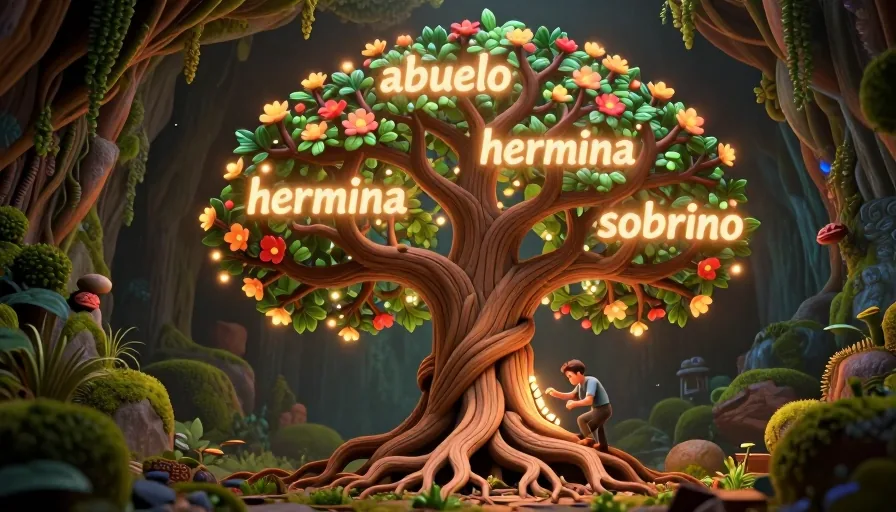
Talking about my family in Spanish language is a fundamental aspect of learning any new language. It's not just about translating words; it's about understanding how to use them in context, with the right grammar, and with cultural sensitivity. This guide will help you master the vocabulary, phrases, and cultural nuances needed to describe your family in Spanish effectively.
Essential Spanish Family Vocabulary: Who is Who?
Before you can describe your family, you need to know the basic vocabulary. Here are some essential terms:
- Padre - Father
- Madre - Mother
- Hermano - Brother
- Hermana - Sister
- Abuelo - Grandfather
- Abuela - Grandmother
- Tío - Uncle
- Tía - Aunt
- Primo - Cousin (male)
- Prima - Cousin (female)
Pronunciation Guide
- Padre - /ˈpaðɾe/
- Madre - /ˈmaðɾe/
- Hermano - /eɾˈmano/
- Hermana - /eɾˈmana/
- Abuelo - /aˈβwelo/
- Abuela - /aˈβwela/
- Tío - /ˈti.o/
- Tía - /ˈti.a/
- Primo - /ˈpɾimo/
- Prima - /ˈpɾima/
Practice Exercise: Fill in the Blanks
Complete the following sentences with the correct family vocabulary:
- Mi ________ es médico.
- Mi ________ es maestra.
- Mi ________ se llama Juan.
- Mi ________ se llama María.
Building Sentences: Describing Your Family Members
Knowing the vocabulary is just the first step. You also need to understand how to build sentences to describe your family members. Here are some basic sentence structures:
Possessive Adjectives
Possessive adjectives are crucial for describing family relationships. Here’s how to use them correctly:
- Mi - My
- Tu - Your (informal)
- Su - His/Her/Your (formal)
Examples
- Mi padre es ingeniero. - My father is an engineer.
- Tu madre es doctora. - Your mother is a doctor.
- Su hermano es estudiante. - His/Her/Your brother is a student.
Practice Exercise: Possessive Adjectives
Rewrite the following sentences using the correct possessive adjectives:
- ________ madre es enfermera.
- ________ hermana es estudiante.
- ________ abuela vive en España.

Learn Languages with YouTube
Watch videos in your target language, auto-capture words into flashcards, and track your progress — all in one place.
See How It Works →Conversational Practice: Introducing Your Family in Spanish
Introducing your family members is a common conversational scenario. Here are some phrases to help you:
- Este es mi padre. - This is my father.
- Esta es mi madre. - This is my mother.
- Este es mi hermano. - This is my brother.
- Esta es mi hermana. - This is my sister.
Scenario-Based Learning: Role-Playing Introductions
Practice introducing your family members with a partner. Here’s a sample dialogue:
Person A: Este es mi padre. Person B: Mucho gusto. ¿Cómo se llama? Person A: Se llama Juan.
Checklist for Introducing Family Members
- Use the correct possessive adjective (mi, tu, su).
- Use the correct gender and number agreement (este, esta, estos, estas).
- Practice common phrases like Mucho gusto (Nice to meet you) and ¿Cómo se llama? (What is his/her name?)
Cultural Nuances in Spanish Family Discussions
In Spanish-speaking cultures, family is often a central theme. Here are some cultural nuances to keep in mind:
- Family is often larger and more extended than in some other cultures.
- Respect for elders is highly valued.
- Family gatherings and celebrations are common and important.
Example: Family Gatherings
In many Spanish-speaking countries, family gatherings are frequent and involve large groups. For example, La Nochebuena (Christmas Eve) is a time when extended families come together to celebrate.
Practice Exercise: Cultural Context
Answer the following questions based on the cultural nuances discussed:
- Why is it important to show respect to elders in Spanish-speaking cultures?
- How might family gatherings differ in Spanish-speaking cultures compared to your own culture?
Common Mistakes to Avoid
- Incorrect gender agreement: Ensure that the articles (el, la, los, las) and adjectives agree with the nouns in gender and number.
- Overusing formal language: While su is correct, using tu in informal contexts can make your conversation more natural.
- Ignoring cultural context: Understanding the cultural importance of family can enhance your conversations and connections.
Mini Drill: Correct the Sentences
Correct the following sentences:
- Mi hermano es una estudiante.
- Su padre es el doctor.
- Mi familia es muy grande y muy feliz.
Conclusion
Learning to describe my family in Spanish language involves more than just translating words. It requires understanding vocabulary, grammar, and cultural context. With practice and the right resources, you can confidently talk about your family in Spanish. Start with the exercises and checklists provided, and gradually build your conversational skills.
FAQ
What are the most common mistakes when describing family in Spanish?
The most common mistakes include incorrect gender agreement, overusing formal language, and ignoring cultural context. Ensure that articles and adjectives agree with nouns in gender and number, use informal language in appropriate contexts, and understand the cultural importance of family.
How can I practice introducing my family members in Spanish?
Practice with a partner using role-playing scenarios. Use common phrases like 'Este es mi padre' and 'Mucho gusto.' Ensure you use the correct possessive adjectives and gender agreement.
Why is cultural context important when talking about family in Spanish?
Cultural context is important because family is often a central theme in Spanish-speaking cultures. Understanding the cultural nuances, such as the importance of extended family and respect for elders, can enhance your conversations and connections.
Related phrases
Start with Metheus
Watch videos in your target language, auto-capture words into flashcards, and track your progress — all in one place.
Get Started →

