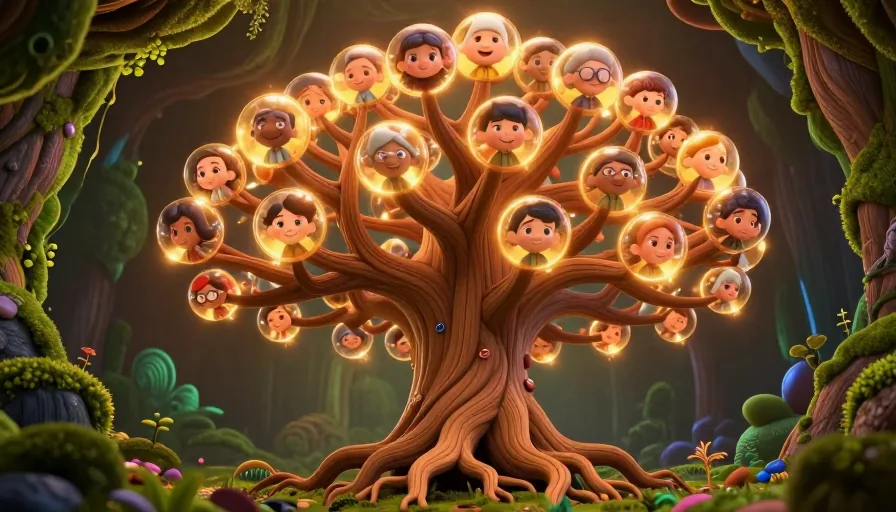
Learning Italian for family discussions is a rewarding journey that enriches your language skills and cultural understanding. This guide provides a comprehensive overview of Italian family vocabulary, from core members to extended relatives and in-laws. You'll also learn key grammatical structures and common phrases to describe family dynamics effectively.
Basic Family Members and Terms
Start with the basics: mother, father, siblings, and other immediate family members. Here's a list of essential terms:
- Madre (Mother)
- Padre (Father)
- Fratello (Brother)
- Sorella (Sister)
- Figlio (Son)
- Figlia (Daughter)
Example:
Mia madre si chiama Maria e mio padre si chiama Giovanni. (My mother's name is Maria and my father's name is Giovanni.)
Mini Drill:
Translate the following sentences into Italian:
- My brother is named Marco.
- Her sister is named Sofia.
- They have two daughters.
Expanding Your Family Vocabulary: Extended Relatives
Next, expand your vocabulary to include extended family members. Here are some key terms:
- Nonno (Grandfather)
- Nonna (Grandmother)
- Zio (Uncle)
- Zia (Aunt)
- Cugino (Cousin)
- Nipote (Nephew/Niece)
Example:
I miei nonni vivono in Sicilia. (My grandparents live in Sicily.)
Checklist:
- Can you name all your extended family members in Italian?
- Practice introducing your extended family in Italian.
Family by Marriage: In-Laws and Extended Kinship
Discussing in-laws and extended kinship requires a different set of vocabulary. Here are some terms to know:
- Suocero (Father-in-law)
- Suocera (Mother-in-law)
- Cognato (Brother-in-law)
- Cognata (Sister-in-law)
- Genero (Son-in-law)
- Nuora (Daughter-in-law)
Example:
La mia suocera è molto gentile. (My mother-in-law is very kind.)
Common Mistakes:
- Confusing cognato (brother-in-law) with cugino (cousin).
- Misgendering in-laws (e.g., using suocero for a mother-in-law).

Learn Languages with YouTube
Watch videos in your target language, auto-capture words into flashcards, and track your progress — all in one place.
See How It Works →Key Grammatical Structures for Describing Family Relationships
Understanding key grammatical structures is crucial for describing family relationships accurately. Here are some essential points:
- Use di to indicate possession (e.g., la casa di mia madre - my mother's house).
- Use con to indicate accompaniment (e.g., vado al cinema con mio fratello - I go to the cinema with my brother).
- Use a to indicate destination (e.g., vado a casa di mia zia - I go to my aunt's house).
Example:
Vado a casa di mia nonna con mia sorella. (I go to my grandmother's house with my sister.)
Common Phrases for Talking About Family Dynamics
Use these common phrases to discuss family dynamics and relationships:
- Venire da una grande famiglia (To come from a large family)
- Essere molto uniti (To be very close)
- Avere un buon rapporto (To have a good relationship)
- Essere in disaccordo (To disagree)
- Essere molto legati (To be very close)
Example:
Veniamo da una grande famiglia e siamo molto uniti. (We come from a large family and are very close.)
Checklist:
- Can you describe your family dynamics in Italian?
- Practice discussing family relationships using the phrases above.
Putting It Together: Talking About Your Family Structure
Combine what you've learned to describe your family structure comprehensively. Here's a sample conversation:
A: Quanti fratelli e sorelle hai? (How many brothers and sisters do you have?) B: Ho due fratelli e una sorella. (I have two brothers and one sister.) A: E i tuoi genitori? (And your parents?) B: I miei genitori sono molto uniti e vivono ancora insieme. (My parents are very close and still live together.)
Mini Drill:
Practice describing your family structure in Italian. Include details about your parents, siblings, and extended family.
Practical Examples and Conversational Context
To truly master Italian for family, practice using these terms in real conversations. Here are some practical examples:
- At a family gathering: Ciao zia Maria, come stai? (Hi Aunt Maria, how are you?)
- Introducing family members: Questi sono i miei genitori, Maria e Giovanni. (These are my parents, Maria and Giovanni.)
- Discussing family dynamics: La mia famiglia è molto unita e ci vediamo spesso. (My family is very close and we see each other often.)
By incorporating these phrases and structures into your conversations, you'll become more confident and fluent in discussing family matters in Italian.
Conclusion
Learning Italian for family is a journey that deepens your connection to the language and culture. With this comprehensive guide, you're well-equipped to discuss family structures, dynamics, and relationships with confidence. Keep practicing, and soon you'll be able to navigate family conversations in Italian with ease.
FAQ
How do I differentiate between 'family' (la famiglia) and specific relational terms in Italian?
In Italian, 'la famiglia' refers to the family as a whole, while specific relational terms like 'madre' (mother), 'padre' (father), and 'fratello' (brother) refer to individual family members. For example, you might say 'La mia famiglia è molto unita' (My family is very close) to talk about your family as a unit, but 'Mia madre si chiama Maria' (My mother's name is Maria) to refer to a specific family member.
What are some common mistakes to avoid when talking about family in Italian?
Common mistakes include confusing similar-sounding terms (e.g., 'cognato' for brother-in-law and 'cugino' for cousin) and misgendering in-laws. Always double-check the gender and relationship to ensure accuracy. Additionally, be mindful of the grammatical structures used to describe family relationships, such as possession and accompaniment.
How can I practice using Italian family vocabulary in real conversations?
Practice using Italian family vocabulary by engaging in real conversations with native speakers or language exchange partners. Start with basic introductions and gradually move to more complex discussions about family dynamics and relationships. Use the phrases and structures provided in this guide to build your confidence and fluency.
Related phrases
Start with Metheus
Watch videos in your target language, auto-capture words into flashcards, and track your progress — all in one place.
Get Started →

