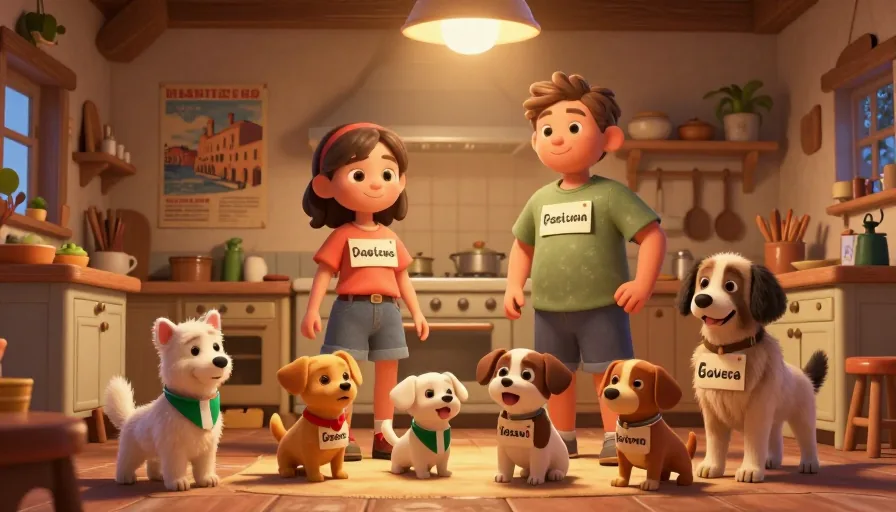
Italian pet names are a delightful way to express affection and build connections. Whether you're learning Italian for travel, work, or personal enrichment, understanding and using Italian pet names can enhance your language skills and cultural appreciation. This guide provides a comprehensive overview of Italian pet names, their meanings, pronunciation, and contextual usage.
The Sweetest Italian Pet Names (Cucciolo, Cucciola, etc.)
Italian pet names often involve diminutives, which are suffixes added to words to make them smaller or more endearing. Here are some of the sweetest Italian pet names for pets:
-
Cucciolo (m) / Cucciola (f): Puppy or kitten. These terms are used for young animals and can also be used affectionately for children or partners.
-
Example: Il mio cucciolo è molto vivace. (My puppy is very lively.)
-
Fido: Faithful. This name is often used for dogs and emphasizes loyalty.
-
Example: Fido è il cane più fedele che conosco. (Fido is the most faithful dog I know.)
-
Bimbo (m) / Bimba (f): Baby. These terms are used for young children and can also be used affectionately for pets.
-
Example: La mia bimba è molto dolce. (My baby is very sweet.)
Terms of Endearment for Romantic Partners
Expressing affection to romantic partners in Italian involves a mix of formal and informal terms. Here are some common terms of endearment:
-
Amorino (m) / Amorina (f): Little love. These terms are used to express deep affection and love.
-
Example: Ciao, amorino mio! (Hi, my little love!)
-
Tesoro (m) / Tesorino (m) / Tesorina (f): Treasure. These terms are used to express that someone is highly valued and cherished.
-
Example: Sei il mio tesoro. (You are my treasure.)
-
Caro (m) / Cara (f): Dear. These terms are used to express affection and can be used in both formal and informal contexts.
-
Example: Cara amica, come stai? (Dear friend, how are you?)

Learn Languages with YouTube
Watch videos in your target language, auto-capture words into flashcards, and track your progress — all in one place.
See How It Works →Affectionate Terms for Family Members
Italian family terms of endearment are often used to express love and closeness. Here are some common terms:
-
Mamma: Mother. This term is used to address or refer to one's mother and can also be used affectionately for other women.
-
Example: Mia mamma è la migliore. (My mother is the best.)
-
Papà: Father. This term is used to address or refer to one's father and can also be used affectionately for other men.
-
Example: Papà, posso avere un po' di aiuto? (Dad, can I have some help?)
-
Fratello (m) / Sorella (f): Brother/Sister. These terms are used to address or refer to siblings and can also be used affectionately for close friends.
-
Example: Mia sorella è molto intelligente. (My sister is very intelligent.)
How to Use Diminutives and Augmentatives in Italian Endearments
Diminutives and augmentatives are essential in Italian to express affection or emphasis. Here’s how to use them:
-
Diminutives: Add suffixes like -ino, -ina, -etto, or -etta to make words smaller or more endearing.
-
Example: Cane (dog) becomes Cane (dog) becomes Cagnolino (little dog).
-
Augmentatives: Add suffixes like -one or -ona to make words bigger or more emphatic.
-
Example: Gatto (cat) becomes Gattone (big cat).
Pronunciation Guide: Mastering Italian Endearments
Pronunciation is key to sounding natural and fluent. Here are some tips for mastering Italian endearments:
-
Cucciolo: Pronounced as /ˈkwʧːolo/ (KWOO-chee-oh-lo)
-
Amorino: Pronounced as /amoˈriːno/ (ah-moh-REE-noh)
-
Tesoro: Pronounced as /teˈzɔːro/ (teh-ZOH-roh)
Mini Drill: Practice Pronunciation
- Listen to native speakers pronounce the terms.
- Repeat the terms aloud, focusing on the correct sounds.
- Record yourself and compare with native speakers.
Checklist for Mastering Italian Pet Names
- Learn the meanings and contexts of common Italian pet names.
- Practice pronunciation using audio resources.
- Use diminutives and augmentatives correctly.
- Incorporate Italian pet names into daily conversations.
- Seek feedback from native speakers.
Comparison Chart: Formal vs. Informal Endearments
| Formal Endearment | Informal Endearment | Context |
|---|---|---|
| Caro (m) / Cara (f) | Tesoro (m) / Tesorina (f) | Romantic partners, close friends |
| Mamma | Mamma mia | Mother, affectionate |
| Papà | Paparino | Father, affectionate |
| Fratello (m) / Sorella (f) | Fratellino (m) / Sorellina (f) | Siblings, close friends |
By understanding and practicing these Italian pet names, you'll not only enrich your vocabulary but also deepen your connection with the Italian language and culture. Buona fortuna!
FAQ
Are Italian pet names only used for animals?
No, Italian pet names are often used for people as well, especially for expressing affection towards family members, romantic partners, and close friends. Terms like 'cucciolo' and 'tesoro' can be used for both animals and humans.
How do I know when to use diminutives and augmentatives?
Diminutives are used to make words smaller or more endearing, while augmentatives make words bigger or more emphatic. For example, 'cane' (dog) becomes 'cagnolino' (little dog) with a diminutive, and 'gatto' (cat) becomes 'gattone' (big cat) with an augmentative. Context and familiarity guide their use.
Can I use Italian pet names in formal settings?
Italian pet names are generally more informal and are best used in casual or familiar settings. In formal contexts, it's better to use more respectful and formal terms of address.
Related phrases
Start with Metheus
Watch videos in your target language, auto-capture words into flashcards, and track your progress — all in one place.
Get Started →

