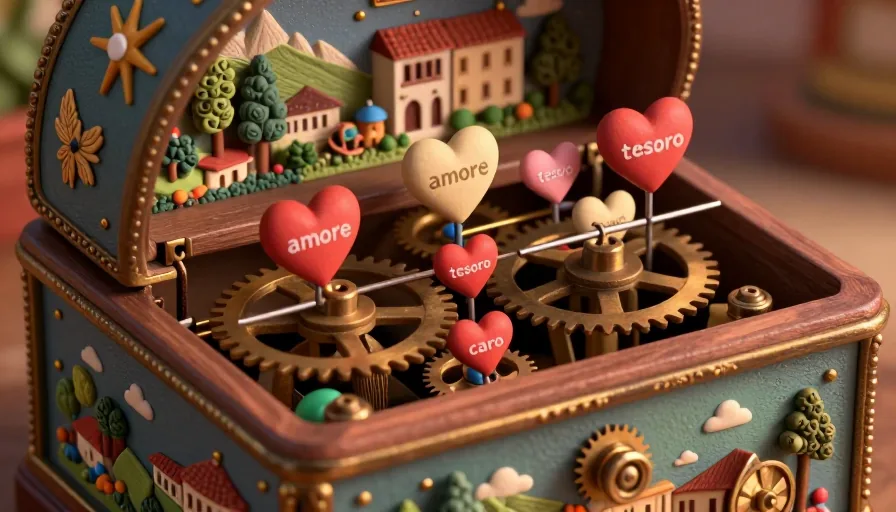
Learning terms of endearment in Italian can significantly enhance your language skills and cultural understanding. This guide will help you navigate the sweet and endearing phrases used in Italian, categorized by context, with pronunciation guides, and cultural insights.
The Sweetest Italian Terms of Endearment for Romance
Italian is a language rich in romance, and its terms of endearment reflect this beautifully. Here are some of the most commonly used romantic terms:
- Amore mio (ah-moh-reh mee-oh): My love. This is a classic term used to express deep affection.
- Tesoro (teh-zoh-roh): Treasure. A sweet term often used to address a romantic partner.
- Cuore mio (kwoh-reh mee-oh): My heart. This term emphasizes the emotional connection between two people.
- Vita mia (vee-tah mee-ah): My life. A strong term of endearment, often used to express that someone is the most important person in your life.
- Stellina (steh-lee-nah): Little star. A cute and affectionate term often used for a romantic partner.
Pronunciation and Usage Tips
- Amore mio: Pronounced as ah-moh-reh mee-oh. Use it when you want to express deep affection or love.
- Tesoro: Pronounced as teh-zoh-roh. This term can be used in various contexts, from romantic to friendly, depending on the tone.
- Cuore mio: Pronounced as kwoh-reh mee-oh. Use it to emphasize the emotional bond between you and your partner.
- Vita mia: Pronounced as vee-tah mee-ah. This term is often used in serious, heartfelt conversations.
- Stellina: Pronounced as steh-lee-nah. Use it to express affection in a playful or romantic context.
Terms of Endearment for Family and Friends in Italian
Italian terms of endearment are not limited to romantic relationships. They are also commonly used among family members and friends. Here are some examples:
- Caro/a (kah-roh/kah-rah): Dear. A versatile term used to address friends, family, or even acquaintances.
- Amico/a (ah-mee-koh/ah-mee-kah): Friend. Often used to address close friends in a casual setting.
- Fratellino/a (frah-tehl-lee-noh/ah): Little brother/sister. Used to address younger siblings or close friends who are like siblings.
- Zio/a (tsee-oh/ah): Uncle/aunt. A term of endearment used to address older relatives or close family friends.
- Nonna (nohn-nah): Grandma. A term of endearment used to address grandmothers or elderly women in a respectful manner.
Pronunciation and Usage Tips
- Caro/a: Pronounced as kah-roh/kah-rah. Use it to address friends, family, or even acquaintances in a friendly manner.
- Amico/a: Pronounced as ah-mee-koh/ah-mee-kah. Use it to address close friends in a casual setting.
- Fratellino/a: Pronounced as frah-tehl-lee-noh/ah. Use it to address younger siblings or close friends who are like siblings.
- Zio/a: Pronounced as tsee-oh/ah. Use it to address older relatives or close family friends in a respectful manner.
- Nonna: Pronounced as nohn-nah. Use it to address grandmothers or elderly women in a respectful manner.
Cute Nicknames for Pets in Italian
Pets are cherished members of the family in Italy, and they have their own set of endearing terms:
- Cucciolo (kwoo-chee-oh-loh): Puppy. A term of endearment used for young dogs or puppies.
- Gattino (gah-tee-noh): Kitten. A term of endearment used for young cats or kittens.
- Pulcino (pool-chee-noh): Chick. A term of endearment used for young birds or chicks.
- Cagnolino (kah-nyoh-lee-noh): Little dog. A term of endearment used for small dogs.
- Micina (mee-chee-nah): Little cat. A term of endearment used for small cats.
Pronunciation and Usage Tips
- Cucciolo: Pronounced as kwoo-chee-oh-loh. Use it to address young dogs or puppies in a playful manner.
- Gattino: Pronounced as gah-tee-noh. Use it to address young cats or kittens in a playful manner.
- Pulcino: Pronounced as pool-chee-noh. Use it to address young birds or chicks in a playful manner.
- Cagnolino: Pronounced as kah-nyoh-lee-noh. Use it to address small dogs in a playful manner.
- Micina: Pronounced as mee-chee-nah. Use it to address small cats in a playful manner.

Learn Languages with YouTube
Watch videos in your target language, auto-capture words into flashcards, and track your progress — all in one place.
See How It Works →Understanding Diminutives and Affection in Italian
Diminutives are a key aspect of Italian language and culture. They are used to express affection, familiarity, or to make something sound smaller or cuter. Here are some examples:
- Amorino (ah-moh-ree-noh): Little love. A diminutive form of amore, used to express affection in a playful manner.
- Cucina (koo-chee-nah): Little kitchen. A diminutive form of cucina, used to express affection or familiarity with the kitchen.
- Librino (lee-bree-noh): Little book. A diminutive form of libro, used to express affection or familiarity with a book.
- Caffettino (kah-feh-tee-noh): Little coffee. A diminutive form of caffè, used to express affection or familiarity with coffee.
- Gattino (gah-tee-noh): Little cat. A diminutive form of gatto, used to express affection or familiarity with a cat.
Pronunciation and Usage Tips
- Amorino: Pronounced as ah-moh-ree-noh. Use it to express affection in a playful manner.
- Cucina: Pronounced as koo-chee-nah. Use it to express affection or familiarity with the kitchen.
- Librino: Pronounced as lee-bree-noh. Use it to express affection or familiarity with a book.
- Caffettino: Pronounced as kah-feh-tee-noh. Use it to express affection or familiarity with coffee.
- Gattino: Pronounced as gah-tee-noh. Use it to express affection or familiarity with a cat.
Cultural Context of Using Terms of Endearment in Italian Relationships
In Italian culture, terms of endearment are an essential part of communication. They are used to express affection, familiarity, and respect. Here are some cultural tips for using terms of endearment in Italian relationships:
- Romantic Relationships: In romantic relationships, terms of endearment are used to express love and affection. They are often used in private conversations and can be very intimate.
- Family Relationships: In family relationships, terms of endearment are used to express love and affection between family members. They are often used in casual conversations and can be very intimate.
- Friendship: In friendships, terms of endearment are used to express affection and familiarity. They are often used in casual conversations and can be very intimate.
- Pets: In pet relationships, terms of endearment are used to express affection and familiarity. They are often used in casual conversations and can be very intimate.
Practical Examples and Checklist
Here are some practical examples and a checklist to help you use terms of endearment in Italian:
- Example 1: You are in a romantic relationship with an Italian speaker. Use terms of endearment like amore mio, tesoro, or cuore mio to express your love and affection.
- Example 2: You are in a family relationship with an Italian speaker. Use terms of endearment like caro/a, amico/a, or fratellino/a to express your love and affection.
- Example 3: You are in a friendship with an Italian speaker. Use terms of endearment like caro/a, amico/a, or fratellino/a to express your affection and familiarity.
- Example 4: You have a pet in Italy. Use terms of endearment like cucciolo, gattino, or pulcino to express your affection and familiarity.
Checklist for Using Terms of Endearment in Italian
- Learn the pronunciation and meaning of each term of endearment.
- Understand the context in which each term of endearment is used.
- Practice using terms of endearment in conversations with Italian speakers.
- Be mindful of the cultural context and use terms of endearment appropriately.
- Use terms of endearment to express affection, familiarity, and respect.
Interactive Quizzes and Flashcards for Practice
To help you practice and remember the terms of endearment in Italian, here are some interactive quizzes and flashcards:
- Quiz 1: Match the term of endearment with its meaning.
- Quiz 2: Fill in the blank with the appropriate term of endearment.
- Flashcard 1: Front: Amorino. Back: Little love.
- Flashcard 2: Front: Tesoro. Back: Treasure.
- Flashcard 3: Front: Cuore mio. Back: My heart.
Comparison Chart: Formal vs. Informal Terms of Endearment
Here is a comparison chart to help you understand the difference between formal and informal terms of endearment in Italian:
| Formal Terms of Endearment | Informal Terms of Endearment |
|---|---|
| Signor/a (Mr./Ms.) | Amico/a (Friend) |
| Dottore/Dottoressa (Doctor) | Caro/a (Dear) |
| Professore/Professora (Professor) | Fratellino/a (Little brother/sister) |
| Ingegnere/Ingegnera (Engineer) | Zio/a (Uncle/aunt) |
| Avvocato/Avvocatessa (Lawyer) | Nonna (Grandma) |
By understanding the difference between formal and informal terms of endearment, you can use them appropriately in different contexts.
Conclusion
Learning terms of endearment in Italian can significantly enhance your language skills and cultural understanding. By following this guide, you can navigate the sweet and endearing phrases used in Italian, categorized by context, with pronunciation guides, and cultural insights. Practice using these terms in conversations with Italian speakers, and you will soon become fluent in expressing affection, familiarity, and respect in Italian.
FAQ
Are terms of endearment in Italian only used in romantic relationships?
No, terms of endearment in Italian are used in various contexts, including romantic relationships, family relationships, friendships, and even with pets. They are a versatile way to express affection, familiarity, and respect.
Can I use terms of endearment in Italian in a professional setting?
It is generally best to avoid using terms of endearment in a professional setting, as they can be seen as too informal or inappropriate. Stick to formal terms of address in professional contexts.
How do I know which term of endearment to use?
The choice of term of endearment depends on the context and the relationship you have with the person. Romantic terms are used with partners, familial terms with family members, and friendly terms with friends. Pay attention to the cultural context and the tone of the conversation.
Related phrases
Start with Metheus
Watch videos in your target language, auto-capture words into flashcards, and track your progress — all in one place.
Get Started →

