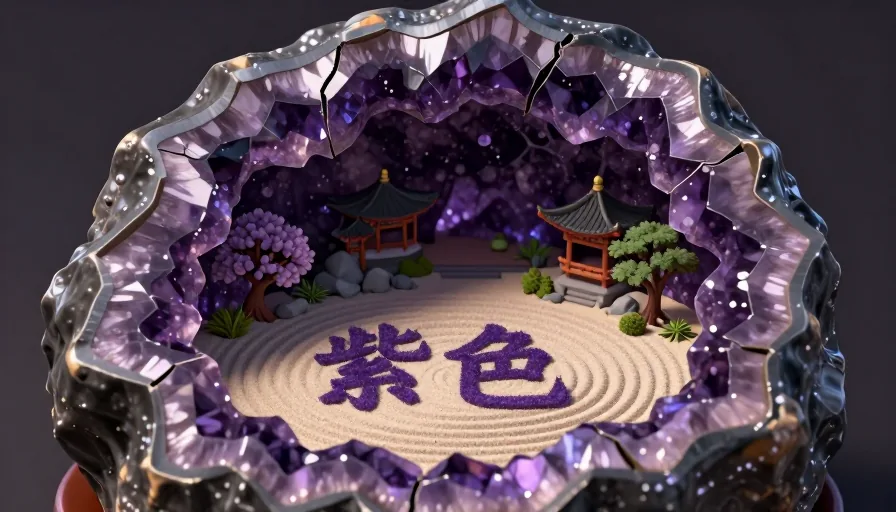
Learning the Japanese for purple can be both fascinating and practical, especially if you're interested in art, fashion, or Japanese culture. This guide will help you understand the most common translations, contextual usage, and related color vocabulary to enhance your language skills.
The Most Common Way to Say 'Purple' in Japanese
The most direct and common way to say 'purple' in Japanese is むらさき (murasaki). This term is widely used in everyday conversation and is the go-to word for describing the color purple. For example:
- その服はむらさきです。 (Sono fuku wa murasaki desu.) - That clothing is purple.
However, むらさき (murasaki) can also refer to a specific shade of purple, often a deep or rich purple. This is where contextual understanding comes into play.
Nuances: Different Shades of Purple in Japanese
Japanese has several terms for different shades of purple, each with its own nuances. Here are a few key terms:
-
あい (ai): This term refers to a lighter or pastel shade of purple. It is often used in contexts related to flowers or nature.
- Example: あい色の花 (Aiiro no hana) - Purple flowers.
-
ぶどう色 (budōiro): This term literally means 'grape color' and refers to a dark, almost blackish-purple shade.
- Example: ぶどう色のワイン (Budōiro no wain) - Purple wine.
-
紫 (murasaki): As mentioned earlier, this is the most common term for purple, but it can also refer to a specific shade of purple used in traditional Japanese art and literature.
- Example: 紫の絵 (Murasaki no e) - A purple painting.

Learn Languages with YouTube
Watch videos in your target language, auto-capture words into flashcards, and track your progress — all in one place.
See How It Works →Using 'Purple' in Context: Examples
Understanding how to use 'purple' in different contexts can greatly enhance your language skills. Here are some practical examples:
Fashion and Beauty
In the context of fashion and beauty, むらさき (murasaki) is often used to describe clothing, accessories, and makeup.
- むらさきのスカート (Murasaki no sukāto) - Purple skirt.
- むらさきのリップスティック (Murasaki no rippusutikku) - Purple lipstick.
Nature and Flowers
When describing nature, especially flowers, あい (ai) is commonly used.
- あい色の桜 (Aiiro no sakura) - Purple cherry blossoms.
- あい色の花 (Aiiro no hana) - Purple flowers.
Art and Literature
In traditional Japanese art and literature, 紫 (murasaki) is often used to describe specific shades of purple that have cultural significance.
- 紫の絵 (Murasaki no e) - A purple painting.
- 紫の詩 (Murasaki no shi) - A purple poem.
Checklist: Mastering Japanese for Purple
To master the Japanese for purple, follow this checklist:
- Learn the basic term むらさき (murasaki).
- Understand the nuances of あい (ai) and ぶどう色 (budōiro).
- Practice using these terms in different contexts (fashion, nature, art).
- Read Japanese literature or watch movies to see how these terms are used in real-life scenarios.
- Practice speaking with a language partner or tutor to get feedback on your pronunciation and usage.
Mini Drill: Practice Your Japanese for Purple
- Describe a purple item you own using むらさき (murasaki).
- Write a sentence using あい (ai) to describe a natural scene.
- Create a sentence using ぶどう色 (budōiro) in a culinary context.
- Translate the following English sentence into Japanese: 'The purple dress is beautiful.'
- Write a short paragraph about a piece of art that features the color purple, using 紫 (murasaki).
Common Mistakes to Avoid
- Confusing Shades: Be careful not to confuse むらさき (murasaki) with あい (ai) or ぶどう色 (budōiro). Each term has a specific shade and context.
- Overgeneralization: Avoid using むらさき (murasaki) in contexts where a more specific term like あい (ai) would be more appropriate.
- Lack of Context: Always consider the context when choosing the right term for purple. This will help you sound more natural and fluent.
By following this guide, you'll be well on your way to mastering the nuances of Japanese for purple and enhancing your overall language skills.
FAQ
Is 'murasaki' the only way to say 'purple' in Japanese?
No, while 'murasaki' is the most common term, there are other shades and contexts where different terms like 'ai' (lighter purple) and 'budōiro' (dark purple) are more appropriate. Understanding these nuances will help you use the correct term in different situations.
Can I use 'murasaki' to describe any shade of purple?
While 'murasaki' is versatile, it is often used to describe a deep or rich purple. For lighter shades, 'ai' is more appropriate. For very dark purples, 'budōiro' is the better choice. Always consider the specific shade and context.
How do I know which shade of purple to use in different contexts?
Practice and exposure to Japanese media can help you understand the nuances. For example, 'ai' is often used in nature and fashion, while 'murasaki' is common in art and literature. Pay attention to how these terms are used in real-life scenarios and practice using them in different contexts.
Related phrases
Start with Metheus
Watch videos in your target language, auto-capture words into flashcards, and track your progress — all in one place.
Get Started →

