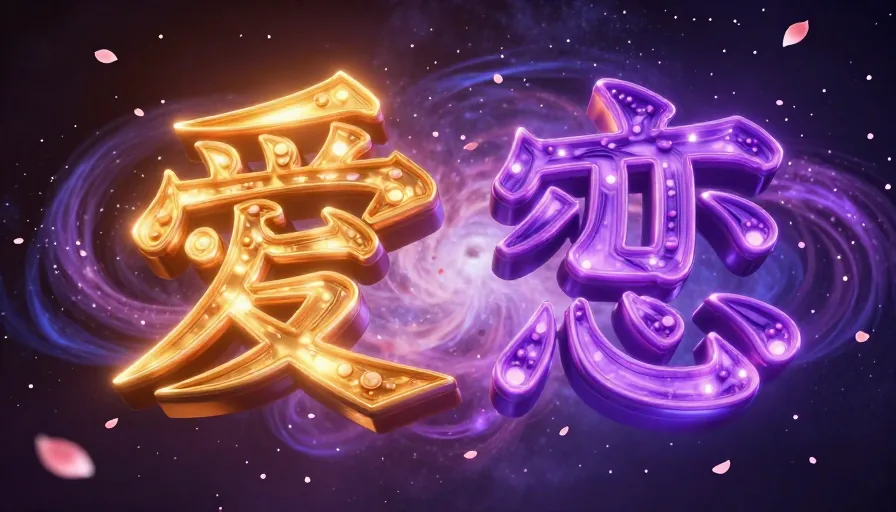
The concept of love in Japanese culture is rich and multifaceted, often expressed through the Kanji 愛 and 恋. These symbols not only represent the emotion of love but also carry deep cultural significance. Understanding the love Japan symbol involves delving into the linguistic nuances and visual representations that make these Kanji unique.
Understanding the Nuances: 愛 vs. 恋
The Kanji 愛 (Ai)
The Kanji 愛 (愛) is one of the most fundamental symbols representing love in Japanese. It is composed of two parts: 亻 (hito), which means 'person,' and 心 (kokoro), which means 'heart.' This combination signifies a deep, heartfelt love that encompasses various forms of affection, including familial love, platonic love, and even self-love.
Readings and Meanings
- Onyomi (音読み): The Chinese-derived reading of 愛 is 'ai.' This reading is often used in formal contexts, such as in literature or formal writing.
- Kunyomi (訓読み): The native Japanese reading of 愛 is 'megu.' This reading is less common but can be found in certain poetic or archaic texts.
The Kanji 恋 (Koi)
The Kanji 恋 (恋) represents a more romantic and passionate form of love. It is often used to describe romantic relationships and the intense emotions associated with them. The Kanji is composed of 戀 (ren), which means 'love,' and 心 (kokoro), which means 'heart.' This combination emphasizes the emotional and passionate aspects of love.
Readings and Meanings
- Onyomi (音読み): The Chinese-derived reading of 恋 is 'ren.' This reading is often used in formal contexts, such as in literature or formal writing.
- Kunyomi (訓読み): The native Japanese reading of 恋 is 'koi.' This reading is more commonly used in everyday language and is often associated with romantic love.

Learn Languages with YouTube
Watch videos in your target language, auto-capture words into flashcards, and track your progress — all in one place.
See How It Works →The Cultural Significance of Japanese Love Symbols
When and How to Use 愛 and 恋
Understanding when and how to use 愛 and 恋 is crucial for effectively communicating love in Japanese. Here are some practical examples:
- 愛 (Ai): Use 愛 when referring to a broad, encompassing form of love. For example, '愛する家族' (aisuru kazoku) means 'loving family.'
- 恋 (Koi): Use 恋 when referring to romantic or passionate love. For example, '恋する心' (koisuru kokoro) means 'a heart in love.'
Common Mistakes to Avoid
- Mistake 1: Using 愛 when you mean 恋. For example, saying '愛する人' (aisuru hito) instead of '恋する人' (koisuru hito) can change the context from a romantic love to a general affection.
- Mistake 2: Confusing the readings. Always ensure you use the correct reading (onyomi or kunyomi) based on the context.
Mini Drill: Practice Using 愛 and 恋
- Translate the following sentences into Japanese using the correct Kanji for love:
- I love my family.
- I am in love with you.
- She loves her job.
- He has a loving heart.
- Write a short paragraph in Japanese describing a romantic love story using 恋.
- Write a short paragraph in Japanese describing a familial love story using 愛.
Visual Connection: Popular Japanese Love Symbols
The Cherry Blossom (Sakura)
The cherry blossom, or sakura, is a powerful symbol of love and beauty in Japanese culture. It represents the transient nature of life and love, much like the fleeting beauty of the blossoms. The sakura is often depicted in art and literature as a metaphor for love that is both beautiful and ephemeral.
The Red String of Fate (Akai Ito)
The red string of fate is a popular love symbol in Japanese folklore. It is believed that the gods tie an invisible red string around the ankles of those who are destined to meet and fall in love. This symbol represents the inevitability and destiny of love, often depicted in romantic stories and visual art.
The Heart (Kokoro)
The heart, or kokoro, is a universal symbol of love and emotion. In Japanese culture, it is often depicted in art and literature as the center of one's being, where love and emotions reside. The heart symbol is used in various contexts, from romantic love to familial affection.
Practical Checklist for Learning Japanese Love Symbols
- Learn the Kanji: Memorize the Kanji 愛 and 恋, their meanings, and readings.
- Practice Readings: Practice reading and writing the Kanji in different contexts.
- Cultural Context: Understand the cultural significance and usage of each Kanji.
- Visual Symbols: Familiarize yourself with popular Japanese love symbols and their meanings.
- Practice Writing: Write short paragraphs or stories using 愛 and 恋 in different contexts.
- Engage with Media: Watch Japanese movies, read manga, and listen to music to see how these symbols are used in real-life scenarios.
Conclusion
Understanding the love Japan symbol involves more than just learning the Kanji. It requires delving into the cultural context, visual representations, and practical usage. By mastering 愛 and 恋, you can gain a deeper appreciation for the nuances of love in Japanese culture and effectively communicate your emotions in the language.
FAQ
What is the difference between 愛 and 恋 in Japanese?
愛 (Ai) represents a broad, encompassing form of love, including familial and platonic love, while 恋 (Koi) specifically refers to romantic and passionate love. The choice between the two depends on the context and the type of love being expressed.
How do I use 愛 and 恋 in everyday conversation?
Use 愛 when referring to general affection or love, such as for family or friends. Use 恋 when talking about romantic love or intense emotions. For example, '愛する家族' (aisuru kazoku) means 'loving family,' while '恋する人' (koisuru hito) means 'a person in love.'
What are some common mistakes to avoid when using 愛 and 恋?
Avoid using 愛 when you mean 恋, as this can change the context from romantic to general affection. Also, ensure you use the correct readings (onyomi or kunyomi) based on the context. For example, '愛する人' (aisuru hito) should be '恋する人' (koisuru hito) for romantic love.
Related phrases
Start with Metheus
Watch videos in your target language, auto-capture words into flashcards, and track your progress — all in one place.
Get Started →

