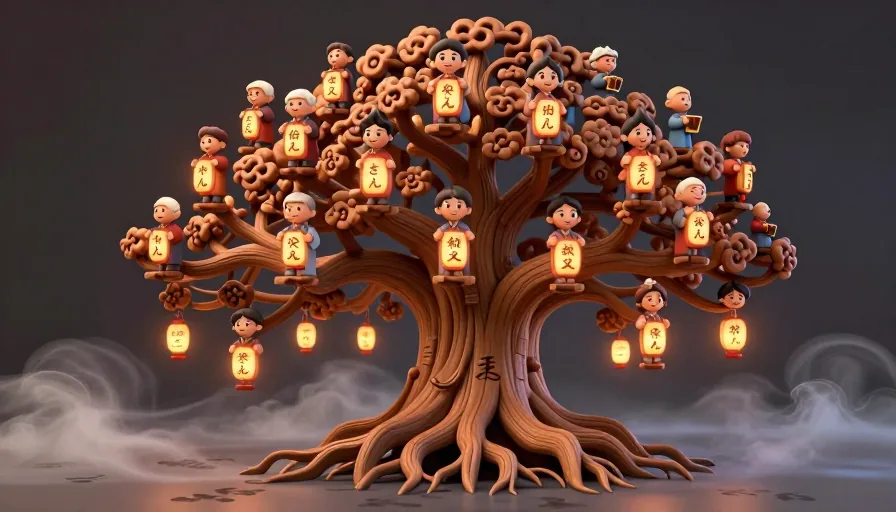
Learning the Japanese word for uncle is more than just memorizing a translation; it's about understanding the nuances of Japanese family structure and social relationships. This guide will help you navigate the different terms for 'uncle' in Japanese, providing practical examples and cultural context to enhance your language learning journey.
What is the Japanese Word for 'Uncle'?
The primary word for 'uncle' in Japanese is Ojisan (おじさん). This term is widely used and can be written in kanji as 伯父さん (oji-san) or 叔父さん (oji-san). However, the choice between these two kanji characters is not arbitrary; it depends on the specific familial relationship.
Mini Drill: Practice Writing Ojisan
Try writing the kanji for 伯父さん and 叔父さん. Which one do you think refers to an uncle older than your parent?
Understanding the Nuances: 伯父さん vs. 叔父さん
While both 伯父さん and 叔父さん can be translated as 'uncle,' they have distinct meanings based on the age of the uncle relative to the parent.
伯父さん (Oji-san)
- Meaning: Refers to an uncle who is older than your parent (their sibling).
- Example: If your mother has an older brother, he would be referred to as 伯父さん.
- Usage: This term is used in formal and informal contexts.
叔父さん (Oji-san)
- Meaning: Refers to an uncle who is younger than your parent (their sibling).
- Example: If your father has a younger brother, he would be referred to as 叔父さん.
- Usage: This term is also used in both formal and informal contexts.
Checklist: When to Use Which Term
- Identify the age of the uncle relative to your parent.
- Use 伯父さん if the uncle is older than your parent.
- Use 叔父さん if the uncle is younger than your parent.

Learn Languages with YouTube
Watch videos in your target language, auto-capture words into flashcards, and track your progress — all in one place.
See How It Works →Ojisan: More Than Just a Family Relation
In Japanese culture, the term Ojisan extends beyond just a familial relationship. It can also be used to address older men who are not related to you but are respected in the community. This usage highlights the importance of respect and hierarchy in Japanese society.
Practical Example
Imagine you are in a small Japanese town and you meet an older man who is known for his wisdom and community involvement. You might address him as Ojisan out of respect, even if he is not your uncle.
The Social Context and Nuance of Using Different Terms
Understanding the social context is crucial when using different terms for 'uncle' in Japanese. The choice of term can convey respect, familiarity, or formality, depending on the situation.
Contextual Examples
- Formal Context: When introducing your uncle to a stranger, you might say, "This is my 伯父さん (or 叔父さん)," depending on his age relative to your parent.
- Informal Context: Among family members, you might simply refer to him as Ojisan.
- Respectful Context: When addressing an older man in the community, you might use Ojisan to show respect.
How These Terms Relate to Family Structure in Japanese Culture
Japanese family structure is deeply rooted in hierarchy and respect for elders. The terms for 'uncle' reflect this structure, with specific terms for different familial relationships.
Family Structure Insights
- Hierarchy: Japanese society values hierarchy, and this is reflected in the language used to address family members.
- Respect: Using the correct term for 'uncle' shows respect for the familial relationship and the individual's position in the family.
- Community: The term Ojisan can also be used to address respected older men in the community, highlighting the importance of community and respect in Japanese culture.
Cultural Fluency Checklist
- Understand the difference between 伯父さん and 叔父さん.
- Know when to use Ojisan in a respectful context.
- Practice using these terms in different social situations.
- Reflect on the cultural significance of these terms in Japanese society.
By mastering the nuances of the Japanese word for uncle, you'll not only expand your vocabulary but also gain a deeper understanding of Japanese culture and family structure. This knowledge will enhance your language learning journey and help you communicate more effectively in Japanese.
FAQ
What if I'm not sure about the age of the uncle relative to my parent?
If you're unsure, it's generally acceptable to use Ojisan in a casual context. However, if you need to be more specific, you might ask for clarification or use the term that seems most appropriate based on the context.
Can I use Ojisan to address any older man?
While Ojisan can be used to address respected older men in the community, it's important to consider the context and the relationship. Using Ojisan inappropriately could be seen as disrespectful, so it's best to use it when there is a clear understanding and mutual respect.
Related phrases
Start with Metheus
Watch videos in your target language, auto-capture words into flashcards, and track your progress — all in one place.
Get Started →

