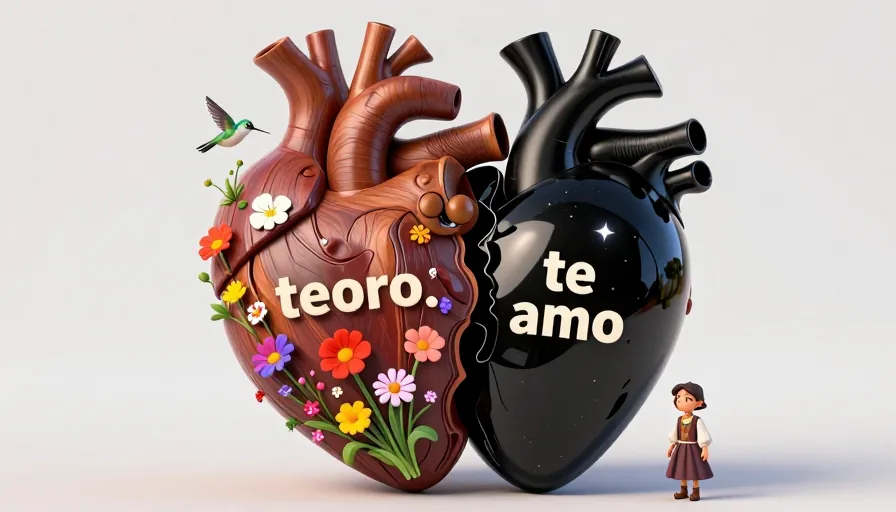
When learning how to say 'love ya' in Spanish, it's crucial to understand the cultural nuances and contextual usage. The direct translation of 'love ya' is 'te quiero,' but the emotional depth and social context can vary significantly. This guide will help you navigate the intricacies of expressing affection in Spanish, ensuring you use the right phrase in the right situation.
What Does 'Love Ya' Actually Mean in Spanish?
The phrase 'love ya' in Spanish translates to 'te quiero.' However, understanding the emotional weight behind 'te quiero' is essential. Unlike English, where 'love ya' can be a casual way to say goodbye, 'te quiero' carries a deeper emotional significance. It's often used to express affection, care, and warmth, but not necessarily romantic love. For example, you might say 'te quiero' to a close friend or family member, but not to a romantic partner.
Mini Drill: Practice 'Te Quiero'
- Translate 'I love you' in a non-romantic context: _______
- Translate 'I love you' in a romantic context: _______
- What would you say to a close friend you haven't seen in a while? _______
Te Quiero vs. Te Amo: Navigating Spanish Affection
While 'te quiero' is a common way to express affection, 'te amo' is reserved for deeper, more intense emotions. 'Te amo' is the equivalent of 'I love you' in English and is typically used in romantic contexts. Understanding the difference between 'te quiero' and 'te amo' is crucial for expressing the right level of affection.
Checklist: When to Use 'Te Quiero' vs. 'Te Amo'
- Use 'te quiero' for:
- Close friends
- Family members
- Casual, non-romantic contexts
- Use 'te amo' for:
- Romantic partners
- Deep, intense emotions
- Formal declarations of love
Context Matters: When to Use Informal Expressions
In Spanish, the context in which you use 'te quiero' or 'te amo' is just as important as the words themselves. Informal expressions like 'te quiero' are generally used in casual, everyday settings, while more formal expressions are reserved for special occasions or deeper emotional connections.
Example Sentences Demonstrating Appropriate Usage in Different Social Settings
- Casual Setting (Friend):
- English: 'See you later, love ya!'
- Spanish: '¡Nos vemos luego, te quiero!'
- Family Setting (Parent to Child):
- English: 'I love you, have a good day at school.'
- Spanish: 'Te quiero, ten un buen día en la escuela.'
- Romantic Setting (Partner):
- English: 'I love you more than words can express.'
- Spanish: 'Te amo más de lo que las palabras pueden expresar.'

Learn Languages with YouTube
Watch videos in your target language, auto-capture words into flashcards, and track your progress — all in one place.
See How It Works →Cultural Nuances: Understanding the Level of Intimacy Implied by the Phrase
The level of intimacy implied by 'te quiero' can vary depending on the region and cultural context. In some Latin American countries, 'te quiero' is a common way to express affection among friends and family, while in others, it might be reserved for more intimate relationships. Understanding these cultural nuances can help you navigate social interactions more effectively.
Comparative Analysis: Informal vs. Formal Ways to Express Affection
- Informal: 'Te quiero'
- Used in casual settings
- Expresses affection and care
- Not necessarily romantic
- Formal: 'Te amo'
- Used in romantic and deep emotional contexts
- Expresses intense love and commitment
- Often reserved for special occasions
Regional Variations: How 'Love Ya' Translates in Different Regions
The way 'love ya' translates and is used can vary significantly across different Spanish-speaking regions. For example, in Mexico, 'te quiero' is commonly used among friends and family, while in Spain, 'te quiero' might be more reserved for romantic contexts. Understanding these regional variations can help you communicate more effectively in different cultural settings.
Practical Examples of Regional Usage
- Mexico:
- 'Te quiero mucho, amigo.' (I love you a lot, friend.)
- Spain:
- 'Te quiero, mi amor.' (I love you, my love.)
- Argentina:
- 'Te quiero, che.' (I love you, buddy.)
Conclusion
Understanding how to say 'love ya' in Spanish involves more than just a literal translation. It requires a deep understanding of the cultural nuances, contextual usage, and emotional depth behind the phrases. By mastering the differences between 'te quiero' and 'te amo,' and knowing when to use informal vs. formal expressions, you can express your affection more accurately and meaningfully in Spanish.
Final Checklist: Mastering 'Love Ya' in Spanish
- Understand the emotional depth of 'te quiero' vs. 'te amo'
- Know when to use informal vs. formal expressions
- Recognize regional variations in usage
- Practice using 'te quiero' and 'te amo' in different social settings
By following this guide, you'll be well on your way to expressing your affection in Spanish with confidence and cultural sensitivity.
FAQ
Is 'te quiero' always used for romantic love?
No, 'te quiero' is often used to express affection, care, and warmth in non-romantic contexts, such as with friends and family. It's more about the feeling of affection rather than romantic love.
Can 'te amo' be used casually?
No, 'te amo' is typically reserved for deep, intense emotions and romantic contexts. Using it casually could be seen as insincere or inappropriate.
How do I know when to use 'te quiero' vs. 'te amo'?
Consider the emotional depth and the context of your relationship. 'Te quiero' is for casual affection, while 'te amo' is for deep, romantic love. If you're unsure, it's better to err on the side of 'te quiero' to avoid any misunderstandings.
Related phrases
Start with Metheus
Watch videos in your target language, auto-capture words into flashcards, and track your progress — all in one place.
Get Started →

