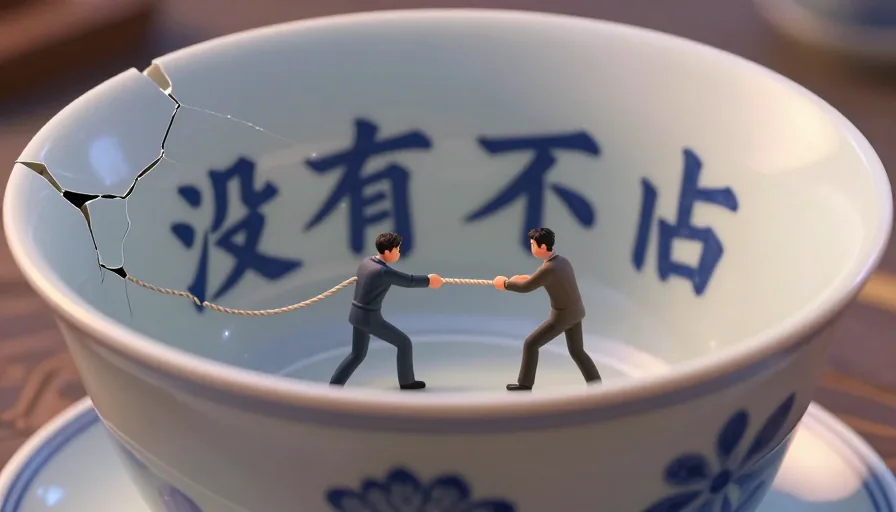
The Chinese word 'meiyou' (没有) is a fundamental component of negation, essential for expressing the absence of possession, actions, or existence. Unlike 'bu' (不), 'meiyou' is used to negate the presence of something, making it a crucial tool for achieving native-like fluency in Chinese. This guide will delve into the literal meaning of 'meiyou', its various usages, and how it differs from 'bu', providing clear examples and practical tips to help you master this important aspect of Chinese grammar.
没有 vs. 不: The Essential Difference
Understanding the difference between 'meiyou' and 'bu' is key to effective negation in Chinese. 'Meiyou' is used to negate the existence or possession of something, while 'bu' is used to negate actions, states, or qualities. For example:
- Meiyou: 我没有钱。 (Wǒ méi yǒu qián.) - I don't have money.
- Bu: 我不高兴。 (Wǒ bù gāo xìng.) - I am not happy.
When to Use 没有: Negating Possession and Existence
Negating Possession
'Meiyou' is commonly used to express the lack of possession. This includes not having an object, not having a skill, or not having a particular characteristic. For example:
- 我没有车。 (Wǒ méi yǒu chē.) - I don't have a car.
- 她没有朋友。 (Tā méi yǒu péng yǒu.) - She doesn't have any friends.
Negating Existence
'Meiyou' can also be used to negate the existence of something. This is useful when you want to say that something does not exist or is not present. For example:
- 这里没有咖啡。 (Zhè lǐ méi yǒu kā fēi.) - There is no coffee here.
- 这本书没有错。 (Zhè běn shū méi yǒu cuò.) - This book has no mistakes.
Common Mistakes to Avoid
- Confusing 'meiyou' with 'bu': Remember, 'meiyou' is for possession and existence, while 'bu' is for actions and states.
- Overusing 'meiyou': Be mindful of the context. 'Meiyou' should not be used to negate actions or states.
- Incorrect Placement: 'Meiyou' should be placed before the object or subject it negates.
When to Use 不: Negating Actions and States
Negating Actions
'Bu' is used to negate actions or events that have not occurred. This includes actions that are not happening, have not happened, or will not happen. For example:
- 我不去。 (Wǒ bù qù.) - I am not going.
- 她不吃饭。 (Tā bù chī fàn.) - She is not eating.
Negating States
'Bu' can also be used to negate states or qualities. This includes physical states, emotional states, or any other condition. For example:
- 我不高兴。 (Wǒ bù gāo xìng.) - I am not happy.
- 这本书不有趣。 (Zhè běn shū bù yǒu qù.) - This book is not interesting.

Learn Languages with YouTube
Watch videos in your target language, auto-capture words into flashcards, and track your progress — all in one place.
See How It Works →Advanced Usage: Deflecting Compliments
One advanced usage of 'meiyou' is deflecting compliments. This is a common scenario in Chinese where 'meiyou' is used to modestly deny praise. For example:
- 你真漂亮! (Nǐ zhēn piào liang!) - You are so beautiful!
- 没有,你才漂亮。 (Méi yǒu, nǐ cái piào liang.) - No, you are the beautiful one.
Practical Checklist for Mastering 'Meiyou'
- Identify the Context: Determine if you are negating possession, existence, or an action.
- Choose the Correct Word: Use 'meiyou' for possession and existence, and 'bu' for actions and states.
- Practice Sentence Structures: Create sentences using 'meiyou' and 'bu' in various contexts.
- Listen and Repeat: Listen to native speakers and repeat their sentences to get a feel for the natural flow.
- Mini Drills: Practice short dialogues with a language partner or tutor to reinforce your understanding.
Mini Drills for Practice
- Possession: Create 5 sentences using 'meiyou' to negate possession.
- Existence: Create 5 sentences using 'meiyou' to negate existence.
- Actions: Create 5 sentences using 'bu' to negate actions.
- States: Create 5 sentences using 'bu' to negate states.
- Deflecting Compliments: Practice 5 dialogues where you use 'meiyou' to deflect compliments.
By following this guide and practicing regularly, you will be able to use 'meiyou' and 'bu' with confidence, achieving a more native-like fluency in Chinese.
Side-by-Side Comparisons
Complex Sentence Structures
-
Meiyou: 我没有时间去看电影。 (Wǒ méi yǒu shí jiān qù kàn diàn yǐng.) - I don't have time to watch a movie.
-
Bu: 我不想去看电影。 (Wǒ bù xiǎng qù kàn diàn yǐng.) - I don't want to watch a movie.
-
Meiyou: 这里没有咖啡。 (Zhè lǐ méi yǒu kā fēi.) - There is no coffee here.
-
Bu: 这里不卖咖啡。 (Zhè lǐ bù mài kā fēi.) - They don't sell coffee here.
Common Learner Errors
- Overgeneralization: Avoid using 'meiyou' for all negations. Remember, 'meiyou' is specific to possession and existence.
- Incorrect Word Order: Ensure 'meiyou' is placed correctly in the sentence to avoid confusion.
- Contextual Misuse: Be aware of the context and choose the appropriate negation word.
By understanding these nuances and practicing regularly, you will be able to use 'meiyou' and 'bu' effectively, enhancing your Chinese language skills.
Conclusion
Mastering 'meiyou' and 'bu' is essential for achieving native-like fluency in Chinese. By understanding their differences and practicing with real-life examples, you can confidently use these negation words in various contexts. Remember to focus on the context, choose the correct word, and practice regularly to improve your language skills.
FAQ
Can 'meiyou' be used to negate actions?
No, 'meiyou' is specifically used to negate possession and existence. For negating actions, use 'bu'. For example, '我没有吃饭' (Wǒ méi yǒu chī fàn.) is incorrect; instead, say '我不吃饭' (Wǒ bù chī fàn.) - I am not eating.
Is 'meiyou' always placed before the object it negates?
Yes, 'meiyou' should always be placed before the object or subject it negates. For example, '我没有钱' (Wǒ méi yǒu qián.) - I don't have money.
Can 'meiyou' be used to deflect compliments?
Yes, 'meiyou' is commonly used to modestly deflect compliments in Chinese. For example, '你真漂亮!' (Nǐ zhēn piào liang!) - You are so beautiful! '没有,你才漂亮。' (Méi yǒu, nǐ cái piào liang.) - No, you are the beautiful one.
Related phrases
Start with Metheus
Watch videos in your target language, auto-capture words into flashcards, and track your progress — all in one place.
Get Started →

