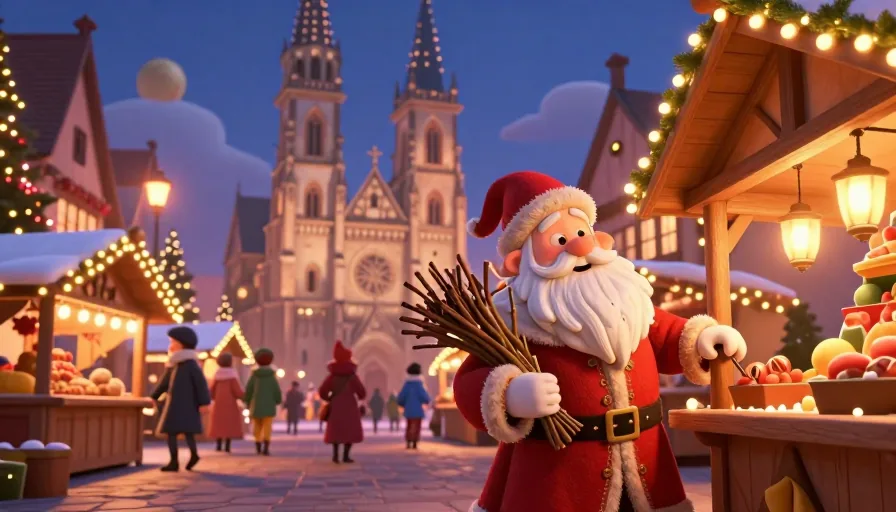
Nikolaustag, or St. Nicholas Day, is a beloved holiday in German-speaking countries, celebrated on December 6th. This festive tradition is rich with history and cultural significance, making it an excellent opportunity for language learners to dive into German culture while expanding their vocabulary. Unlike Christmas, which is celebrated on December 24th and 25th, Nikolaustag marks the beginning of the festive season in Germany, Austria, and Switzerland.
What is Nikolaustag? History and Significance
Nikolaustag honors St. Nicholas, a historical figure known for his generosity and kindness. Born in the 4th century in what is now Turkey, St. Nicholas became a bishop and was renowned for his charitable deeds. Over time, his legacy evolved into a festive tradition celebrated across Europe, with unique customs and rituals in German-speaking countries.
Key Historical Figures
- St. Nicholas: The central figure of the holiday, known for his generosity and kindness.
- Knecht Ruprecht: A companion to St. Nicholas, often depicted as a frightening figure who accompanies St. Nicholas to encourage good behavior in children.
- Krampus: A demonic figure from Alpine folklore who, like Knecht Ruprecht, is associated with St. Nicholas and is used to scare children into good behavior.
Traditions and Customs: What Happens on St. Nicholas Day?
On Nikolaustag, children in German-speaking countries eagerly await the arrival of St. Nicholas. They leave their shoes or boots outside their doors on the evening of December 5th, hoping that St. Nicholas will fill them with treats and small gifts. If the children have been well-behaved, they wake up to find their shoes filled with chocolates, nuts, and other goodies. However, if they have misbehaved, they might find a lump of coal or a switch (a small bundle of twigs) left by Knecht Ruprecht as a reminder to improve their behavior.
Practical Checklist for Celebrating Nikolaustag
- Prepare Your Shoes: Clean and polish your shoes or boots the night before Nikolaustag.
- Write a Letter to St. Nicholas: Children often write letters to St. Nicholas, expressing their gratitude and asking for small gifts or treats.
- Leave Out a Treat for St. Nicholas: Some families leave out a small treat, such as a cookie or a piece of fruit, for St. Nicholas as a token of appreciation.
- Check Your Shoes in the Morning: Wake up early on Nikolaustag to see what St. Nicholas has left for you.
- Share the Joy: Share your treats with family and friends, and enjoy the festive spirit of the season.
Key German Vocabulary for the Festive Season
Learning key vocabulary related to Nikolaustag can enhance your understanding and enjoyment of the holiday. Here are some essential phrases and words:
- Nikolaustag: St. Nicholas Day
- St. Nikolaus: St. Nicholas
- Knecht Ruprecht: A companion to St. Nicholas, often depicted as a frightening figure
- Krampus: A demonic figure from Alpine folklore
- Geschenke: Gifts
- Leckereien: Treats
- Schuhe: Shoes
- Stiefel: Boots
- Weihnachten: Christmas
- Festliche Grüße: Festive greetings
- Gute Taten: Good deeds
- Artig sein: To be well-behaved
- Unartig sein: To be naughty
- Kohle: Coal
- Rute: Switch (a small bundle of twigs)
Mini Drill: Translate and Practice
- Translate the following English phrases into German:
- Happy St. Nicholas Day!
- I left my shoes outside last night.
- I found treats in my boots this morning.
- I hope St. Nicholas brings me gifts.
- I was well-behaved this year.
- Practice using the vocabulary in sentences:
- Describe what you would do to prepare for Nikolaustag.
- Explain the difference between Knecht Ruprecht and Krampus.
- Share a festive greeting with a friend or family member.

Learn Languages with YouTube
Watch videos in your target language, auto-capture words into flashcards, and track your progress — all in one place.
See How It Works →Nikolaustag vs. Christmas: Understanding German Festive Timing
In German-speaking countries, the festive season begins with Nikolaustag on December 6th, marking the start of the holiday celebrations. This is in contrast to many other cultures, where Christmas is the primary focus. Understanding the timing and significance of Nikolaustag can help language learners appreciate the cultural nuances of German-speaking countries.
Comparison to Other Cultures
- United States: Christmas is celebrated on December 25th, with gift-giving and family gatherings.
- United Kingdom: Christmas is celebrated on December 25th, with traditions such as Christmas dinner and caroling.
- Mexico: Christmas celebrations include Las Posadas, a nine-day festival leading up to Christmas Eve.
- Germany: Nikolaustag marks the beginning of the festive season, with Christmas celebrations continuing through December 24th and 25th.
Practical Phrases for Discussing the Holiday
Learning practical phrases can help you engage in conversations about Nikolaustag and its traditions. Here are some useful phrases:
- Frohen Nikolaustag!: Happy St. Nicholas Day!
- Ich habe meine Schuhe draußen gelassen.: I left my shoes outside.
- Ich habe Leckereien in meinen Stiefeln gefunden.: I found treats in my boots.
- Ich hoffe, dass St. Nikolaus mir Geschenke bringt.: I hope St. Nicholas brings me gifts.
- Ich war dieses Jahr artig.: I was well-behaved this year.
- Ich habe eine Rute von Knecht Ruprecht bekommen.: I got a switch from Knecht Ruprecht.
- Ich habe Kohle von St. Nikolaus bekommen.: I got coal from St. Nicholas.
- Ich habe St. Nikolaus einen Brief geschrieben.: I wrote a letter to St. Nicholas.
- Ich habe St. Nikolaus eine Leckerei dagelassen.: I left a treat for St. Nicholas.
- Ich habe meine Schuhe geputzt.: I polished my shoes.
Mini Drill: Role-Play a Conversation
- Pair up with a language partner or friend.
- Practice a conversation about Nikolaustag, using the practical phrases provided.
- Take turns asking and answering questions about the holiday and its traditions.
Conclusion
Nikolaustag is a cherished tradition in German-speaking countries, offering a unique opportunity for language learners to immerse themselves in the culture and language. By understanding the history, traditions, and key vocabulary associated with Nikolaustag, you can enhance your language skills and gain a deeper appreciation for German festive customs. Whether you're celebrating with family and friends or simply learning about the holiday, Nikolaustag is a festive and enriching experience.
FAQ
Why is Nikolaustag celebrated on December 6th?
Nikolaustag is celebrated on December 6th to honor the feast day of St. Nicholas, a historical figure known for his generosity and kindness. This date marks the beginning of the festive season in German-speaking countries, leading up to Christmas.
What should I do if I find a switch (Rute) in my shoes on Nikolaustag?
If you find a switch in your shoes on Nikolaustag, it is a sign from Knecht Ruprecht that you have been naughty. This is a reminder to improve your behavior. You can use this as an opportunity to reflect on your actions and make amends.
How can I prepare for Nikolaustag if I am not in a German-speaking country?
Even if you are not in a German-speaking country, you can still prepare for Nikolaustag by learning about the traditions and vocabulary associated with the holiday. You can write a letter to St. Nicholas, leave out a treat, and polish your shoes or boots. You can also share the festive spirit with friends and family by exchanging gifts and treats.
Related phrases
Start with Metheus
Watch videos in your target language, auto-capture words into flashcards, and track your progress — all in one place.
Get Started →

