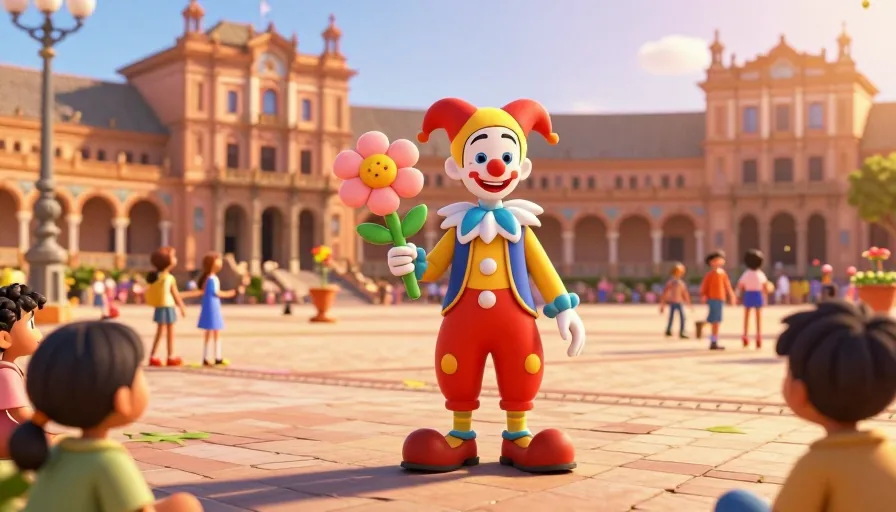
The term payaso meaning in English can be nuanced and context-dependent. While it primarily translates to 'clown,' 'fool,' or 'entertainer,' understanding its usage in different contexts is crucial for effective communication in Spanish. This guide will delve into the various meanings, provide practical examples, and offer interactive quizzes to solidify your understanding.
What is 'Payaso' in English?
The word 'payaso' is a versatile term in Spanish that can be translated into English in several ways. The most common translations are 'clown,' 'fool,' and 'entertainer.' Each of these translations carries a slightly different connotation, and understanding these nuances is essential for accurate communication.
Primary English Translations
-
Clown: This is the most literal translation and is often used in the context of circuses or entertainment. For example, 'El payaso hizo reír a todos los niños' translates to 'The clown made all the children laugh.'
-
Fool: In some contexts, 'payaso' can refer to someone who acts foolishly or irresponsibly. For instance, 'No seas payaso y termina tu tarea' means 'Don't be a fool and finish your homework.'
-
Entertainer: This translation is often used in broader contexts where the focus is on providing entertainment. For example, 'El payaso del cumpleaños hizo un espectáculo increíble' translates to 'The birthday entertainer put on an incredible show.'
Contextual Meanings of 'Payaso': Clown vs. Fool
Understanding the contextual usage of 'payaso' is crucial for accurate communication. The term can have different meanings depending on the situation.
Clown in a Circus
In the context of a circus or a children's party, 'payaso' is often used to refer to a clown. For example, 'El payaso del circo hizo reír a todos' translates to 'The circus clown made everyone laugh.'
Fool in Everyday Life
In everyday life, 'payaso' can be used to describe someone who is acting foolishly or irresponsibly. For example, 'No seas payaso y termina tu tarea' means 'Don't be a fool and finish your homework.'
Entertainer in Social Events
In social events, 'payaso' can refer to an entertainer who provides amusement. For example, 'El payaso del cumpleaños hizo un espectáculo increíble' translates to 'The birthday entertainer put on an incredible show.'
Examples of 'Payaso' in Spanish Sentences
To better understand the usage of 'payaso,' let's look at some practical examples in Spanish sentences.
Example 1: Circus Context
Spanish: El payaso del circo hizo reír a todos los niños. English: The circus clown made all the children laugh.
Example 2: Foolish Behavior
Spanish: No seas payaso y termina tu tarea. English: Don't be a fool and finish your homework.
Example 3: Entertainer at a Party
Spanish: El payaso del cumpleaños hizo un espectáculo increíble. English: The birthday entertainer put on an incredible show.
Grammatical Context
While 'payaso' is a noun and its grammatical context is relatively straightforward, it's important to note how it fits into sentences. 'Payaso' can be used as a subject, object, or complement in a sentence. For example:
- Subject: El payaso hizo reír a todos.
- Object: Vi al payaso en el circo.
- Complement: Es un payaso.
Related Vocabulary and Idiomatic Expressions
Understanding related vocabulary and idiomatic expressions can enhance your comprehension of 'payaso.'
Related Vocabulary
-
Payasada: A foolish or silly act. For example, 'Hizo una payasada en la fiesta' translates to 'He did something silly at the party.'
-
Payasito: A diminutive form of 'payaso,' often used to refer to a small clown or a playful person. For example, 'El payasito hizo reír a todos los niños' translates to 'The little clown made all the children laugh.'
Idiomatic Expressions
-
Ser un payaso: To be a fool or to act foolishly. For example, 'No seas un payaso y termina tu tarea' means 'Don't be a fool and finish your homework.'
-
Hacer el payaso: To act like a clown or to behave foolishly. For example, 'Deja de hacer el payaso y ponte a trabajar' translates to 'Stop acting like a clown and get to work.'

Learn Languages with YouTube
Watch videos in your target language, auto-capture words into flashcards, and track your progress — all in one place.
See How It Works →Comparative Analysis: Formal vs. Informal Contexts
The usage of 'payaso' can vary significantly between formal and informal contexts. Understanding these differences is crucial for effective communication.
Formal Contexts
In formal contexts, 'payaso' is often used to refer to a professional entertainer or clown. For example, 'El payaso del circo hizo reír a todos los niños' translates to 'The circus clown made all the children laugh.'
Informal Contexts
In informal contexts, 'payaso' can be used to describe someone who is acting foolishly or irresponsibly. For example, 'No seas payaso y termina tu tarea' means 'Don't be a fool and finish your homework.'
Interactive Examples and Quizzes
To solidify your understanding of 'payaso,' try these interactive examples and quizzes.
Quiz 1: Fill in the Blank
Complete the following sentences with the correct form of 'payaso.'
- El
del circo hizo reír a todos los niños. 2. No seas
y termina tu tarea. 3. El
del cumpleaños hizo un espectáculo increíble.
Quiz 2: True or False
Determine whether the following statements are true or false.
- 'Payaso' can only be used to refer to a clown in a circus.
- 'Payaso' can be used to describe someone who is acting foolishly.
- 'Payaso' is always used in a positive context.
Cultural Connotations of 'Payaso'
The term 'payaso' carries cultural connotations that go beyond its literal meaning. Understanding these nuances can enhance your comprehension and usage of the word.
Positive Connotations
In many cultures, 'payaso' is associated with joy, laughter, and entertainment. For example, in Spanish-speaking countries, clowns are often seen as symbols of fun and happiness, especially in children's events.
Negative Connotations
In some contexts, 'payaso' can have negative connotations, referring to someone who is acting foolishly or irresponsibly. For example, 'No seas payaso y termina tu tarea' means 'Don't be a fool and finish your homework.'
Checklist for Mastering 'Payaso'
To master the usage of 'payaso,' follow this checklist:
- Understand the primary English translations: clown, fool, entertainer.
- Learn the contextual meanings in different situations.
- Practice with example sentences and quizzes.
- Explore related vocabulary and idiomatic expressions.
- Compare formal and informal usage.
- Reflect on the cultural connotations of the term.
By following this checklist, you'll be well on your way to mastering the meaning and usage of 'payaso' in Spanish.
Conclusion
Understanding the payaso meaning in English and its various contexts is essential for effective communication in Spanish. By exploring the primary translations, contextual usage, grammatical context, related vocabulary, and cultural connotations, you can enhance your Spanish vocabulary and communication skills. Practice with example sentences, quizzes, and interactive examples to solidify your understanding and become a more confident Spanish speaker.
FAQ
Is 'payaso' always used to refer to a clown?
No, 'payaso' can have different meanings depending on the context. It can refer to a clown, a fool, or an entertainer. Understanding the context is crucial for accurate communication.
Can 'payaso' be used in formal contexts?
Yes, 'payaso' can be used in formal contexts, especially when referring to a professional entertainer or clown. However, it is more commonly used in informal contexts to describe someone acting foolishly.
What are some related vocabulary and idiomatic expressions involving 'payaso'?
Related vocabulary includes 'payasada' (a foolish act) and 'payasito' (a small clown). Idiomatic expressions include 'ser un payaso' (to be a fool) and 'hacer el payaso' (to act like a clown).
Related phrases
Start with Metheus
Watch videos in your target language, auto-capture words into flashcards, and track your progress — all in one place.
Get Started →

