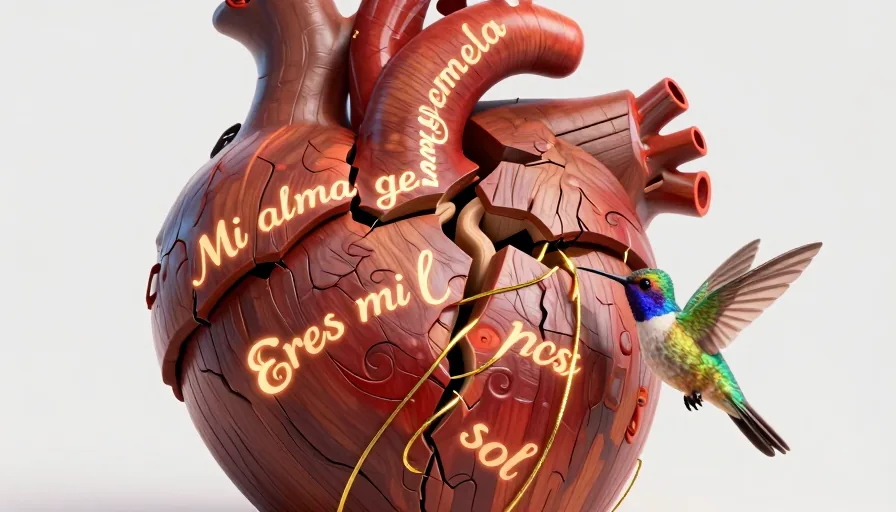
Learn how to express your feelings with a variety of romantic Spanish phrases that go beyond the basic 'Te Amo'. This guide covers essential phrases for every stage of your relationship, from initial flirtations to deep, enduring affection. We'll explore cultural context, situational usage, and provide practical examples to help you navigate the nuances of Spanish romantic language.
Essential Romantic Phrases for Every Stage of Your Relationship
New Relationships: Sparking Interest
When you're just getting to know someone, you'll want to use phrases that are charming and respectful. Here are some romantic Spanish phrases to help you make a great first impression:
- ¿Te gustaría salir conmigo? (Would you like to go out with me?)
- Eres muy guapo/a. (You are very handsome/beautiful.)
- Me encanta pasar tiempo contigo. (I love spending time with you.)
Mini Drill: Practice these phrases with a friend or language exchange partner. Try to use them in different contexts to build confidence.
Deepening Connections: Expressing Affection
As your relationship grows, you'll want to express your deepening feelings with more meaningful romantic Spanish phrases:
- Me importas mucho. (You mean a lot to me.)
- Estoy loco/a por ti. (I'm crazy about you.)
- Eres mi media naranja. (You are my better half.)
Checklist for Deepening Connections:
- Use these phrases in conversations to express your feelings.
- Pay attention to your partner's reactions and adjust your language accordingly.
- Incorporate these phrases into your daily conversations to build intimacy.
Long-Term Love: Reinforcing Your Bond
In long-term relationships, it's important to keep the romance alive with heartfelt romantic Spanish phrases:
- Te adoro. (I adore you.)
- Eres el amor de mi vida. (You are the love of my life.)
- Contigo quiero envejecer. (I want to grow old with you.)
Cultural Tip: In some Spanish-speaking regions, public displays of affection are more common and accepted. However, in others, they may be seen as inappropriate. Always respect local customs and your partner's comfort level.

Learn Languages with YouTube
Watch videos in your target language, auto-capture words into flashcards, and track your progress — all in one place.
See How It Works →Beyond 'Te Amo': Nuances in Expressing Deep Affection
While 'Te Amo' is the most direct way to say 'I love you' in Spanish, there are many other ways to express deep affection. Here are some variations and their nuances:
- Te quiero: This phrase is often used to express a deep, platonic love, but it can also be used romantically in some regions. It's less intense than 'Te Amo'.
- Estoy enamorado/a de ti: This phrase means 'I am in love with you'. It's a strong declaration of romantic love.
- Me has robado el corazón: This phrase means 'You have stolen my heart'. It's a dramatic way to express deep affection.
Common Mistake: Avoid using 'Te Amo' too early in a relationship, as it can come across as too intense. Instead, use phrases like 'Me gustas mucho' (I like you very much) or 'Me encantas' (I am crazy about you).
Flirty & Playful: Pick-up Lines and Charming Compliments
When you want to add a bit of fun and flirtation to your conversations, try these romantic Spanish phrases:
- Tienes unos ojos preciosos. (You have beautiful eyes.)
- Eres como un sueño. (You are like a dream.)
- ¿Puedo invitarte a una copa? (Can I buy you a drink?)
Checklist for Flirty Conversations:
- Use these phrases in a lighthearted and respectful manner.
- Pay attention to your partner's reactions and adjust your language accordingly.
- Incorporate these phrases into your conversations to build a playful dynamic.
Cultural Context for Using Romantic Spanish Phrases
Spanish is spoken in many countries, and cultural norms can vary greatly. Here are some tips for using romantic Spanish phrases in different regions:
- Spain: Spaniards tend to be more direct and expressive. Public displays of affection are common, and using romantic phrases is generally well-received.
- Latin America: In many Latin American countries, public displays of affection are less common, and people may be more reserved. Always respect local customs and your partner's comfort level.
Cultural Tip: In some Latin American countries, using the informal 'tú' form is more common, while in others, the formal 'usted' form is preferred. Always ask your partner which form they prefer.
Situational Usage: When and Where to Use Romantic Spanish Phrases
The context in which you use romantic Spanish phrases is just as important as the phrases themselves. Here are some tips for different situations:
- First Dates: Use lighthearted and respectful phrases to build a connection. Avoid using intense phrases like 'Te Amo' too early.
- Anniversaries: Use heartfelt and romantic phrases to express your deep affection. This is a great time to use phrases like 'Eres el amor de mi vida' (You are the love of my life).
- Everyday Conversations: Incorporate romantic phrases into your daily conversations to build intimacy and reinforce your bond.
Mini Drill: Practice using these phrases in different contexts with a friend or language exchange partner. Try to use them in different situations to build confidence.
Conclusion
Mastering romantic Spanish phrases is a great way to express your feelings and build deeper connections. By understanding the nuances of these phrases and using them in the right context, you can create a more meaningful and authentic experience for both you and your partner.
FAQ
Is it okay to use 'Te Amo' on a first date?
Using 'Te Amo' on a first date can come across as too intense. Instead, use lighter phrases like 'Me gustas mucho' (I like you very much) or 'Me encantas' (I am crazy about you).
Are public displays of affection acceptable in all Spanish-speaking countries?
No, public displays of affection are not acceptable in all Spanish-speaking countries. In some regions, they may be seen as inappropriate. Always respect local customs and your partner's comfort level.
How can I tell if my partner prefers the informal 'tú' or the formal 'usted' form?
Ask your partner which form they prefer. In some Latin American countries, the informal 'tú' form is more common, while in others, the formal 'usted' form is preferred.
Related phrases
Start with Metheus
Watch videos in your target language, auto-capture words into flashcards, and track your progress — all in one place.
Get Started →

