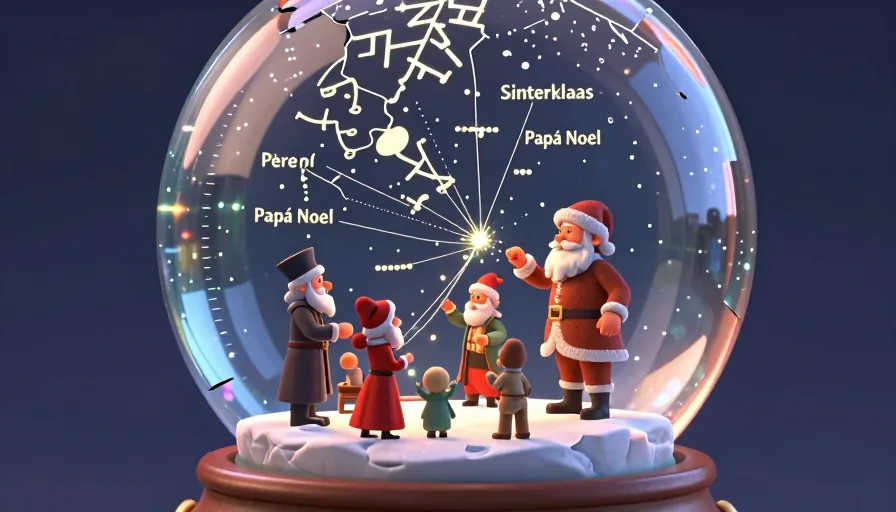
Santa nicknames offer a unique window into the cultural and linguistic diversity of Christmas traditions around the world. By exploring these names, language learners can enrich their vocabulary and gain insights into different cultures. This guide will take you on a journey through santa nicknames, their origins, and how to use them effectively in context.
The Global Dictionary of Santa Nicknames: A Linguistic Tour
English: Santa Claus and Father Christmas
In English-speaking countries, Santa Claus is the most common name. Derived from the Dutch 'Sinterklaas,' it reflects the influence of Dutch settlers in America. 'Father Christmas' is another popular term, emphasizing the jolly, gift-giving figure associated with the holiday season.
Example Sentence: Santa Claus is coming to town, and Father Christmas will bring joy to all the children.
French: Père Noël and Papa Noël
In France, 'Père Noël' (Father Christmas) and 'Papa Noël' (Daddy Christmas) are widely used. These names highlight the familial and nurturing aspect of the Christmas figure, emphasizing the idea of a loving father bringing gifts.
Example Sentence: Les enfants attendent avec impatience l'arrivée de Père Noël et Papa Noël pour recevoir leurs cadeaux.
German: Weihnachtsmann
In Germany, 'Weihnachtsmann' (Christmas Man) is the traditional name. This term directly translates to 'Christmas Man,' reflecting the deep cultural roots of the holiday in German-speaking regions. The name is often used interchangeably with 'Nikolaus,' which is derived from Saint Nicholas, the historical figure behind the legend of Santa Claus.
Example Sentence: Der Weihnachtsmann bringt Geschenke für alle Kinder, die brav waren.
Spanish: Papá Noel
In Spanish-speaking countries, 'Papá Noel' (Daddy Noel) is the most common name. This term is similar to the French 'Papa Noël' and emphasizes the familial and nurturing aspect of the Christmas figure.
Example Sentence: Papá Noel trae regalos para todos los niños en Navidad.
Italian: Babbo Natale
In Italy, 'Babbo Natale' (Daddy Christmas) is the traditional name. This term is unique to Italian and reflects the country's rich cultural heritage and language.
Example Sentence: Babbo Natale porta doni a tutti i bambini buoni.

Learn Languages with YouTube
Watch videos in your target language, auto-capture words into flashcards, and track your progress — all in one place.
See How It Works →Decoding the Names: Cultural Context Behind Santa's Titles
Father Christmas vs. Weihnachtsmann
'Father Christmas' and 'Weihnachtsmann' both refer to the same figure but have different cultural connotations. 'Father Christmas' is more familial and nurturing, while 'Weihnachtsmann' is more direct and traditional. Understanding these nuances can help language learners appreciate the cultural context behind these names.
Formal vs. Informal Names for Santa
Formal names for Santa, such as 'Santa Claus' and 'Père Noël,' are often used in official contexts or in formal writing. Informal names, like 'Father Christmas' and 'Papá Noel,' are more commonly used in everyday conversation and informal settings. Recognizing the difference between formal and informal names can help language learners use the correct term in the appropriate context.
Interactive Quiz: Which Nickname Fits Which Country?
Test your knowledge with this interactive quiz. Match the following Santa nicknames with their respective countries:
- Père Noël
- Weihnachtsmann
- Papá Noel
- Babbo Natale
- Santa Claus
Answers:
- France
- Germany
- Spain
- Italy
- English-speaking countries
Practical Examples and Checklists for Language Learners
Example Sentences and Phrases
English: Santa Claus is coming to town, and Father Christmas will bring joy to all the children.
French: Les enfants attendent avec impatience l'arrivée de Père Noël et Papa Noël pour recevoir leurs cadeaux.
German: Der Weihnachtsmann bringt Geschenke für alle Kinder, die brav waren.
Spanish: Papá Noel trae regalos para todos los niños en Navidad.
Italian: Babbo Natale porta doni a tutti i bambini buoni.
Checklist for Vocabulary Acquisition
- Identify the Santa nickname in your target language.
- Learn the cultural context behind the name.
- Practice using the name in sentences.
- Listen to native speakers use the name in context.
- Use the name in conversations and writing.
Mini Drill: Fill in the Blanks
Complete the following sentences with the correct Santa nickname:
- In France, children wait for __________ to bring their gifts.
- In Germany, __________ delivers presents to all the good children.
- In Spain, __________ brings joy and gifts during the holiday season.
- In Italy, __________ is the traditional name for the Christmas figure.
- In English-speaking countries, __________ is the most common name for the Christmas figure.
Answers:
- Père Noël
- Weihnachtsmann
- Papá Noel
- Babbo Natale
- Santa Claus
Conclusion
Exploring santa nicknames from various languages is not only a fun way to learn about different cultures but also an effective method for expanding your vocabulary. By understanding the cultural context and linguistic roots of these names, language learners can gain a deeper appreciation for the diversity of Christmas traditions around the world. Use the examples, checklists, and interactive quizzes in this guide to enhance your language learning journey.
FAQ
Why are there so many different names for Santa Claus?
The different names for Santa Claus reflect the cultural and linguistic diversity of Christmas traditions around the world. Each name has its own unique history and significance, often rooted in the local language and customs.
How can learning about Santa nicknames help improve my language skills?
Learning about Santa nicknames can help improve your language skills by expanding your vocabulary and providing context for cultural expressions. It also offers practical examples and checklists to reinforce learning.
Are there any formal or informal rules for using these names?
Yes, there are formal and informal contexts for using Santa nicknames. For example, 'Santa Claus' and 'Père Noël' are more formal, while 'Father Christmas' and 'Papá Noel' are more informal. Understanding these nuances can help you use the correct term in the appropriate setting.
Related phrases
Start with Metheus
Watch videos in your target language, auto-capture words into flashcards, and track your progress — all in one place.
Get Started →

