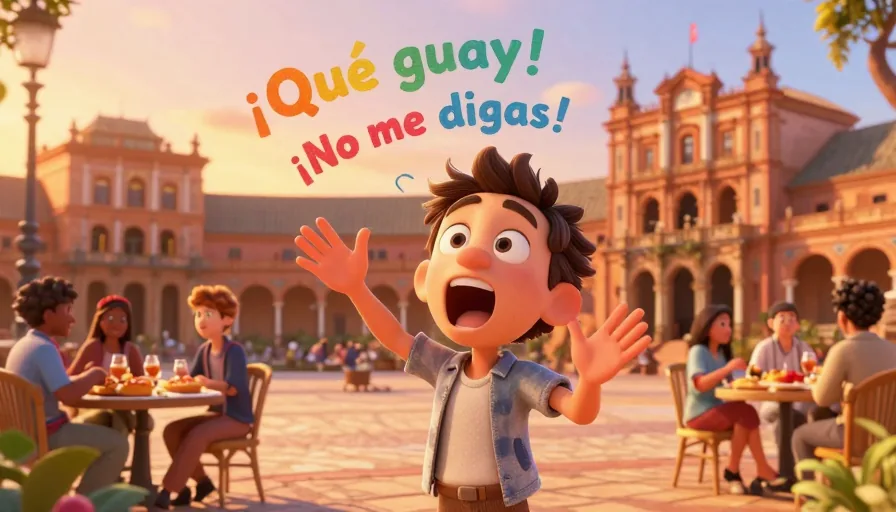
Spanish interjections are powerful tools for expressing a wide range of emotions in everyday conversations. They add depth and authenticity to your speech, making you sound more like a native speaker. This guide will help you understand and use Spanish interjections effectively, moving beyond simple lists to explore the cultural context and emotional nuances behind each expression.
The Emotional Spectrum: Interjections for Expressing Surprise and Shock
Spanish interjections for surprise and shock can vary greatly in intensity and formality. Here are some common examples:
- ¡Ay! - A mild expression of surprise or pain. Pronounced as /ai/.
- Example: ¡Ay! Se me olvidó mi cartera. (Ouch! I forgot my wallet.)
- ¡Ay, Dios mío! - A more intense expression of shock or disbelief. Pronounced as /ai, dios mi.o/.
- Example: ¡Ay, Dios mío! ¿Qué pasó? (Oh my God! What happened?)
- ¡Caramba! - An exclamation of surprise or annoyance. Pronounced as /ka'ram.ba/.
- Example: ¡Caramba! Llegaste tarde. (Gosh! You're late.)
Mini Drill: Surprise and Shock
- You accidentally step on someone's foot. What do you say?
- You see a car accident. What do you exclaim?
- You realize you've forgotten an important appointment. What do you say?
Navigating Conversation: Interjections for Agreement, Disagreement, and Confirmation
Interjections for agreement, disagreement, and confirmation help you navigate conversations smoothly. Here are some key examples:
- ¡Claro! - An enthusiastic agreement. Pronounced as /'kla.ro/.
- Example: ¿Vamos al cine? ¡Claro! (Let's go to the movies? Of course!)
- ¡Qué va! - An expression of disagreement or disbelief. Pronounced as /'ke va/.
- Example: ¿Te gusta la comida picante? ¡Qué va! (Do you like spicy food? No way!)
- ¿Sí? - A confirmation or check for understanding. Pronounced as /si/.
- Example: ¿Vamos a la playa mañana? ¿Sí? (Are we going to the beach tomorrow? Right?)
Checklist: Agreement and Disagreement
- Use ¡Claro! for enthusiastic agreement.
- Use ¡Qué va! for strong disagreement.
- Use ¿Sí? to confirm understanding.
Beyond the Basics: Contextualizing Interjections for Nuance
Understanding the context in which to use Spanish interjections is crucial for nuanced communication. Here are some tips:
- Formal vs. Informal: Some interjections are more formal than others. For example, ¡Ay, Dios mío! is more formal than ¡Ay!.
- Cultural Context: Interjections can have cultural significance. For instance, ¡Órale! is commonly used in Mexico to express excitement or agreement.
- Emotional Intensity: The intensity of the emotion can dictate the interjection. For mild surprise, use ¡Ay!; for intense shock, use ¡Ay, Dios mío!.
Comparison Chart: Formal vs. Informal Usage
| Formal | Informal |
|---|---|
| ¡Ay, Dios mío! | ¡Ay! |
| ¡Caray! | ¡Caramba! |
| ¡Órale! | ¡Vamos! |

Learn Languages with YouTube
Watch videos in your target language, auto-capture words into flashcards, and track your progress — all in one place.
See How It Works →Interjections vs. Conversational Fillers
It's important to distinguish between interjections and common conversational fillers. Interjections express emotion, while fillers like eh or um are used to pause or think.
- Interjections: ¡Ay!, ¡Caramba!, ¡Claro!
- Fillers: Eh, Um, Bueno
Mini Drill: Interjections vs. Fillers
- You're thinking about what to say next. What do you use?
- You're expressing surprise. What do you use?
- You're agreeing with someone. What do you use?
Practical Usage Examples
Here are some dialogues to illustrate the use of Spanish interjections:
Scenario 1: Surprise
Person A: ¡Ay! Se me olvidó mi cartera. (Ouch! I forgot my wallet.) Person B: ¡Ay, Dios mío! ¿Qué vamos a hacer? (Oh my God! What are we going to do?)
Scenario 2: Agreement
Person A: ¿Vamos al cine? (Let's go to the movies?) Person B: ¡Claro! (Of course!)
Scenario 3: Disagreement
Person A: ¿Te gusta la comida picante? (Do you like spicy food?) Person B: ¡Qué va! (No way!)
Interactive Quiz: Test Your Knowledge
- Which interjection would you use to express mild surprise? a) ¡Ay, Dios mío! b) ¡Ay! c) ¡Caramba!
- Which interjection would you use to express strong disagreement? a) ¡Claro! b) ¡Qué va! c) ¿Sí?
- Which interjection is more formal? a) ¡Ay! b) ¡Ay, Dios mío! c) ¡Caramba!
Pronunciation Guides for Difficult Sounds
- ¡Ay! - /ai/
- ¡Ay, Dios mío! - /ai, dios mi.o/
- ¡Caramba! - /ka'ram.ba/
- ¡Claro! - /'kla.ro/
- ¡Qué va! - /'ke va/
- ¿Sí? - /si/
Conclusion
Mastering Spanish interjections will significantly enhance your ability to express emotions and navigate conversations naturally. Practice using these interjections in various contexts to become more fluent and confident in your Spanish speaking skills.
By understanding the emotional impact and cultural context of each interjection, you'll be able to communicate more effectively and authentically. Happy learning!
FAQ
How do I know which interjection to use in different situations?
The choice of interjection depends on the emotional intensity and the formality of the situation. For example, use **¡Ay!** for mild surprise and **¡Ay, Dios mío!** for intense shock. Formal situations may require more polite interjections like **¡Ay, Dios mío!** instead of **¡Ay!**.
Are there any interjections that are considered rude or inappropriate?
While most interjections are neutral, some can be perceived as rude or inappropriate depending on the context. For example, **¡Caramba!** can express annoyance, so use it cautiously. Always consider the cultural and emotional context when choosing an interjection.
Can I use Spanish interjections in formal settings?
Yes, but choose them carefully. Some interjections are more formal than others. For example, **¡Ay, Dios mío!** is more formal than **¡Ay!**. In formal settings, it's best to use interjections that convey respect and politeness.
Related phrases
Start with Metheus
Watch videos in your target language, auto-capture words into flashcards, and track your progress — all in one place.
Get Started →

