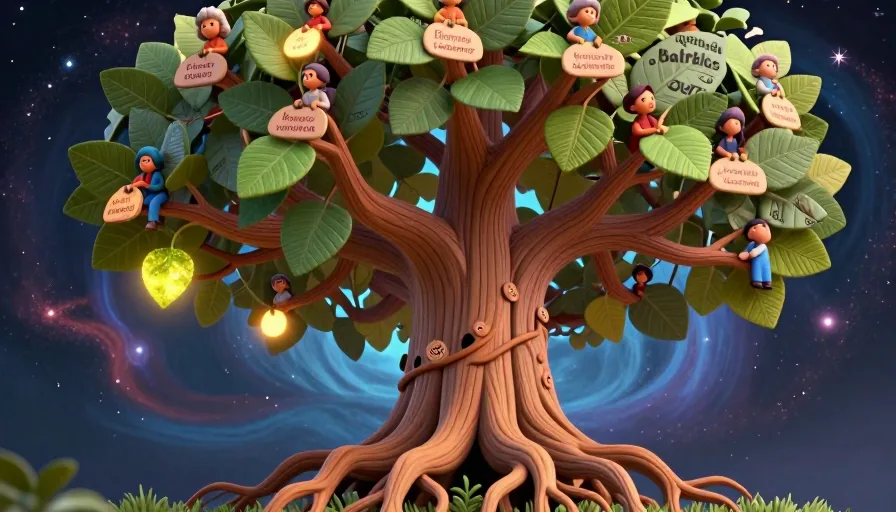
Understanding the spanish word for family is crucial for anyone learning Spanish, as family is a central theme in many conversations and cultural contexts. This guide will help you master the essential vocabulary, phrases, and cultural nuances related to family in Spanish.
Essential Spanish Words for Immediate Family
Let's start with the core Spanish words for immediate family members:
- Padre (Father) - El padre de Juan es médico. (Juan's father is a doctor.)
- Madre (Mother) - La madre de María es maestra. (Maria's mother is a teacher.)
- Hermano (Brother) - Mi hermano es mayor que yo. (My brother is older than me.)
- Hermana (Sister) - Mi hermana vive en Madrid. (My sister lives in Madrid.)
- Hijo (Son) - El hijo de Carlos es muy inteligente. (Carlos's son is very intelligent.)
- Hija (Daughter) - La hija de Ana es muy simpática. (Ana's daughter is very nice.)
Mini Drill: Try to create sentences using these terms to describe your own family or a fictional family.
Expanding Your Vocabulary: Extended Family Members
Next, let's explore the terms for extended family members:
- Abuelo (Grandfather) - Mi abuelo me cuenta historias interesantes. (My grandfather tells me interesting stories.)
- Abuela (Grandmother) - La abuela de Luis hace las mejores galletas. (Luis's grandmother makes the best cookies.)
- Tío (Uncle) - Mi tío vive en Barcelona. (My uncle lives in Barcelona.)
- Tía (Aunt) - La tía de Sofía es médica. (Sofía's aunt is a doctor.)
- Primo (Cousin, male) - Mi primo y yo jugamos fútbol juntos. (My cousin and I play soccer together.)
- Prima (Cousin, female) - Mi prima y yo vamos al cine. (My cousin and I go to the movies.)
Checklist:
- Can you name all the extended family members in Spanish?
- Can you create sentences using these terms?
Family Dynamics: Common Phrases and Expressions
Learning common family phrases and expressions will help you sound more natural in conversations. Here are some useful examples:
- ¿Cómo está tu familia? (How is your family?) - Mi familia está bien, gracias. (My family is fine, thank you.)
- Mi familia es grande. (My family is large.) - Tengo muchos hermanos y primos. (I have many brothers and cousins.)
- Mi familia es pequeña. (My family is small.) - Soy hijo único. (I am an only child.)
- Mi familia es muy unida. (My family is very close-knit.) - Nos reunimos todos los fines de semana. (We get together every weekend.)
Practical Example: Imagine you are introducing your family to a new friend. What phrases would you use?

Learn Languages with YouTube
Watch videos in your target language, auto-capture words into flashcards, and track your progress — all in one place.
See How It Works →Understanding Spanish Noun Gender in Family Contexts
Spanish nouns have a gender, which is either masculine or feminine. Understanding this is crucial for learning the spanish word for family. Here’s a quick guide:
- Masculine nouns usually end in -o (e.g., padre, hijo, tío).
- Feminine nouns usually end in -a (e.g., madre, hija, tía).
Visual Aid:
| Masculine | Feminine |
|---|---|
| Padre | Madre |
| Hermano | Hermana |
| Hijo | Hija |
| Abuelo | Abuela |
| Tío | Tía |
| Primo | Prima |
Practical Example: Try to identify the gender of each family member in the following sentences:
- El padre de Juan es médico. (Father is masculine.)
- La madre de María es maestra. (Mother is feminine.)
Common Family Idioms and Colloquialisms
Spanish is rich in idioms and colloquialisms related to family. Here are a few to help you sound more like a native speaker:
- Echar una mano (To lend a hand) - Mi hermano siempre echa una mano con las tareas del hogar. (My brother always lends a hand with household chores.)
- Ser el ojito derecho (To be the apple of someone's eye) - Mi sobrina es el ojito derecho de mi abuela. (My niece is the apple of my grandmother's eye.)
- Estar en la luna de miel (To be on your honeymoon) - Mis padres están en la luna de miel. (My parents are on their honeymoon.)
Mini Drill: Try to use these idioms in sentences describing your own family dynamics.
Cultural Context: How Family is Discussed in Spanish-Speaking Cultures
In Spanish-speaking cultures, family is often discussed with a strong sense of pride and closeness. Here are some cultural nuances to keep in mind:
- Family gatherings are common and often involve large groups of extended family members.
- Respect for elders is highly valued, and it's common to address older family members with formal titles like don or doña.
- Family support is crucial, and it's not uncommon for multiple generations to live under the same roof.
Practical Example: Imagine you are describing a typical family gathering in a Spanish-speaking country. What details would you include?
Conclusion
Mastering the spanish word for family and related vocabulary will greatly enhance your ability to communicate in Spanish. By understanding the nuances of family terms, phrases, and cultural contexts, you'll be well on your way to sounding like a native speaker.
Checklist for Mastery:
- Can you name all immediate and extended family members in Spanish?
- Can you create sentences using common family phrases?
- Do you understand the gender agreement of family nouns?
- Can you use family idioms and colloquialisms in context?
- Do you appreciate the cultural significance of family in Spanish-speaking cultures?
By following this guide and practicing regularly, you'll be able to confidently discuss family in Spanish.
FAQ
Why is understanding family vocabulary important in Spanish?
Understanding family vocabulary is crucial because family is a central theme in many conversations and cultural contexts in Spanish-speaking cultures. It helps you connect with people on a deeper level and understand the cultural nuances.
How do I remember the gender of Spanish family nouns?
Remembering the gender of Spanish family nouns can be challenging, but focusing on the typical endings (-o for masculine, -a for feminine) and practicing with sentences can help. Visual aids and regular practice are also effective.
What are some common mistakes to avoid when learning Spanish family vocabulary?
Common mistakes include confusing masculine and feminine nouns, using incorrect articles (el vs. la), and not understanding the cultural context. Regular practice and exposure to native speakers can help avoid these mistakes.
Related phrases
Start with Metheus
Watch videos in your target language, auto-capture words into flashcards, and track your progress — all in one place.
Get Started →

