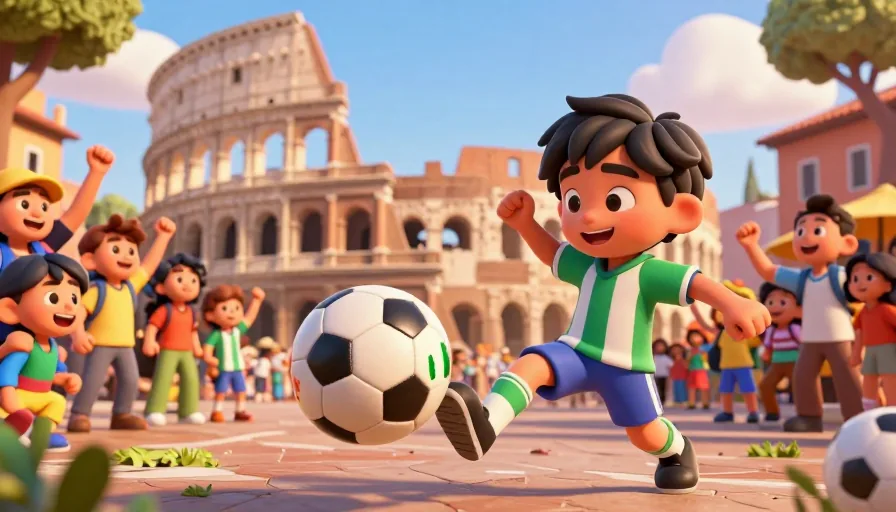
Sports in Italian are deeply rooted in the country's culture, with soccer (calcio) being the most popular. Understanding sports vocabulary in Italian not only enhances your language skills but also provides insight into Italian culture. This guide will cover essential sports vocabulary, key Italian sports, and common phrases used when discussing sports in Italian.
The Heart of Italian Sports: Why Soccer (Calcio) Dominates
Soccer, known as calcio in Italian, is more than just a sport in Italy; it's a way of life. The Italian national team has won the FIFA World Cup four times, and the country is home to some of the world's most prestigious soccer clubs, such as Juventus, AC Milan, and Inter Milan. The passion for calcio is evident in the streets, where children play impromptu games, and in the stadiums, where fans create an electric atmosphere.
Key Vocabulary for Soccer (Calcio)
To discuss soccer in Italian, familiarize yourself with the following terms:
- La partita (the match)
- Il gol (the goal)
- Il calcio d'angolo (the corner kick)
- Il rigore (the penalty kick)
- Il fuorigioco (offside)
- Il cartellino giallo (yellow card)
- Il cartellino rosso (red card)
- Il portiere (the goalkeeper)
- Il difensore (the defender)
- Il centrocampista (the midfielder)
- L'attaccante (the forward)
Mini Drill: Soccer Vocabulary
Translate the following English phrases into Italian:
- The referee showed a yellow card.
- The team scored a goal in the last minute.
- The player was offside.
- The goalkeeper made a great save.
- The match ended in a draw.
Essential Sports Vocabulary: From Calcio to Cycling
While calcio is the most popular sport, Italy has a rich sporting culture that includes other disciplines. Here are some essential vocabulary terms for various sports:
Basketball (Pallacanestro)
- Il canestro (the basket)
- Il tiro libero (the free throw)
- Il fallo (the foul)
- Il tempo (the quarter)
- Il tabellone (the scoreboard)
Volleyball (Pallavolo)
- Il pallone (the ball)
- Il servizio (the serve)
- Il punto (the point)
- Il muro (the block)
- Il palleggio (the bump)
Cycling (Ciclismo)
- La bicicletta (the bicycle)
- La corsa (the race)
- La salita (the climb)
- La discesa (the descent)
- Il traguardo (the finish line)
Tennis (Tennis)
- La racchetta (the racket)
- Il campo (the court)
- Il servizio (the serve)
- Il punto (the point)
- Il match (the match)
Common Mistakes in Sports Vocabulary
- Mistake: Using il pallone for basketball instead of la palla da basket.
- Mistake: Confusing il calcio (soccer) with il calcio (kick) in other sports.
- Mistake: Using il gol for a goal in basketball instead of il canestro.

Learn Languages with YouTube
Watch videos in your target language, auto-capture words into flashcards, and track your progress — all in one place.
See How It Works →How to Talk About Your Favorite Sport in Italian
When discussing your favorite sport in Italian, use the following phrases and structures:
- Mi piace giocare a [sport] (I like to play [sport]).
- Il mio sport preferito è [sport] (My favorite sport is [sport]).
- Guardo sempre le partite di [sport] (I always watch [sport] matches).
- Ho giocato a [sport] da bambino (I played [sport] as a child).
- Vado spesso a vedere le partite di [sport] (I often go to watch [sport] matches).
Checklist: Talking About Sports in Italian
- Learn the basic vocabulary for your favorite sport.
- Practice common phrases for discussing sports.
- Watch Italian sports commentary to improve listening skills.
- Join a sports club or group to practice speaking.
- Read articles about Italian sports to expand your vocabulary.
The Cultural Significance of Sports in Italy
Sports in Italy are not just about competition; they are deeply intertwined with the country's cultural identity. The World Cup, for example, is a time of national pride and unity. Italians celebrate their victories with parades and public gatherings, and defeats are mourned collectively. The passion for sports is evident in the streets, where children play impromptu games, and in the stadiums, where fans create an electric atmosphere.
The World Cup and Italian Culture
Italy's World Cup history is a source of national pride. The Italian national team has won the FIFA World Cup four times, and the country is home to some of the world's most prestigious soccer clubs, such as Juventus, AC Milan, and Inter Milan. The passion for calcio is evident in the streets, where children play impromptu games, and in the stadiums, where fans create an electric atmosphere.
Mini Drill: Cultural Context
Answer the following questions in Italian:
- Why is soccer so important in Italy?
- How do Italians celebrate when their national team wins the World Cup?
- What are some of the most famous soccer clubs in Italy?
- How do Italians react to a defeat in a major sporting event?
- What other sports are popular in Italy besides soccer?
Practical Examples: Sports Conversations in Italian
Example 1: Talking About Soccer
Italian: Mi piace molto il calcio. Guardo sempre le partite della Serie A e tifo per la Juventus. English: I love soccer very much. I always watch Serie A matches and support Juventus.
Example 2: Discussing a Basketball Game
Italian: Ho visto una partita di pallacanestro ieri sera. Era molto emozionante! English: I watched a basketball game last night. It was very exciting!
Example 3: Describing a Cycling Race
Italian: Il Giro d'Italia è una delle corse ciclistiche più famose al mondo. Ho sempre sognato di partecipare. English: The Giro d'Italia is one of the most famous cycling races in the world. I have always dreamed of participating.
Example 4: Talking About Tennis
Italian: Gioco a tennis ogni fine settimana. È un ottimo modo per mantenersi in forma. English: I play tennis every weekend. It's a great way to stay in shape.
Example 5: Discussing a Volleyball Match
Italian: Ho giocato a pallavolo al liceo. Era il mio sport preferito. English: I played volleyball in high school. It was my favorite sport.
Conclusion
Learning sports vocabulary in Italian is not just about mastering new words; it's about understanding the cultural context and passion that Italians have for their favorite sports. By practicing the vocabulary and phrases provided in this guide, you'll be well on your way to discussing sports in Italian like a native.
FAQ
Why is soccer (calcio) so important in Italian culture?
Soccer, or calcio, is deeply rooted in Italian culture due to its historical significance and the passion it evokes among fans. Italy has won the FIFA World Cup four times, and the sport is a source of national pride and unity. The excitement and emotion surrounding calcio are evident in the streets and stadiums, making it a central part of Italian life.
What are some common mistakes to avoid when learning sports vocabulary in Italian?
Common mistakes include using the wrong terms for specific sports (e.g., using 'il pallone' for basketball instead of 'la palla da basket'), confusing 'il calcio' (soccer) with 'il calcio' (kick) in other sports, and using 'il gol' for a goal in basketball instead of 'il canestro'. Familiarize yourself with the specific vocabulary for each sport to avoid these errors.
How can I practice discussing sports in Italian?
To practice discussing sports in Italian, start by learning the basic vocabulary for your favorite sport. Use common phrases for discussing sports, watch Italian sports commentary to improve your listening skills, join a sports club or group to practice speaking, and read articles about Italian sports to expand your vocabulary. Engaging with native speakers and immersing yourself in the language will enhance your proficiency.
Related phrases
Start with Metheus
Watch videos in your target language, auto-capture words into flashcards, and track your progress — all in one place.
Get Started →

