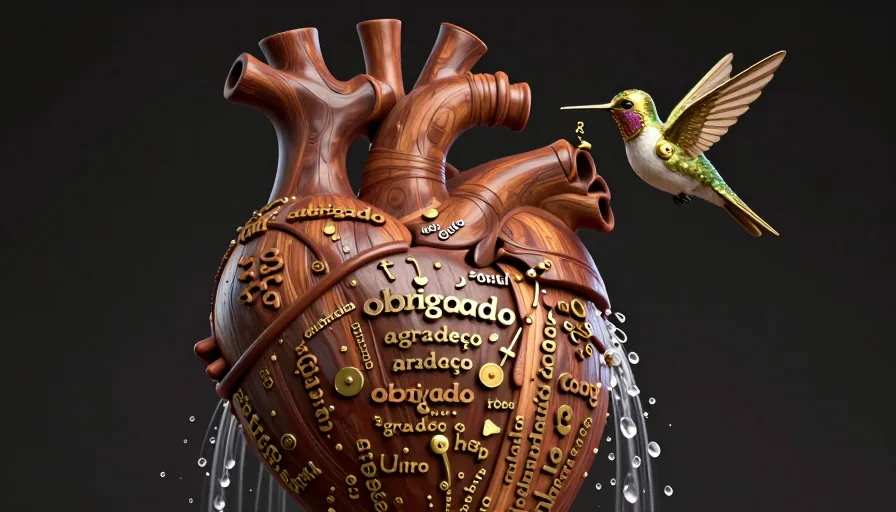
Learning how to say 'thanks in Portuguese' is essential for effective communication. Whether you're a beginner or an advanced learner, understanding the nuances of expressing gratitude in Portuguese can significantly enhance your language skills. This guide will explore different ways to say 'thank you,' the contextual usage, and common polite phrases to help you navigate various social situations.
The Most Common Ways to Say 'Thank You' in Portuguese
The most straightforward way to say 'thanks in Portuguese' is 'obrigado' for males and 'obrigada' for females. These are the direct translations of 'thank you' and are used in both formal and informal contexts.
- Obrigado (Thank you - male speaker)
- Obrigada (Thank you - female speaker)
Mini Drill: Practice Basic 'Thank You'
- Imagine you are a male speaker. How would you say 'thank you' to a friend?
- Imagine you are a female speaker. How would you say 'thank you' to a teacher?
Expressing Gratitude: Beyond 'Obrigado'
While 'obrigado' and 'obrigada' are the most common ways to say 'thanks in Portuguese,' there are several other expressions that can convey gratitude more subtly or in different contexts.
Valeu
'Valeu' is an informal way to say 'thanks' and is commonly used among friends and in casual settings. It is equivalent to saying 'cheers' or 'thanks a lot' in English.
- Valeu! (Thanks!)
Gratidão
'Gratidão' translates to 'gratitude' and is used to express a deeper sense of thankfulness. It is often used in formal contexts or when expressing profound gratitude.
- Muito obrigado/a pela sua gratidão. (Thank you very much for your gratitude.)
De Nada
'De nada' means 'you're welcome' and is used in response to someone thanking you. It is a polite way to acknowledge that you have received a thank you.
- De nada. (You're welcome.)
Checklist: When to Use Different Expressions
- Use 'obrigado' or 'obrigada' in formal and informal settings.
- Use 'valeu' in casual, informal settings with friends.
- Use 'gratidão' in formal settings or when expressing deep gratitude.
- Use 'de nada' in response to someone thanking you.
Formal vs. Informal: Contextual Usage
Understanding the formality levels in Portuguese is crucial for expressing gratitude appropriately. Here are some guidelines:
Formal Contexts
In formal contexts, such as professional settings or when addressing elders, it is essential to use more formal expressions. For example, 'muito obrigado' (thank you very much) or 'agradeço muito' (I appreciate it very much) are appropriate.
- Muito obrigado/a. (Thank you very much.)
- Agradeço muito. (I appreciate it very much.)
Informal Contexts
In informal contexts, such as with friends or family, you can use more casual expressions like 'valeu' or 'de boa' (no problem).
- Valeu! (Thanks!)
- De boa. (No problem.)

Learn Languages with YouTube
Watch videos in your target language, auto-capture words into flashcards, and track your progress — all in one place.
See How It Works →The Difference Between Expressing Thanks and Expressing Gratitude
Expressing thanks is a straightforward acknowledgment of a favor or kindness, while expressing gratitude involves a deeper sense of appreciation. In Portuguese, the distinction is subtle but important.
Expressing Thanks
- Obrigado/a (Thank you)
- Valeu (Thanks)
Expressing Gratitude
- Gratidão (Gratitude)
- Agradeço muito (I appreciate it very much)
Polite Phrases for Everyday Interactions
In addition to direct expressions of thanks, incorporating polite phrases into your daily interactions can enhance your communication skills. Here are some common polite phrases in Portuguese:
Common Polite Phrases
- Por favor (Please)
- Com licença (Excuse me)
- Desculpe (Sorry)
- De nada (You're welcome)
Integration of Polite Phrases
Integrating polite phrases with direct thank yous can make your interactions more fluid and respectful. For example:
- Por favor, pode me ajudar? (Please, can you help me?)
- Com licença, posso passar? (Excuse me, can I pass?)
- Desculpe, estou atrasado. (Sorry, I am late.)
- De nada, foi um prazer ajudar. (You're welcome, it was a pleasure to help.)
Addressing Common Learner Confusion
One common confusion among learners is the debate over using 'obrigado' versus other expressions. Here are some clarifications:
The 'Obrigado' Debate
- Obrigado and Obrigada are gender-specific and should be used based on the speaker's gender.
- Valeu is more casual and should be used in informal settings.
- Gratidão is more formal and should be used in deeper expressions of gratitude.
Checklist: Avoiding Common Mistakes
- Always match the gender of the speaker with 'obrigado' or 'obrigada'.
- Use 'valeu' only in casual settings.
- Reserve 'gratidão' for formal or deeply appreciative contexts.
Regional Variations and Nuances
Portuguese, like many languages, has regional variations that can affect how gratitude is expressed. Here are some regional nuances:
Brazilian Portuguese
In Brazilian Portuguese, 'valeu' is very common and is used frequently in everyday conversations. 'Obrigado' and 'obrigada' are also used but are considered more formal.
European Portuguese
In European Portuguese, 'obrigado' and 'obrigada' are more commonly used, and 'valeu' is less frequent. The language tends to be more formal overall.
Mini Drill: Regional Expressions
- Imagine you are in Brazil. How would you thank a friend for a favor?
- Imagine you are in Portugal. How would you thank a colleague for assistance?
Conclusion
Mastering 'thanks in Portuguese' involves understanding the various expressions, contextual usage, and regional nuances. By incorporating these elements into your language learning, you can communicate more effectively and respectfully in Portuguese-speaking environments.
Final Checklist
- Practice using 'obrigado' and 'obrigada' in formal and informal settings.
- Learn and use 'valeu' in casual conversations.
- Express deeper gratitude with 'gratidão'.
- Integrate polite phrases into your daily interactions.
- Be mindful of regional variations and adjust your expressions accordingly.
By following this guide, you'll be well-equipped to express gratitude in Portuguese with confidence and clarity.
FAQ
Is it okay to use 'obrigado' in informal settings?
Yes, 'obrigado' and 'obrigada' can be used in both formal and informal settings. However, in very casual contexts, 'valeu' is more commonly used.
What is the difference between 'obrigado' and 'gratidão'?
'Obrigado' is a straightforward way to say 'thank you,' while 'gratidão' expresses a deeper sense of gratitude and is often used in more formal or emotional contexts.
Can I use 'valeu' in formal settings?
No, 'valeu' is considered informal and should be reserved for casual conversations with friends or family. In formal settings, use 'obrigado' or 'obrigada' instead.
How do I respond to someone saying 'obrigado'?
You can respond with 'de nada,' which means 'you're welcome.' This is a polite way to acknowledge that you have received a thank you.
Related phrases
Start with Metheus
Watch videos in your target language, auto-capture words into flashcards, and track your progress — all in one place.
Get Started →

