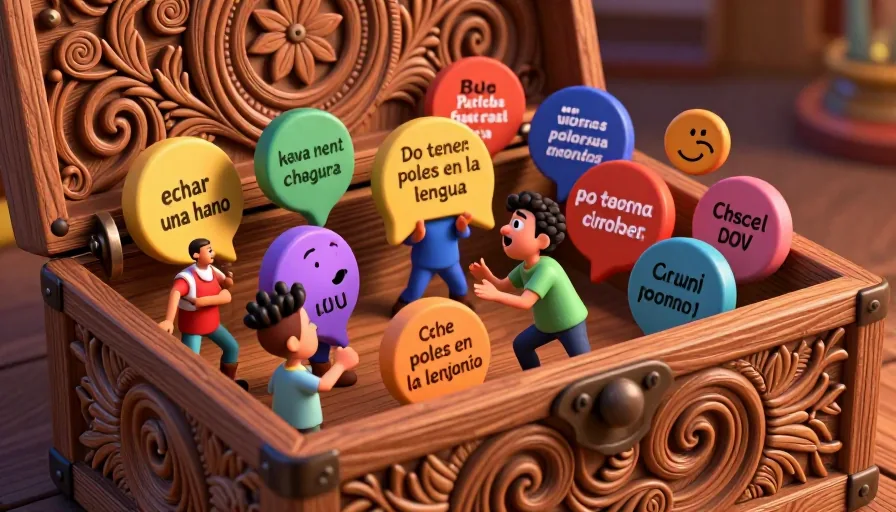
Tricky questions in Spanish, particularly riddles, offer a unique and engaging method to enhance vocabulary retention and gain cultural insights. By solving riddles, you not only expand your vocabulary but also develop critical thinking skills and a deeper understanding of Spanish culture. This approach goes beyond simple translation, focusing on cognitive benefits and practical application.
Why Spanish Riddles Are Your Secret Weapon for Vocabulary
Riddles are more than just fun brain teasers; they are powerful tools for language learning. Here’s how they enhance vocabulary retention:
- Contextual Learning: Riddles provide context, making it easier to remember new words. For example, the riddle “Blanca por dentro, verde por fuera” (White on the inside, green on the outside) helps you learn and remember the words for “egg” (huevo) and “leaf” (hoja).
- Engagement: Riddles keep you engaged and motivated, making the learning process more enjoyable.
- Repetition: Solving riddles often involves repeating words and phrases, reinforcing memory.
Mini Drill: Identify the Vocabulary
Try to identify the vocabulary in the following riddle:
“Tiene cuatro patas y un rabo, pero no es un animal.”
(Hint: Think about common household items.)
Mastering Cultural Nuances Through Spanish Brain Teasers
Riddles often reflect cultural nuances and idiomatic expressions, providing a window into the Spanish-speaking world. For instance, the riddle “¿Qué tiene una cabeza y no piensa?” (What has a head and doesn’t think?) reveals the cultural significance of everyday objects and their symbolic meanings.
Example: Cultural Insight Through Riddles
Riddle: “¿Qué tiene una cabeza y no piensa?” Answer: Una moneda (A coin). Explanation: This riddle highlights the cultural significance of coins in Spanish-speaking countries, where coins are often referred to as having a “head” (cara) and a “tail” (cruz).

Learn Languages with YouTube
Watch videos in your target language, auto-capture words into flashcards, and track your progress — all in one place.
See How It Works →Step-by-Step Guide: How to Use Riddles for Faster Learning
Step 1: Choose the Right Riddles
Select riddles that match your current vocabulary level. Start with simpler riddles and gradually move to more complex ones.
Step 2: Solve and Reflect
Solve the riddle and reflect on the vocabulary and cultural insights gained. Write down new words and their meanings.
Step 3: Practice Regularly
Make riddle-solving a daily habit. Set aside 15-20 minutes each day to solve riddles and review your notes.
Step 4: Engage with Native Speakers
Share the riddles with native Spanish speakers and discuss the solutions. This will enhance your understanding and pronunciation.
Checklist for Effective Riddle Learning
- Choose riddles that match your vocabulary level.
- Solve the riddle and write down new words.
- Reflect on cultural insights.
- Practice regularly.
- Engage with native speakers.
Examples of Complex Spanish Riddles
Riddle 1: “Una cajita redonda, blanca como el azar, todos la saben abrir, nadie la sabe cerrar.”
Answer: Un huevo (An egg). Explanation: This riddle plays with the idea of an egg being round and white, and everyone knows how to open it (eat it), but no one knows how to close it back up.
Riddle 2: “Blanca por dentro, verde por fuera.”
Answer: Una hoja (A leaf). Explanation: This riddle describes the appearance of a leaf, which is green on the outside and white on the inside when you look at the veins.
Riddle 3: “Tiene cuatro patas y un rabo, pero no es un animal.”
Answer: Una mesa (A table). Explanation: This riddle describes a table, which has four legs (patas) and a drawer (rabo), but is not an animal.
Strategies for Using Riddles as a Daily Learning Tool
Strategy 1: Incorporate Riddles into Daily Routine
Set aside a specific time each day to solve riddles. This could be during your morning coffee break or before bed.
Strategy 2: Use Riddles for Vocabulary Review
Review the vocabulary from the riddles regularly. Create flashcards or use digital tools to reinforce memory.
Strategy 3: Join a Riddle Club
Join a language exchange group or a riddle club where you can share and solve riddles with others. This will provide additional motivation and cultural insights.
Conclusion
Tricky questions in Spanish, particularly riddles, are a powerful tool for enhancing vocabulary retention and cultural understanding. By incorporating riddles into your daily learning routine, you can make the process more engaging and effective. Start with simple riddles and gradually move to more complex ones, and don’t forget to reflect on the cultural insights gained.
FAQ
How do riddles help with vocabulary retention?
Riddles help with vocabulary retention by providing context, engaging learners, and encouraging repetition. They make the learning process more enjoyable and effective.
Can riddles really improve my cultural understanding?
Yes, riddles often reflect cultural nuances and idiomatic expressions, providing a deeper understanding of the Spanish-speaking world. They offer insights into everyday objects and their symbolic meanings.
How often should I solve riddles to see improvements?
For optimal results, set aside 15-20 minutes each day to solve riddles and review your notes. Consistency is key to seeing improvements in vocabulary and cultural understanding.
Related phrases
Start with Metheus
Watch videos in your target language, auto-capture words into flashcards, and track your progress — all in one place.
Get Started →

