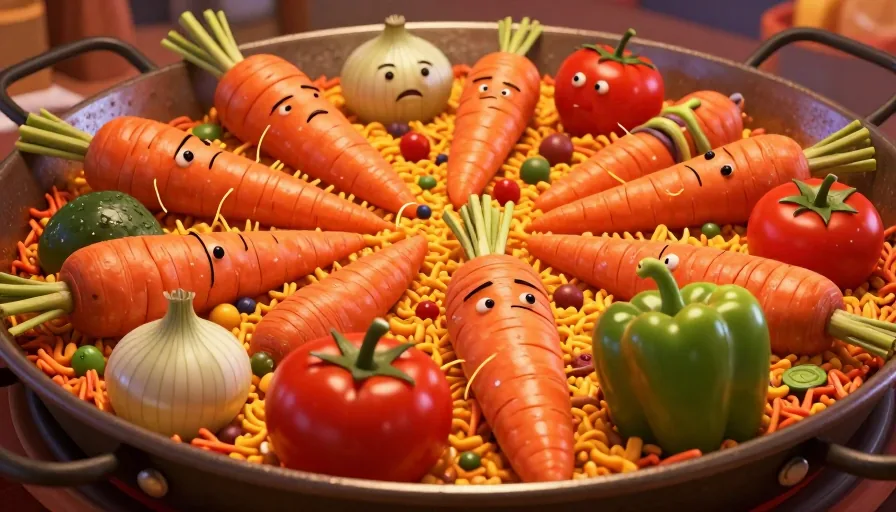
Learning the names of vegetables in Spanish is a fundamental step in expanding your culinary vocabulary. This guide will help you master the essential terms, understand Spanish noun gender, and use practical phrases for discussing and ordering vegetables. Let's dive into the world of vegetable in Spanish and become fluent in no time.
The Essential Spanish Vocabulary for Vegetables
Start with the basics. Here are some common Spanish words for basic vegetables:
| English | Spanish | Gender | Pronunciation |
|---|---|---|---|
| Tomato | Tomate | m | to-MAH-te |
| Potato | Papa | f | PA-pa |
| Carrot | Zanahoria | f | za-na-HO-rya |
| Cucumber | Pepino | m | pe-PEE-no |
| Onion | Cebolla | f | se-BO-ya |
| Garlic | Ajo | m | AH-ho |
| Lettuce | Lechuga | f | le-CHOO-ga |
| Spinach | Espinaca | f | es-pi-NA-ka |
| Broccoli | Brócoli | m | BRO-ko-lee |
| Cabbage | Repollo | m | re-PO-yo |
| Pea | Guisante | m | gwee-SAN-te |
| Corn | Maíz | m | MA-iz |
Interactive Flashcards
Use these flashcards to practice and reinforce your memory:
- Tomate - Tomato
- Papa - Potato
- Zanahoria - Carrot
- Pepino - Cucumber
- Cebolla - Onion
Mastering Spanish Noun Gender: A Quick Guide for Food Vocabulary
Understanding Spanish noun gender is crucial for accurate communication. Most vegetable names in Spanish are feminine, but there are exceptions. Here’s a quick guide:
- Feminine: Most vegetables end in 'a' (e.g., la papa, la zanahoria)
- Masculine: Some vegetables end in 'o' or have irregular endings (e.g., el tomate, el maíz)
Mini Drill: Gender Identification
Identify the gender of the following vegetables:
- El brócoli
- La lechuga
- El ajo
- La espinaca
Practical Phrases: How to Talk About Vegetables in Spanish
Use these phrases to discuss and order vegetables in Spanish:
- ¿Qué verduras prefieres? - Which vegetables do you prefer?
- Me gustan las zanahorias y los pepinos. - I like carrots and cucumbers.
- ¿Puedes recomendar una ensalada con estas verduras? - Can you recommend a salad with these vegetables?
- Quiero comprar algunas verduras frescas. - I want to buy some fresh vegetables.
- ¿Tienen tomates maduros? - Do you have ripe tomatoes?
Common Mistakes to Avoid
- Confusing Gender: Remember that most vegetables are feminine, but not all.
- Incorrect Pronunciation: Practice the pronunciation to avoid misunderstandings.
- Overlooking Context: Use context clues from recipes or shopping lists to reinforce learning.

Learn Languages with YouTube
Watch videos in your target language, auto-capture words into flashcards, and track your progress — all in one place.
See How It Works →Categorizing Vegetables for Easier Learning
Categorizing vegetables can make learning more manageable. Here are some common categories:
Root Vegetables
- Papa - Potato
- Zanahoria - Carrot
- Remolacha - Beet
- Rábano - Radish
Leafy Greens
- Lechuga - Lettuce
- Espinaca - Spinach
- Acelga - Swiss chard
- Rúcula - Arugula
Fruits Often Used as Vegetables
- Tomate - Tomato
- Pepino - Cucumber
- Pimiento - Bell pepper
- Calabacín - Zucchini
Tips for Learning Vegetable Vocabulary Through Context
- Recipes: Use Spanish recipes to learn vegetable names in context.
- Shopping Lists: Create and practice with Spanish shopping lists.
- Cooking Shows: Watch Spanish cooking shows to hear and see vegetables in action.
- Market Visits: Visit local markets and practice naming vegetables in Spanish.
Checklist for Mastering Vegetable Vocabulary
- Learn the basic vocabulary for common vegetables.
- Understand and practice noun gender rules.
- Use practical phrases for discussing and ordering vegetables.
- Categorize vegetables for easier learning.
- Practice with recipes, shopping lists, and real-life contexts.
Distinguishing Between Common and Nuanced Terms
Most vegetable names in Spanish are straightforward, but some can be nuanced. For example:
- Pimiento can refer to both bell peppers and chili peppers, depending on the context.
- Calabacín is often used interchangeably with zucchini, but in some regions, it might refer to a different type of squash.
Mini Drill: Contextual Understanding
Match the following terms with their correct contexts:
- Pimiento - Bell pepper or chili pepper
- Calabacín - Zucchini or squash
Common Spanish Vegetable Phrases
Here are some additional phrases to help you discuss vegetables in Spanish:
- ¿Dónde puedo encontrar las verduras frescas? - Where can I find the fresh vegetables?
- Me gustaría una ensalada con estas verduras. - I would like a salad with these vegetables.
- ¿Cuáles verduras son de temporada? - Which vegetables are in season?
- Quiero probar algunas verduras nuevas. - I want to try some new vegetables.
Pronunciation Guide
Use this guide to practice the pronunciation of common vegetables:
- Tomate - to-MAH-te
- Papa - PA-pa
- Zanahoria - za-na-HO-rya
- Pepino - pe-PEE-no
- Cebolla - se-BO-ya
Conclusion
Mastering vegetable in Spanish is a rewarding journey that enhances your culinary vocabulary and communication skills. By following this guide, you'll be well on your way to confidently discussing and ordering vegetables in Spanish. Happy learning!
FAQ
Why is it important to learn the gender of Spanish nouns?
Learning the gender of Spanish nouns is crucial because it affects the articles and adjectives used with them. For example, 'el tomate' (the tomato) is masculine, while 'la zanahoria' (the carrot) is feminine. Understanding gender helps you form correct sentences and avoid common mistakes.
What are some common mistakes learners make when translating vegetable names?
Common mistakes include confusing the gender of nouns, incorrect pronunciation, and overlooking context. For example, 'el tomate' is masculine, but 'la papa' is feminine. Practicing with flashcards and real-life contexts can help avoid these errors.
How can I practice vegetable vocabulary in Spanish?
You can practice vegetable vocabulary by using recipes, shopping lists, and watching Spanish cooking shows. Visiting local markets and naming vegetables in Spanish is also a great way to reinforce learning.
Related phrases
Start with Metheus
Watch videos in your target language, auto-capture words into flashcards, and track your progress — all in one place.
Get Started →

