German for I Love You: Mastering Expressions of Affection in German
When learning German for I love you, it's crucial to understand the nuances and cultural context behind different expressions of affection. This guide will help you navigate the spectrum of German love phrases, from romantic declarations to platonic and familial affection.
Ich liebe dich vs. Ich hab' dich lieb: Understanding the German Spectrum of Affection
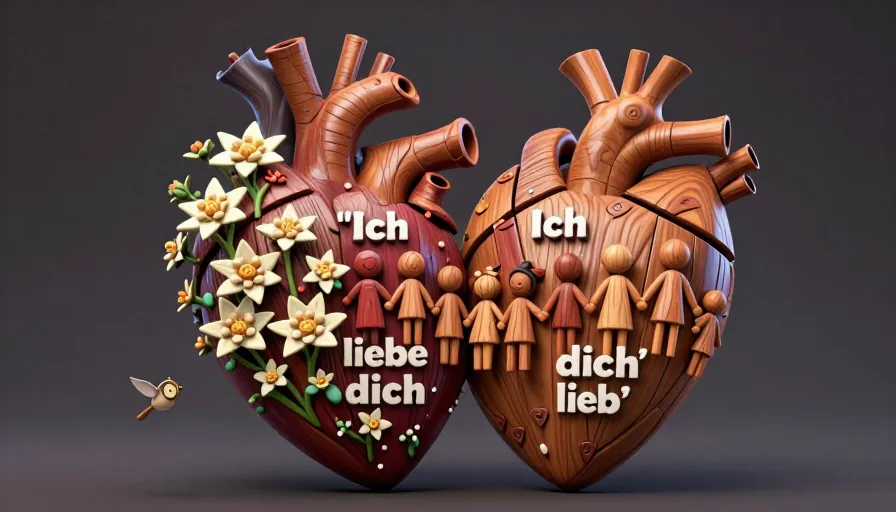
In German, there are several ways to express love, each with its own intensity and context. The two most common phrases are 'Ich liebe dich' and 'Ich hab' dich lieb'.
Ich liebe dich
'Ich liebe dich' is the most intense and serious declaration of love in German. It is reserved for deep romantic love and is typically used between partners in a committed relationship. Using this phrase too early in a relationship can be overwhelming and may come across as insincere.
Example:
Partner A: Ich liebe dich. Partner B: Ich liebe dich auch.
Ich hab' dich lieb
'Ich hab' dich lieb' is a softer, more casual expression of affection. It is often used among family members and close friends to express care and warmth. This phrase is less intense than 'Ich liebe dich' and can be used more freely in various contexts.
Example:
Friend A: Ich hab' dich lieb, danke für deine Hilfe. Friend B: Ich hab' dich auch lieb, kein Problem.
Navigating Romance: When to Use 'Ich liebe dich' in German Culture
In German culture, the timing of saying 'Ich liebe dich' is crucial. It's important to build a strong emotional connection before expressing such deep feelings. Here are some guidelines to help you navigate this delicate situation:
Building Emotional Connection
Before saying 'Ich liebe dich', ensure you have a strong emotional bond with your partner. This could take several months or even a year, depending on the relationship's pace. Pay attention to your partner's cues and respond accordingly.
Cultural Context
Germans tend to be more reserved and cautious when it comes to expressing deep emotions. They value sincerity and authenticity, so it's essential to mean what you say. Using 'Ich liebe dich' too soon can be perceived as insincere or even manipulative.
Common Mistakes to Avoid
- Saying it too soon: Avoid using 'Ich liebe dich' on a first or second date. It's important to build a strong emotional connection before expressing such deep feelings.
- Overusing the phrase: Be mindful of how often you use 'Ich liebe dich'. Overusing it can dilute its meaning and make it less special.
- Using it casually: Reserve 'Ich liebe dich' for serious romantic declarations. Using it casually can be perceived as insincere.

Learn Languages with YouTube
Watch videos in your target language, auto-capture words into flashcards, and track your progress — all in one place.
See How It Works →Alternative, Softer Ways to Express Affection
Besides 'Ich liebe dich' and 'Ich hab' dich lieb', there are other ways to express affection in German. These phrases are softer and can be used in various contexts, from romantic to platonic.
Du gefällst mir
'Du gefällst mir' means 'You please me' or 'I am attracted to you'. It's a softer way to express romantic interest without committing to a deep emotional declaration.
Example:
Person A: Du gefällst mir wirklich. Person B: Danke, du gefällst mir auch.
Ich mag dich
'Ich mag dich' means 'I like you'. It's a casual and friendly way to express affection, often used among friends and acquaintances.
Example:
Friend A: Ich mag dich wirklich. Friend B: Ich mag dich auch.
Ich bin in dich verliebt
'Ich bin in dich verliebt' means 'I am in love with you'. It's a stronger expression than 'Ich liebe dich' and is often used when confessing romantic feelings for the first time.
Example:
Person A: Ich bin in dich verliebt. Person B: Ich bin auch in dich verliebt.
Practical Checklist for Using German Expressions of Affection
- Assess the relationship: Determine the depth and nature of your relationship before choosing an expression of affection.
- Consider the context: Think about the situation and the other person's feelings before expressing your emotions.
- Be sincere: Ensure your words reflect your genuine feelings and intentions.
- Observe cultural norms: Pay attention to how Germans express affection and adapt your behavior accordingly.
- Practice: Use mini-drills to practice different expressions of affection in various scenarios.
Mini Drill: Expressing Affection
- Imagine you are on a third date with someone you really like. What would you say?
- Imagine you are talking to a close friend you haven't seen in a while. What would you say?
- Imagine you are confessing your feelings to someone for the first time. What would you say?
Common Mistakes Learners Make Regarding the Timing and Intensity of These Phrases
- Misjudging the relationship stage: Using 'Ich liebe dich' too early in a relationship can be overwhelming and may come across as insincere.
- Overusing romantic phrases: Be mindful of how often you use romantic phrases. Overusing them can dilute their meaning and make them less special.
- Ignoring cultural norms: Germans tend to be more reserved when it comes to expressing deep emotions. Pay attention to cultural norms and adapt your behavior accordingly.
Conclusion
Mastering German for I love you involves understanding the nuances and cultural context behind different expressions of affection. By following the guidelines and examples provided in this guide, you can navigate the spectrum of German love phrases with confidence and cultural appropriateness.
FAQ
When is it appropriate to say 'Ich liebe dich' in German?
It's appropriate to say 'Ich liebe dich' when you have a strong emotional connection with your partner and are in a committed relationship. Avoid using it too early in a relationship, as it can be overwhelming and may come across as insincere.
What is the difference between 'Ich liebe dich' and 'Ich hab' dich lieb'?
'Ich liebe dich' is a serious declaration of romantic love, while 'Ich hab' dich lieb' is a softer expression of affection used among family members and close friends.
Can I use 'Ich liebe dich' casually?
No, 'Ich liebe dich' should be reserved for serious romantic declarations. Using it casually can be perceived as insincere.
Related phrases
Start with Metheus
Watch videos in your target language, auto-capture words into flashcards, and track your progress — all in one place.
Get Started →

