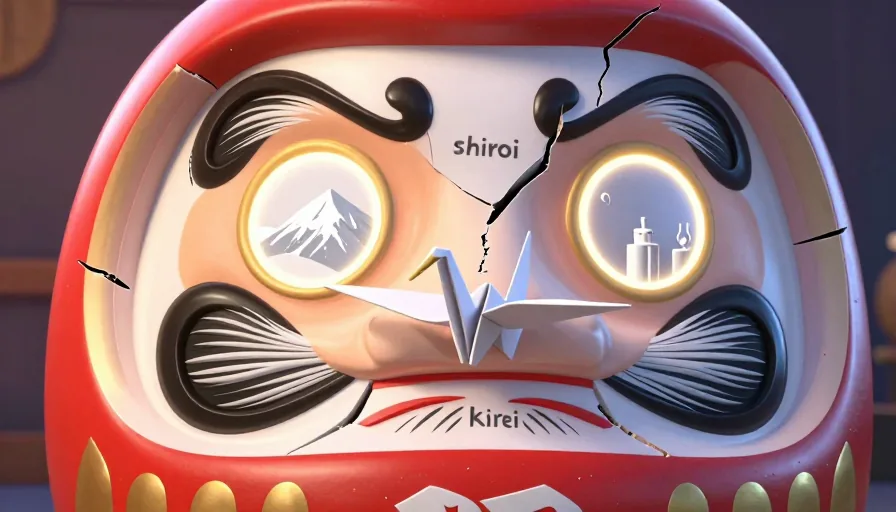
When learning Japanese, understanding the nuances of colors is essential, and 'white' in Japanese is no exception. This guide will cover the primary Japanese words for 'white', contextual usage, related vocabulary, and provide example sentences to help you master this concept.
The Basic Japanese Word for 'White'
The primary word for 'white' in Japanese is 白い (shiroi). This term is used to describe the color white in various contexts. For example:
- 白い車 (Shiroi kuruma) - White car
- 白い雪 (Shiroi yuki) - White snow
- 白い服 (Shiroi fuku) - White clothes
Contextual Nuances: When to Use Which Term
While 白い (shiroi) is the most common term, there are other words and phrases that convey different nuances of 'white'.
Formal vs. Casual Usage
In formal contexts, you might use 白色 (hakushoku) to describe the color white. This term is often used in technical or scientific writing.
- 白色のペン (Hakushoku no pen) - White pen
- 白色の紙 (Hakushoku no kami) - White paper
In casual conversation, 白い (shiroi) is more appropriate.
Specific Vocabulary
There are also specific terms for 'white' in different contexts:
- 真っ白 (masshiro) - Pure white, completely white. This term is often used to describe something that is entirely white without any blemishes.
- 真っ白な布 (Masshiro na nuno) - Completely white cloth
- 白銀 (hakugin) - Silver-white. This term is used to describe a silvery white color.
- 白銀の指輪 (Hakugin no yubiwa) - Silver-white ring
Visual Aids
To help you remember these terms, here are the Kanji, Hiragana, and Romaji for each:
- 白い (Shiroi) - 白い
- 白色 (Hakushoku) - 白色
- 真っ白 (Masshiro) - 真っ白
- 白銀 (Hakugin) - 白銀
Common Phrases Using 'Shiro' or Related Terms
Here are some common phrases and idioms that use 'white' in Japanese:
- 白い雪が降る (Shiroi yuki ga furu) - It snows white snow
- 白い服を着る (Shiroi fuku o kiru) - To wear white clothes
- 白いページ (Shiroi peeji) - White page
- 白い花 (Shiroi hana) - White flower
- 白い犬 (Shiroi inu) - White dog

Learn Languages with YouTube
Watch videos in your target language, auto-capture words into flashcards, and track your progress — all in one place.
See How It Works →Practical Examples and Checklist
Example Sentences
- 白い車が道を走っている (Shiroi kuruma ga michi o hashitteiru) - A white car is driving on the road.
- 白い雪が降っている (Shiroi yuki ga futteiru) - It is snowing white snow.
- 白い服を着てください (Shiroi fuku o kite kudasai) - Please wear white clothes.
- 白いページに書いてください (Shiroi peeji ni kaite kudasai) - Please write on the white page.
- 白い花が咲いている (Shiroi hana ga saiteiru) - White flowers are blooming.
- 白い犬が遊んでいる (Shiroi inu ga asondeiru) - A white dog is playing.
Checklist for Mastering 'White' in Japanese
- Learn the basic word 白い (shiroi) and its usage.
- Understand the difference between 白い (shiroi) and 白色 (hakushoku).
- Practice using 真っ白 (masshiro) and 白銀 (hakugin) in sentences.
- Memorize common phrases and idioms using 'white'.
- Create your own sentences using the words and phrases learned.
Mini Drills
Drill 1: Fill in the Blanks
Fill in the blanks with the appropriate word for 'white' in Japanese:
- このペンは______です。 (Kono pen wa ______ desu.) - This pen is white.
- 真っ白な______が降っている。 (Masshiro na ______ ga futteiru.) - It is snowing completely white.
- 白銀の______を買いました。 (Hakugin no ______ o kaimashita.) - I bought a silver-white ring.
Drill 2: Translation Practice
Translate the following sentences from English to Japanese:
- The white car is parked outside.
- She is wearing a completely white dress.
- The white page is blank.
- The white dog is running in the park.
- The white flowers are beautiful.
Comparison with Similar-Sounding or Contextually Similar Words
It's important to distinguish between similar-sounding or contextually similar words to avoid confusion. For example:
- 白い (shiroi) vs. 黒い (kuroi) - Black
- 白色 (hakushoku) vs. 黒色 (kokushoku) - Black color
- 真っ白 (masshiro) vs. 真っ黒 (makkuro) - Completely black
By understanding these distinctions, you can use 'white' in Japanese more accurately and confidently.
Common Mistakes to Avoid
- Mistake 1: Using 'shiroi' in formal contexts where 'hakushoku' is more appropriate.
- Mistake 2: Confusing 'masshiro' with 'shiroi' when describing something completely white.
- Mistake 3: Not using the correct Kanji/Hiragana/Romaji when writing 'white' in Japanese.
By avoiding these common mistakes, you can improve your proficiency in using 'white' in Japanese.
Conclusion
Understanding 'white' in Japanese involves more than just learning a single word. By mastering the nuances, contextual usage, and related vocabulary, you can communicate more effectively in Japanese. Practice the example sentences, complete the checklist, and use the mini drills to reinforce your learning.
FAQ
What is the primary word for 'white' in Japanese?
The primary word for 'white' in Japanese is **白い (shiroi)**. This term is used to describe the color white in various contexts, such as describing objects, people, or concepts.
How do I use 'white' in Japanese formally?
In formal contexts, you can use **白色 (hakushoku)** to describe the color white. This term is often used in technical or scientific writing.
What are some common phrases using 'white' in Japanese?
Some common phrases using 'white' in Japanese include **白い雪が降る (Shiroi yuki ga furu)** - It snows white snow, and **白い服を着る (Shiroi fuku o kiru)** - To wear white clothes.
How can I remember the different nuances of 'white' in Japanese?
To remember the different nuances of 'white' in Japanese, practice using visual aids such as Kanji, Hiragana, and Romaji. Additionally, create your own sentences and use the mini drills provided in this guide.
Related phrases
Start with Metheus
Watch videos in your target language, auto-capture words into flashcards, and track your progress — all in one place.
Get Started →

