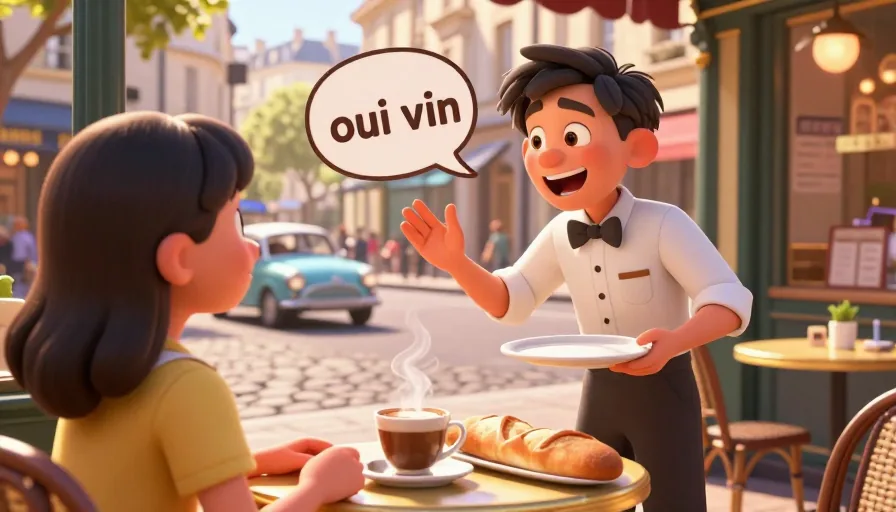
Understanding how to use 'yes yes' in French is crucial for natural and immersive language learning. This phrase, 'oui oui,' is more than just a simple affirmation; it's a key to unlocking fluid and authentic conversations. Whether you're a beginner or an intermediate learner, mastering 'oui oui' will significantly enhance your communication skills.
Understanding 'Oui Oui': When and How to Use It in French Conversation
The phrase 'oui oui' is a versatile and commonly used expression in French. It can mean 'yes, yes' or 'of course' depending on the context. Here are some practical examples to illustrate its usage:
- Affirmation: When someone asks if you want to go to the park, you can respond with 'Oui oui, j'aimerais bien!' (Yes, yes, I would like that!)
- Agreement: If a friend suggests watching a movie, you can say 'Oui oui, c'est une bonne idée!' (Yes, yes, that's a good idea!)
- Confirmation: When confirming a plan, you might say 'Oui oui, on se voit à 7 heures.' (Yes, yes, we'll meet at 7 o'clock.)
Common Mistakes to Avoid
- Overuse: Be careful not to overuse 'oui oui' as it can sound repetitive and unnatural.
- Context Misuse: Ensure you use it in the right context. For example, 'oui oui' is not appropriate for formal settings where a more polite 'oui' or 'd'accord' might be better.
Immersing Yourself: Using Conversational Phrases in Real French Content
To truly master 'oui oui' and other conversational phrases, immerse yourself in real French content. Watching French movies, TV shows, and listening to podcasts can provide a wealth of examples. Here’s a checklist to help you get started:
- Watch French Movies and TV Shows: Pay attention to how native speakers use 'oui oui' in different contexts.
- Listen to French Podcasts: Podcasts often feature natural conversations that can help you understand the nuances of 'oui oui'.
- Read French Books and Articles: Look for dialogues and conversations where 'oui oui' is used.
Practical Examples from Media
- Movie Scene: In the movie 'Amélie,' the character often uses 'oui oui' in casual conversations. Watching such scenes can give you a sense of how natural it sounds.
- Podcast Episode: Listen to episodes of 'Coffee Break French' where hosts use everyday phrases, including 'oui oui'.
Beyond the Textbook: Practical Phrases for Natural Fluency
While textbooks are essential, they often lack the natural flow of real conversations. Here are some practical phrases that can be integrated with 'oui oui' to enhance your fluency:
- Oui oui, je comprends. (Yes, yes, I understand.)
- Oui oui, je suis d'accord. (Yes, yes, I agree.)
- Oui oui, je vais le faire. (Yes, yes, I will do it.)
Mini Drill: Practice with a Friend
Pair up with a friend and practice the following dialogue:
- Friend: Est-ce que tu veux aller au cinéma ce soir? (Do you want to go to the cinema tonight?)
- You: Oui oui, j'aimerais bien! (Yes, yes, I would like that!)

Learn Languages with YouTube
Watch videos in your target language, auto-capture words into flashcards, and track your progress — all in one place.
See How It Works →The Difference Between Formal and Informal Usage
Understanding the difference between formal and informal usage of 'oui oui' is crucial. In formal settings, it's better to use 'oui' or 'd'accord' to maintain a respectful tone. For example:
- Formal: Oui, je comprends. (Yes, I understand.)
- Informal: Oui oui, je comprends. (Yes, yes, I understand.)
Checklist for Formal vs. Informal Usage
- Formal Settings: Use 'oui' or 'd'accord' in professional or formal conversations.
- Informal Settings: Use 'oui oui' in casual conversations with friends and family.
Integrating 'Oui Oui' into Real-World Learning Materials
To effectively integrate 'oui oui' into your learning routine, consider the following methods:
- Watching Videos: Use platforms like YouTube to watch French videos and pay attention to how 'oui oui' is used.
- Reading: Read French articles and books, focusing on dialogues and conversations.
- Listening: Listen to French podcasts and audiobooks to hear 'oui oui' in context.
Example Learning Plan
- Week 1: Watch a French movie and note down all instances of 'oui oui'.
- Week 2: Listen to a French podcast and practice repeating the phrases you hear.
- Week 3: Read a French article and identify conversations where 'oui oui' is used.
Vocabulary Expansion Related to Common Conversational Phrases
Expanding your vocabulary around common conversational phrases can significantly improve your fluency. Here are some related phrases to 'oui oui' that you should learn:
- Oui, bien sûr. (Yes, of course.)
- Oui, d'accord. (Yes, okay.)
- Oui, je suis d'accord. (Yes, I agree.)
Mini Drill: Expanding Your Vocabulary
Practice the following phrases with a friend or language partner:
- Friend: Est-ce que tu veux aller au marché? (Do you want to go to the market?)
- You: Oui, bien sûr! (Yes, of course!)
By focusing on specific, high-frequency conversational phrases like 'oui oui' and integrating them into your learning routine, you can achieve natural and immersive language learning. This approach not only enhances your vocabulary but also helps you understand the nuances of French conversation, making your language learning journey more effective and enjoyable.
FAQ
Is 'oui oui' appropriate for formal settings?
No, 'oui oui' is generally used in informal settings. For formal conversations, it's better to use 'oui' or 'd'accord' to maintain a respectful tone.
Can I overuse 'oui oui' in conversations?
Yes, overusing 'oui oui' can make your speech sound repetitive and unnatural. Use it judiciously and in the right context.
How can I practice 'oui oui' effectively?
Practice 'oui oui' by watching French movies, listening to podcasts, and reading articles. Engage in conversations with friends or language partners to get a feel for its natural usage.
Related phrases
Start with Metheus
Watch videos in your target language, auto-capture words into flashcards, and track your progress — all in one place.
Get Started →

