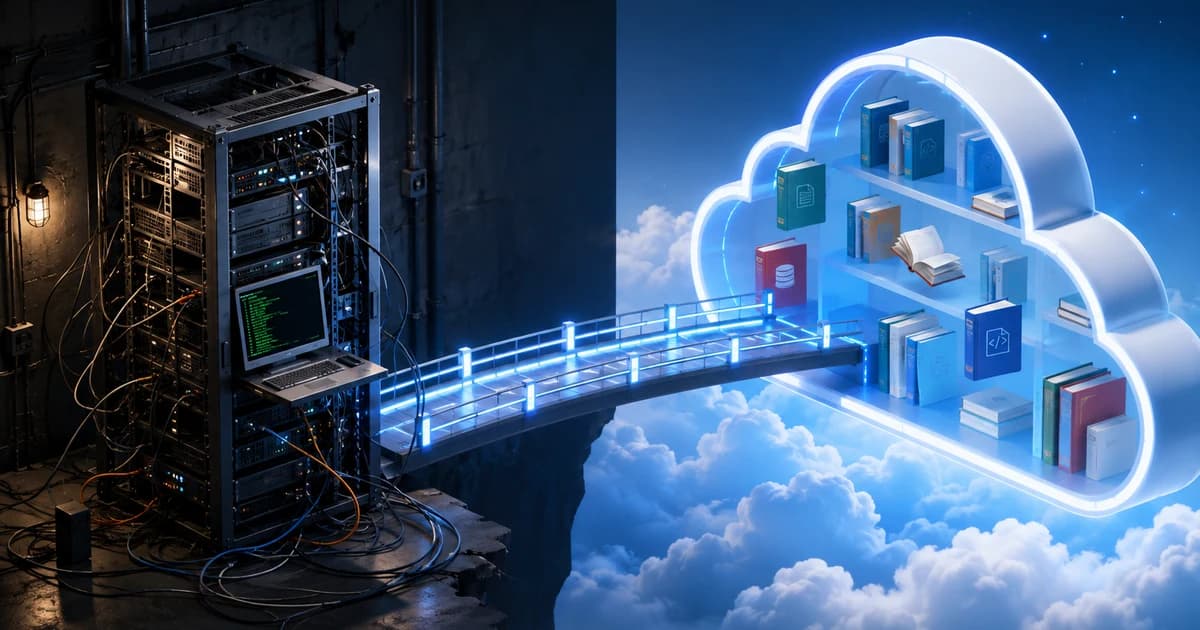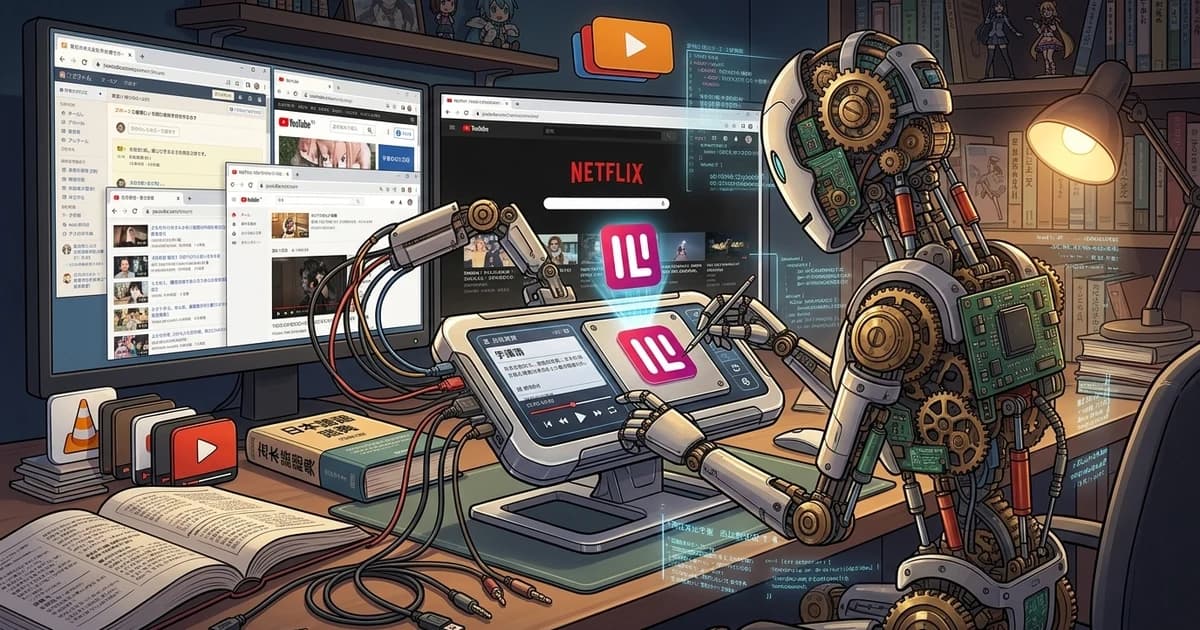
If you've spent any time in Japanese learning communities, you've seen the same recommendation repeated like a mantra: "Just use Yomitan + asbplayer + AnkiConnect. It's free and 100% integrated." And it's true—this open-source stack is incredibly powerful. What those comments don't mention is that getting it running can eat an entire weekend, and keeping it running eats a little more of your sanity every time Anki updates.
This guide breaks down the honest trade-off between the DIY open-source stack (Yomitan, asbplayer, AnkiConnect) and all-in-one immersion tools like Metheus—so you can pick the workflow that matches your technical comfort and your learning goals.
What Each Tool Does in the Open-Source Stack
The classic free setup for Japanese immersion looks like this:
| Tool | Role | Complexity |
|---|---|---|
| Yomitan (formerly Yomichan) | Popup dictionary for hover lookups on web pages | Medium |
| asbplayer | Video player that mines sentences from local video + subtitles | High |
| AnkiConnect | Local API bridge that sends mined cards into Anki | High |
| Anki (desktop) | The SRS that stores and schedules your cards | Low |
| Dict files (JMDict, Yomitan-style dics) | The actual dictionary data you import as JSON | Medium |
Getting all five pieces to talk to each other requires installing a local extension, a local video player, a local API server, importing dictionary JSON files, and configuring card templates. It's a genuinely rewarding setup for tinkerers—and a genuinely frustrating one for everyone else.
The Real Cost of the DIY Stack: 6 Failure Points
Community forums are full of threads that start with "I followed the guide but...". The most common failures:
-
AnkiConnect connection errors: "Failed to execute 'json' on 'Response': Unexpected end of JSON input"—the classic error when the local API bridge can't connect because Anki isn't running, the port changed, or CORS blocked the request.
-
Dictionary import failures: Yomitan dictionary files are large JSON bundles; a single malformed file breaks the entire import.
-
Version drift: Anki updates, asbplayer updates, and the stack silently breaks until you debug it.
-
Local-only storage: Your mining setup is tied to one machine. Switch computers and your entire pipeline needs rebuilding.
-
No subtitle extraction for many platforms: The stack shines with local files and YouTube, but struggles with Netflix, Viki, Disney+, and other streaming sites.
-
Configuration overhead: Setting up card templates, audio, and screenshots is a project in itself—before you've learned a single word.
None of these are reasons to mock the open-source stack. They're reasons to be honest about what you're signing up for.

Learn Languages with YouTube
Watch videos in your target language, auto-capture words into flashcards, and track your progress — all in one place.
Start Free →What All-in-One Tools Do Differently
All-in-one immersion tools bundle the dictionary, the subtitle engine, the audio capture, and the flashcard system into one integrated product. The trade-offs versus the DIY stack:
| Feature | Yomitan + asbplayer + Anki | All-in-One (Metheus) |
|---|---|---|
| Setup time | 2-6 hours (or more) | Under 5 minutes |
| Cost | Free (your time is the price) | Free |
| Dictionary lookups | Excellent (Yomitan is best-in-class) | Contextual sentence translation included |
| Video mining | asbplayer (local files, YouTube) | Works on Netflix, YouTube, Viki, Disney+ and more |
| Sync across devices | Manual, local-only | Automatic (cloud) |
| Maintenance | Ongoing (every update can break it) | None |
| Anki export | Native AnkiConnect | Direct, plus built-in SRS |
The honest summary: if you love configuring tools and want maximum control, the DIY stack is a legitimate choice. If you want to spend your time learning Japanese instead of maintaining software, an all-in-one tool is the pragmatic winner.
Who Should Use Which Setup
Choose the Yomitan + asbplayer stack if:
-
You're comfortable with local development tools, JSON files, and debugging.
-
You primarily mine from local video files and YouTube.
-
You want deep control over card templates and dictionary choices.
-
You're committed to a single computer workflow.
Choose an all-in-one tool if:
-
You want zero setup and zero maintenance.
-
You mine from streaming platforms (Netflix, Viki, Disney+).
-
You want your vocabulary and progress synced across devices.
-
You'd rather spend your limited study time on input, not on infrastructure.
The 5-Minute Alternative: Mining From Streaming Sites Without Any Setup
With the Metheus extension, the whole pipeline collapses into one interaction: open any supported streaming site, hover any word in the subtitles, get an instant contextual translation, and click once to save a rich flashcard—sentence, native audio clip, and screenshot all attached. No AnkiConnect, no local server, no JSON dictionaries, no card template configuration.
The captured cards go straight to a built-in spaced repetition system that works on any device, so your mining workflow survives a computer switch, a reinstall, or an Anki update—because there is nothing local to break.
Pick the Setup You'll Actually Maintain
The best immersion setup is the one you're still using six months from now. The DIY stack rewards technical users with unmatched control; all-in-one tools reward everyone else with consistency. Both will get you to fluent Japanese faster than any textbook—the only wrong choice is the one that leaves you debugging at 11 PM instead of watching anime.
Start Free with Metheus and go from install to first mined sentence in under five minutes—no local setup required.
FAQ
Is Yomitan + asbplayer really free?
Yes, both tools are free and open source. The real cost is time: setup takes hours, and updates can break the pipeline, requiring ongoing maintenance.
Can I mine sentences from Netflix and other streaming sites with the DIY stack?
The open-source stack works reliably with local video files and YouTube. Streaming platforms like Netflix, Viki, and Disney+ are harder to support and often require workarounds that break frequently.
What is the AnkiConnect 'Unexpected end of JSON input' error?
It happens when the browser extension can't reach the local AnkiConnect server—usually because Anki isn't running, the port changed, or CORS settings blocked the request. It's one of the most common failure points of the DIY setup.
Related phrases
Language learning in 2026 isn't about finishing daily streaks. The fastest path to fluency combines three elements: comprehensible input from real media you enjoy, active vocabulary capture while consuming that content, and spaced repetition to lock words into long-term memory. Gamified apps build the habit. Immersion tools build the fluency. The most effective learners use both—in that order.
Start with Metheus
Watch videos in your target language, auto-capture words into flashcards, and track your progress — all in one place.
Get Started Free →