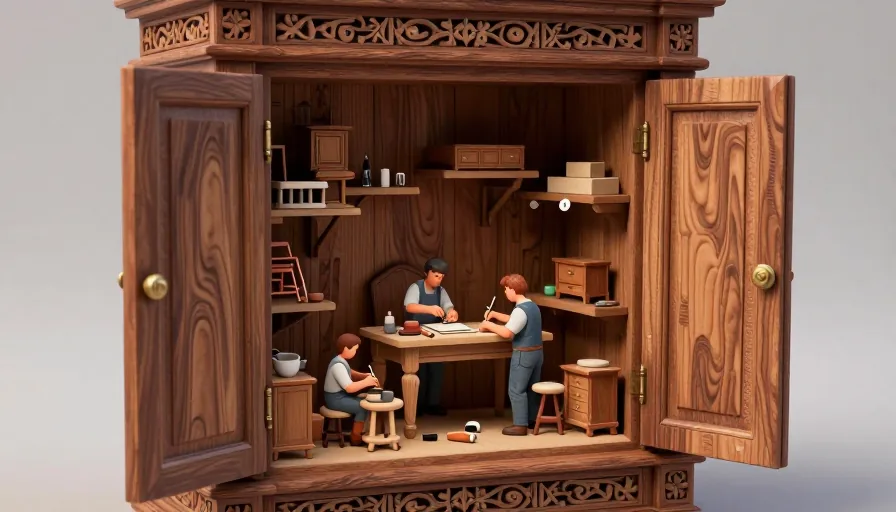
Learning furniture in Italian is a practical way to expand your vocabulary and improve your conversational skills. Whether you're decorating a home, discussing interior design, or simply describing your surroundings, knowing the right terms can make a significant difference. This guide will provide you with essential vocabulary, useful phrases, and cultural insights to help you master furniture-related conversations in Italian.
Essential Italian Furniture Vocabulary
Understanding the core vocabulary for common furniture items in Italian is the first step. Here are some essential terms:
- Sedia (chair)
- Tavolo (table)
- Letto (bed)
- Armadio (wardrobe)
- Divano (sofa)
- Lampada (lamp)
- Specchio (mirror)
- Tappeto (rug)
- Libreria (bookshelf)
- Cassettiera (chest of drawers)
Pronunciation Guide
- Sedia (SEH-dee-ah)
- Tavolo (tah-VOH-loh)
- Letto (LEHT-toh)
- Armadio (ar-MAH-dee-oh)
- Divano (dee-VAH-noh)
- Lampada (lam-PAH-dah)
- Specchio (SPEH-kyo)
- Tappeto (tah-PEH-toh)
- Libreria (lee-BREH-ree-ah)
- Cassettiera (kah-seh-TEER-ah)
How to Talk About Furniture in Italian: Useful Phrases
Knowing how to use furniture vocabulary in context is crucial. Here are some practical phrases:
- Dove posso trovare una sedia? (Where can I find a chair?)
- Il tavolo è rotto. (The table is broken.)
- Vorrei comprare un nuovo letto. (I would like to buy a new bed.)
- L'armadio è pieno di vestiti. (The wardrobe is full of clothes.)
- Il divano è comodo. (The sofa is comfortable.)
- Accendi la lampada, per favore. (Turn on the lamp, please.)
- Lo specchio è appeso alla parete. (The mirror is hung on the wall.)
- Il tappeto è morbido. (The rug is soft.)
- La libreria è piena di libri. (The bookshelf is full of books.)
- La cassettiera è nuova. (The chest of drawers is new.)
Mini Drill: Sentence Building
Try building your own sentences using the vocabulary and phrases above. For example:
- Il tavolo è vicino alla finestra. (The table is near the window.)
- La sedia è comoda. (The chair is comfortable.)
- Il letto è fatto. (The bed is made.)

Learn Languages with YouTube
Watch videos in your target language, auto-capture words into flashcards, and track your progress — all in one place.
See How It Works →Common Mistakes When Translating Furniture Terms
Learners often make mistakes when translating furniture terms. Here are some common errors to avoid:
- Confusing 'sedia' with 'sedie': 'Sedia' is singular, while 'sedie' is plural. Make sure to use the correct form based on the context.
- Mispronouncing 'armadio': Many learners mispronounce 'armadio' as 'ar-mah-dee-oh' instead of the correct 'ar-MAH-dee-oh'.
- Using 'divano' incorrectly: 'Divano' means 'sofa', not 'couch'. In Italian, 'couch' is translated as 'divano' or 'sofà'.
- Mixing up 'tavolo' and 'tavolino': 'Tavolo' is a table, while 'tavolino' is a small table or side table.
Checklist for Avoiding Common Mistakes
- Practice pronunciation: Use language learning apps or work with a tutor to improve your pronunciation.
- Contextual usage: Pay attention to how native speakers use these terms in different contexts.
- Grammar rules: Understand the grammatical rules for singular and plural forms.
Cultural Nuances and Common Phrases
Italian culture has unique ways of describing furniture and home decor. Here are some cultural nuances and common phrases:
- Essere parte dell'arredamento: This phrase means 'to be part of the furniture' and is used to describe someone who is so familiar or integrated into a place that they seem like a permanent fixture.
- Confondersi con la tappezzeria: This means 'to blend in with the wallpaper' and is used to describe someone who is unnoticed or overlooked.
- Arredamento moderno vs. arredamento classico: Italians often distinguish between modern and classic interior design. 'Arredamento moderno' refers to contemporary design, while 'arredamento classico' refers to traditional or classic design.
Interactive Quiz: Furniture Placement
Test your knowledge with this interactive quiz. Match the furniture item with its correct placement in a room:
- Sedia a) Near the window b) In the bedroom c) In the living room
- Lampada a) On the floor b) On the table c) On the wall
- Tappeto a) Under the table b) On the bed c) On the floor
Practical Examples and Conversational Phrases
Here are some practical examples and conversational phrases to help you use furniture vocabulary in real-life situations:
- Stiamo arredando la nuova casa. (We are furnishing the new house.)
- Dove posso trovare un buon arredamento? (Where can I find good furniture?)
- Il divano è troppo grande per il salotto. (The sofa is too big for the living room.)
- Vorrei cambiare l'arredamento della cucina. (I would like to change the kitchen furniture.)
- Il letto è troppo alto. (The bed is too high.)
Checklist for Practical Usage
- Describe your home: Practice describing the furniture in your home using the vocabulary and phrases you've learned.
- Role-play scenarios: Practice conversations about furniture with a language partner or tutor.
- Use context clues: Pay attention to how native speakers use these terms in different contexts and try to mimic their usage.
Conclusion
Mastering furniture vocabulary in Italian is a practical and enjoyable way to improve your language skills. By understanding the core vocabulary, useful phrases, and cultural nuances, you'll be able to talk about furniture with confidence. Practice regularly and use the resources provided to enhance your learning experience.
FAQ
How do I pronounce 'armadio' correctly?
To pronounce 'armadio' correctly, say 'ar-MAH-dee-oh'. Many learners mispronounce it as 'ar-mah-dee-oh'. Practice with a language learning app or tutor to improve your pronunciation.
What is the difference between 'tavolo' and 'tavolino'?
'Tavolo' is a table, while 'tavolino' is a small table or side table. Understanding this distinction will help you describe furniture more accurately in Italian.
How do I say 'to be part of the furniture' in Italian?
The phrase 'to be part of the furniture' translates to 'essere parte dell'arredamento' in Italian. This phrase is used to describe someone who is so familiar or integrated into a place that they seem like a permanent fixture.
Related phrases
Start with Metheus
Watch videos in your target language, auto-capture words into flashcards, and track your progress — all in one place.
Get Started →

