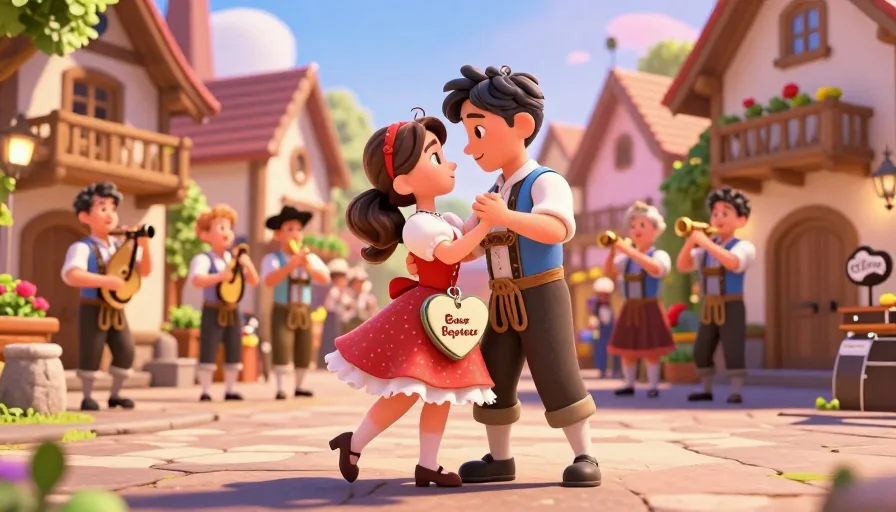
When learning the German word for sweetheart, it's essential to understand that German has a rich variety of terms of endearment. These terms go beyond simple translations and carry cultural nuances that can significantly impact their usage. This guide will explore direct translations, contextual usage, cultural nuances, and common nicknames, providing you with a comprehensive understanding of German terms of endearment.
The Direct Translation: What is the German Word for 'Sweetheart'?
The most direct translation of the German word for sweetheart is 'Schatz.' This term is widely used in both romantic and platonic contexts. However, it's important to note that 'Schatz' is just one of many endearing terms in the German language. Other direct translations include:
- Liebling (darling)
- Herzchen (little heart)
- Maus (mouse, as in 'sweet mouse')
Each of these terms has its own nuances and appropriate contexts for use.
Mini Drill: Match the Term
Match the German term with its English equivalent:
- Schatz
- Liebling
- Herzchen
- Maus
a. Darling b. Sweetheart c. Little heart d. Mouse
Beyond 'Schatz': Exploring German Terms of Endearment
German has a variety of endearing terms that go beyond the direct translation of 'sweetheart.' These terms can express different levels of intimacy and affection. Some of the most common terms include:
- Liebes (love)
- Herz (heart)
- Engel (angel)
- Bär (bear)
Example Sentences
- Schatz, ich habe dich vermisst. (Sweetheart, I missed you.)
- Du bist mein Liebling. (You are my darling.)
- Mein kleines Herzchen, komm her. (My little heart, come here.)
- Du bist mein Maus. (You are my sweet mouse.)
Context Matters: When to Use Which Term of Endearment
The context in which you use a term of endearment is crucial. German terms of endearment can vary based on the level of formality, the nature of the relationship, and the cultural setting. Here are some guidelines:
- Formal vs. Informal: In formal settings, it's best to avoid using terms of endearment unless you have a close relationship with the person. In informal settings, such as with friends or family, these terms are more commonly used.
- Romantic vs. Platonic: Some terms, like 'Schatz,' can be used in both romantic and platonic contexts, while others, like 'Liebes,' are more romantic.
- Cultural Nuances: Germans tend to be more reserved with terms of endearment compared to some other cultures. It's important to gauge the comfort level of the person you're addressing.
Checklist for Using German Terms of Endearment
- Understand the context (formal vs. informal)
- Consider the nature of the relationship (romantic vs. platonic)
- Gauge the cultural comfort level
- Use terms appropriately based on the situation

Learn Languages with YouTube
Watch videos in your target language, auto-capture words into flashcards, and track your progress — all in one place.
See How It Works →Common German Nicknames for Your Partner
In addition to terms of endearment, Germans also use various nicknames for their partners. These nicknames can add a playful and affectionate touch to your language. Some common nicknames include:
- Bärchen (little bear)
- Kätzchen (little cat)
- Mäuschen (little mouse)
- Hase (hare)
Example Sentences
- Mein Bärchen, komm her und kuschle mit mir. (My little bear, come here and cuddle with me.)
- Du bist mein Kätzchen. (You are my little cat.)
- Mein Mäuschen, ich liebe dich. (My little mouse, I love you.)
- Mein Hase, lass uns einen Spaziergang machen. (My hare, let's go for a walk.)
Cultural Nuances: When to Use Which Term
Understanding the cultural nuances of German terms of endearment is essential for using them appropriately. Here are some tips:
- Avoid Overuse: Germans generally prefer subtlety and may find excessive use of endearing terms annoying or insincere.
- Respect Boundaries: Always respect the boundaries of the person you're addressing. If they seem uncomfortable with a term, switch to a more neutral one.
- Learn from Context: Pay attention to how native speakers use these terms in different contexts. This will help you understand the nuances better.
Common Mistakes to Avoid
- Using the Wrong Term: Make sure you understand the meaning and context of the term before using it.
- Overusing Terms: Avoid using endearing terms too frequently, as it can lose its impact.
- Ignoring Cultural Norms: Be mindful of cultural norms and respect the boundaries of the person you're addressing.
Practical Examples and Usage
To help you better understand the usage of German terms of endearment, here are some practical examples:
- Romantic Context: 'Schatz, ich liebe dich.' (Sweetheart, I love you.)
- Platonic Context: 'Liebling, wie geht's?' (Darling, how are you?)
- Formal Context: 'Herr Müller, wie kann ich Ihnen helfen?' (Mr. Müller, how can I help you?)
Mini Drill: Fill in the Blank
Fill in the blank with the appropriate term of endearment:
- <blank>, ich habe dich vermisst. (I missed you.)
- Du bist mein <blank>. (You are my <blank>.)
- Mein kleines <blank>, komm her. (My little <blank>, come here.)
- Du bist mein <blank>. (You are my <blank>.)
Conclusion
Learning the German word for sweetheart and other terms of endearment can greatly enrich your language skills and cultural understanding. By understanding the context, cultural nuances, and appropriate usage, you can express your affection and build stronger relationships. Practice these terms in various contexts and pay attention to how native speakers use them. With time and practice, you'll become more comfortable and proficient in using German terms of endearment.
FAQ
Is it appropriate to use terms of endearment in formal settings?
In formal settings, it's best to avoid using terms of endearment unless you have a close relationship with the person. Stick to more neutral and respectful language in professional or formal contexts.
Can I use the same term of endearment for both romantic and platonic relationships?
Some terms, like 'Schatz,' can be used in both romantic and platonic contexts, while others, like 'Liebes,' are more romantic. It's important to choose the term based on the nature of your relationship and the context.
How can I avoid overusing terms of endearment?
To avoid overusing terms of endearment, be mindful of the frequency and context in which you use them. Pay attention to how native speakers use these terms and respect the boundaries of the person you're addressing.
Related phrases
Start with Metheus
Watch videos in your target language, auto-capture words into flashcards, and track your progress — all in one place.
Get Started →

