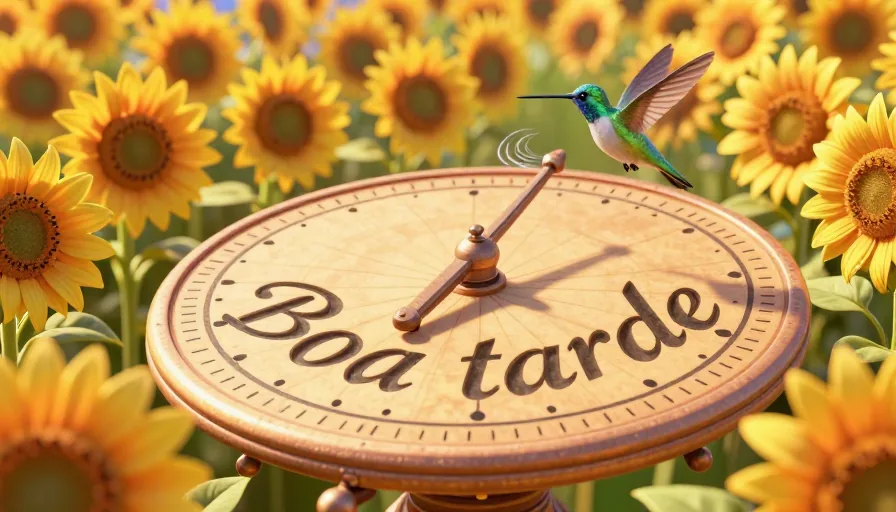
Good Afternoon in Portuguese: Mastering the Art of Greeting
Learning how to say 'good afternoon in Portuguese' is essential for anyone looking to communicate effectively in Portuguese-speaking countries. The phrase 'Boa tarde' is more than just a greeting; it's a cultural marker that signifies respect and awareness of the time of day. This guide will walk you through the nuances of using 'Boa tarde', including its pronunciation, formal vs. informal usage, and cultural context.
Understanding 'Boa Tarde': When and How to Use It
The direct translation of 'good afternoon in Portuguese' is 'Boa tarde'. This greeting is commonly used from around 12 PM to sunset. It's a versatile phrase that can be used in both formal and informal settings. For example, you might say 'Boa tarde' to a colleague at work or to a friend you meet on the street.
Pronunciation Guide for 'Boa Tarde'
Pronouncing 'Boa tarde' correctly is crucial for clear communication. Here's a breakdown:
- Boa: Pronounced as 'bwah' (rhymes with 'saw' but with a 'b' sound at the beginning)
- Tarde: Pronounced as 'tahr-deh' (emphasis on the second syllable)
Practice the pronunciation by listening to native speakers or using language learning apps that offer audio pronunciations.
Interactive Examples
-
Formal Setting:
- Situation: You are meeting a client for a business lunch.
- Greeting: 'Boa tarde, Senhor/a [Last Name].'
- Translation: 'Good afternoon, Mr./Ms. [Last Name].'
-
Informal Setting:
- Situation: You are greeting a friend you bump into at the market.
- Greeting: 'Boa tarde, [First Name]!'
- Translation: 'Good afternoon, [First Name]!'
Formal vs. Informal: Choosing the Right Greeting
In Portuguese, the level of formality in greetings can vary based on the context and the relationship between the speakers. While 'Boa tarde' is generally neutral, there are other greetings that might be more appropriate in different situations.
When to Use 'Bom Dia'
'Bom dia' is used in the morning, typically from sunrise to around 12 PM. It's a friendly and informal greeting that can be used with friends, family, and even in some professional settings. For example:
- Situation: Greeting a colleague at the office in the morning.
- Greeting: 'Bom dia, [Name]!'
- Translation: 'Good morning, [Name]!'
When to Use 'Boa Noite'
'Boa noite' is used in the evening, typically from sunset to bedtime. It can be used as both a greeting and a farewell. For example:
- Situation: Greeting a neighbor in the evening.
- Greeting: 'Boa noite, [Name]!'
- Translation: 'Good evening, [Name]!'

Learn Languages with YouTube
Watch videos in your target language, auto-capture words into flashcards, and track your progress — all in one place.
See How It Works →Beyond 'Boa Tarde': Other Essential Time-Based Greetings
Understanding the full range of time-based greetings in Portuguese can help you navigate different social and professional situations with ease. Here are some additional greetings to know:
'Olá'
'Olá' is a versatile greeting that can be used at any time of day. It's informal and friendly, making it suitable for casual conversations with friends and family. For example:
- Situation: Answering a phone call from a friend.
- Greeting: 'Olá, [Name]!'
- Translation: 'Hello, [Name]!'
'Tudo bem?'
'Tudo bem?' is a common informal greeting that translates to 'How are you?' or 'All good?'. It's often used in casual settings and can be a great way to start a conversation. For example:
- Situation: Greeting a coworker in a relaxed setting.
- Greeting: 'Tudo bem, [Name]?'
- Translation: 'All good, [Name]?'
'Como está?'
'Como está?' is a more formal way to ask 'How are you?'. It's often used in professional settings or when addressing someone you don't know well. For example:
- Situation: Greeting a new client at a business meeting.
- Greeting: 'Como está, [Name]?'
- Translation: 'How are you, [Name]?'
Cultural Etiquette Surrounding Greetings
Greetings in Portuguese are more than just words; they are a reflection of the culture and social norms. Here are some tips to help you navigate the cultural nuances:
Greeting Etiquette
- Eye Contact: Maintain eye contact when greeting someone to show respect and sincerity.
- Handshakes: A firm handshake is common in professional settings, while a hug or a kiss on the cheek is more common among friends and family.
- Politeness: Always use the appropriate level of formality based on the context and the relationship.
Quick Reference Chart: Greetings Across Different Portuguese Dialects
| Time of Day | European Portuguese | Brazilian Portuguese |
|---|---|---|
| Morning | Bom dia | Bom dia |
| Afternoon | Boa tarde | Boa tarde |
| Evening | Boa noite | Boa noite |
Practical Checklist for Mastering Portuguese Greetings
- Practice Pronunciation: Use language learning apps or listen to native speakers to perfect your pronunciation.
- Contextual Use: Understand when to use 'Boa tarde' vs. 'Bom dia' vs. 'Boa noite'.
- Formal vs. Informal: Learn the appropriate greetings for different levels of formality.
- Cultural Awareness: Familiarize yourself with cultural norms and etiquette surrounding greetings.
- Interactive Practice: Engage in conversations with native speakers or language exchange partners to practice your greetings in real-life scenarios.
Mini Drills for Practice
- Greeting Drill: Practice greeting different people in various contexts. For example, greet a friend, a colleague, and a stranger using the appropriate greeting.
- Time-Based Greeting Drill: Practice using 'Boa tarde' at different times of the day to get a feel for when it's most appropriate.
- Formal vs. Informal Drill: Practice switching between formal and informal greetings based on the context and relationship.
By mastering the art of greeting in Portuguese, you'll not only improve your language skills but also gain a deeper understanding of the culture and social norms. Whether you're traveling to a Portuguese-speaking country or simply want to connect with Portuguese speakers in your community, knowing how to say 'good afternoon in Portuguese' is a valuable skill that will enhance your communication and cultural awareness.
FAQ
Is 'Boa tarde' used in both European and Brazilian Portuguese?
Yes, 'Boa tarde' is used in both European and Brazilian Portuguese to greet someone in the afternoon. The pronunciation and usage are similar in both dialects, making it a universally understood greeting.
Can 'Boa tarde' be used as a farewell?
While 'Boa tarde' is primarily a greeting, it can also be used as a farewell in informal settings. However, for a more formal farewell, you might use 'Até logo' (see you later) or 'Até mais' (see you soon).
What if I'm not sure what time it is? Can I still use 'Boa tarde'?
If you're unsure of the exact time, it's generally safe to use 'Boa tarde' from around 12 PM to sunset. If you're still unsure, using a more neutral greeting like 'Olá' or 'Tudo bem?' can be a good alternative.
Related phrases
Start with Metheus
Watch videos in your target language, auto-capture words into flashcards, and track your progress — all in one place.
Get Started →

